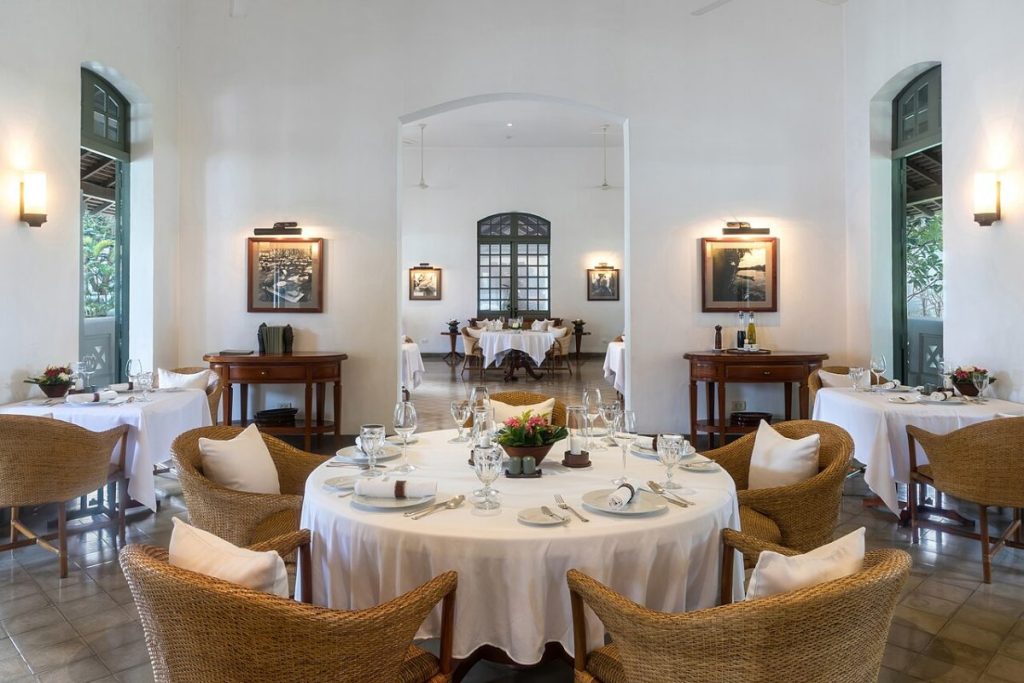
Restaurant private dining is the business of selling a defined space, a set menu and a block of time to one host. It can be a dedicated room, a section of the dining room or a full buyout. Handled well, it fills quiet nights, lifts average check and introduces your restaurant to guests who come back on their own.
The demand is there. Searches for private dining run to thousands a month in the US, and spike before the holidays and in spring. This guide covers how to set the offer up, price it, contract it and run it without disrupting regular service.
Key facts
- Private dining means selling a defined space and menu to one host for a set time, usually with a food and beverage minimum.
- You do not need a separate room: a semi-private section or a full buyout can be sold the same way.
- Fixed or limited menus make group events predictable for the kitchen and easier to cost.
- The IRS treats a mandatory service charge, such as an automatic gratuity, as wages rather than tips.
- Every booking needs a written agreement: date, times, guest count deadline, minimum, deposit and cancellation terms.
What counts as private dining?
Most restaurants sell some mix of three formats. Knowing which ones you can actually deliver is the first decision.
- Private room. A closed space with its own door. Best for business dinners, rehearsal dinners and anything with speeches.
- Semi-private section. Part of the main floor screened off or reserved. It needs a clear boundary and a noise level that will not bother other guests.
- Full buyout. The whole restaurant for one host. Usually only worth it on nights you would not fill anyway, or at a minimum that covers a strong regular night.
Write down the seated and standing capacity for each space, the hours you can sell it and any nights that are off limits. That list becomes the first page of your events packet.
How do you price a private dining room?
The two common models are a food and beverage minimum and a per-person package. Many restaurants combine them.
Food and beverage minimums
The host commits to spending a set amount on food and drink. If they fall short, the difference is charged as a room fee. To set a minimum, look at what that space or those seats normally earn in the same daypart. A room that would otherwise seat walk-ins on a Friday needs a higher minimum than the same room on a Tuesday.
Per-person packages
A fixed price per guest for a set menu, with or without drinks. Packages are easy for hosts to compare and easy for you to cost. Build them from your own recipe costs, not from a competitor’s price list.
| Model | Best for | Watch out for |
|---|---|---|
| Food and beverage minimum | Rooms with steady demand; hosts who want flexibility | Groups ordering cheaply to just clear the minimum |
| Per-person package | Corporate dinners, rehearsal dinners, set menus | Guest count drops after you have ordered |
| Room fee plus menu | Small groups in large rooms | Hosts reading the fee as a penalty |
Whichever you use, state clearly what is and is not included: tax, service charge, cake cutting, corkage, AV, flowers and overtime.
What should a private dining menu look like?
A group of 30 ordering from the full menu at once is a hard night for any kitchen. A limited event menu protects ticket times for the group and for everyone else in the dining room.
- Plated, with choices. Two or three choices per course, collected in advance. Ask the host for place cards or a list so servers know who ordered what.
- Family style. Shared platters per table. Fast to serve and good for social groups.
- Reception. Passed bites and stations for standing events. Plan quantities per guest per hour and agree them in writing.
Collect allergies and dietary needs with the guest count, not on the night. If you already run a holiday party menu, it can double as your winter event menu.
What goes in an event agreement?
Every booking needs a short written agreement signed before you hold the date. It protects both sides and stops arguments about the bill.
- Date, space and times, including setup and when the room must be cleared.
- Guest count and the deadline for the final number. Charge for the confirmed count or the actual count, whichever is higher.
- Menu and pricing, or the minimum spend and what counts toward it.
- Deposit and when the balance is due.
- Cancellation terms, with dates. A deposit that is refundable until a set date, then non-refundable, is common.
- Service charge and taxes, stated as percentages.
- House rules: decorations, outside cakes, music volume, end time.
Payment details should go through your normal card processing, not be written on the form. See our notes on card processing fees if deposits will add volume.
Service charges versus tips
Many restaurants add a fixed percentage to event checks. Be careful how you describe it. The IRS explains that a payment is only a tip if the customer pays it freely, sets the amount and generally chooses who gets it. A mandatory charge fails that test, so it is a service charge, and the amounts you pay staff from it are treated as non-tip wages for withholding. Tell hosts plainly what the charge covers and whether it goes to staff. State and local rules on service charge disclosure vary, so check yours.
Who should sell and run the events?
Inquiries go cold fast. Someone has to own them, even if it is a general manager working a few hours a week on events.
- Reply within one business day with availability, capacity and your events packet.
- Hold dates in one place, ideally your reservation system, so the floor team never double-books the room. Our reservation system guide covers what to look for.
- Run a short pre-shift for every event: host name, timeline, menu, allergies, speeches, who is paying.
- Staff it as its own section. A server pulled between the event and regular tables lets both down.
How do you market private dining?
Most event business comes from people who already know you. Make it easy for them to ask.
- A dedicated private dining page on your website with photos of the space, capacities, sample menus and an inquiry form.
- A line on the bottom of every receipt and in your email footer.
- Your Google Business Profile listing the room and linking to the page.
- Outreach to nearby offices, wedding planners and hotels before the holiday and spring seasons.
The quiet months are when to book the busy ones. Start holiday outreach in early autumn and graduation and wedding outreach after New Year.
What to do after the event
Send a thank-you within two days with the final invoice and a short question about how it went. Ask whether they would book again, and log the answer. A host who had a good night is your best lead for the next one, and their guests are your next regulars. Add them to your list with consent, and track repeat bookings so you know which events are worth chasing.
Sell the space, the menu and the time. Everything else is detail you put in writing.
More guides are in our restaurant marketing section.
Frequently asked questions
What is a food and beverage minimum?
It is the least the host agrees to spend on food and drink for the booking, before tax and service charge. If the group spends less, the host pays the difference, often listed as a room fee.
Do I need a separate room to offer private dining?
No. Many restaurants sell a semi-private section, a patio or a full buyout during quieter dayparts. What matters is a clearly defined space, a set time and a menu the kitchen can deliver for the group.
Is an automatic gratuity on a private event a tip?
Under IRS guidance, a charge the guest has no choice about is a service charge, not a tip. Amounts paid to staff from it are treated as non-tip wages for payroll purposes.
How far ahead should I confirm the final guest count?
Most venues ask for a final count a few days before the event so the kitchen can order and prep. Put the deadline in the agreement and charge for the confirmed number.
What menu format works best for groups?
A fixed menu with two or three choices per course, or family-style platters, keeps ticket times steady and makes food cost predictable. Offer upgrades as add-ons rather than an open menu.
The short version
Private dining works when you sell a defined space, a limited menu and clear terms. Decide which spaces and times you can sell, set minimums from your own sales data, put every booking in writing, staff it like a separate service and follow up within days. Done that way, group bookings fill quiet nights and bring in guests who come back on their own.
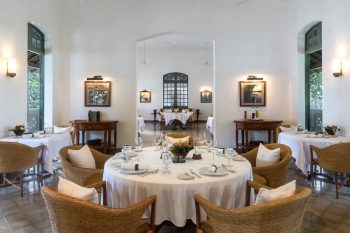
Featured photo: Restaurant room of Amantaka luxury Resort & Hotel in Luang Prabang Laos by Basile Morin, BY-SA 4.0.