A good holiday party menu for restaurants is a short, fixed-price set of packages built from dishes your kitchen already cooks well, costed per guest, protected by a deposit and a minimum spend, and backed by a prep and staffing plan written weeks in advance. Get those five pieces right and December group bookings become some of the easiest revenue of the year.
To make that concrete, this walkthrough follows a hypothetical 90-seat bistro through the whole process. The numbers are illustrative, not benchmarks, so swap in your own costs and prices as you read.
Key takeaways
- Offer two or three prix-fixe tiers built from existing menu items, not a separate holiday kitchen.
- Cost every package per guest, then check the margin against your target before you set a price.
- Take a deposit and set a minimum spend, with clear dates for final numbers and cancellations.
- Federal rules treat a compulsory service charge as a service charge, not a tip, so decide and disclose how you’ll handle it.
- Lock dietary needs on a pre-order form and plan prep backwards from each party date.
The setup: a 90-seat bistro in December
Say you run a 90-seat bistro with a private back room for 30 and an open-kitchen line of four cooks on a normal Friday. Last December you took holiday parties ad hoc: a different menu for each group, deposits for some and not others, and one Saturday when two parties of 25 arrived at the same time and the kitchen fell 40 minutes behind.
This year the owner wants a system. The goals are simple: one set of packages, one booking process, predictable food cost, and no night where parties swamp à la carte guests.
- Capacity rule: the back room holds one party per night; the main room takes one more party of up to 20 on Sunday to Thursday only.
- Seating windows: parties start at 6pm or 6:30pm, before the à la carte peak.
- Buyouts: full-restaurant buyouts are quoted separately with a higher minimum.
Build three packages, not one
Three tiers give guests a clear choice without multiplying prep. Every dish comes from the current menu or is a small variation on it, so the line already knows how to cook it.
- Classic (family-style): shared starters, two mains on platters and one dessert, built from starters and braises that hold well.
- Seasonal (plated, choice of two): starter, main and dessert from the current seasonal menu.
- Chef’s (plated, choice of three): canapés, starter, main and dessert, adding one premium main to the seasonal items.
Family-style is the kitchen’s friend for bigger groups: fewer plates to fire, and platters that can be topped up in rounds. The plated tiers give the premium feel some hosts want. If you’re refreshing the menu for winter anyway, our notes on a fall seasonal menu show how to pick dishes that travel well into group service.
Choose dishes that hold
- Braises, roasts and slow-cooked dishes that are at their best after resting.
- Starters that can be plated in advance and held cold.
- Desserts that are portioned ahead: tarts, panna cotta, cakes.
- Avoid anything cooked to order at the last second for 30 people at once.
Pricing, deposits and the service charge
Cost per guest
Cost each package per guest, exactly as you would a menu item, then add the extras that group dining brings.
- Plate cost for each course, from your recipe cards, using current invoices.
- Shared items: bread, canapés and petits fours divided per guest.
- Waste allowance: family-style platters over-produce; add a buffer.
- Extras: printed menus, place cards, any decorations you supply.
- Check the margin against your target food cost before you set the price.
If your theoretical food cost and actual food cost have drifted apart this year, fix that before you price packages; our guide to food cost percentage explains where the gap usually comes from.
Drinks packages
Offer a simple choice: a per-guest drinks package for a set time, a bar tab with a cap, or consumption billed at the end. Whatever you offer, agree it in writing with the host before the night.
Holiday parties make money when the kitchen cooks what it already knows. Novelty is for the menu card, not the prep list.
Deposits and minimums
Deposits and minimums turn a tentative booking into a firm one. Our bistro sets these terms and puts them on a one-page booking agreement:
- Deposit: a set amount per guest to hold the date, credited to the final bill.
- Minimum spend: for the private room, so a party of 12 in a room for 30 still covers its cost.
- Final numbers: confirmed a set number of days before the event; guests who don’t arrive after that are charged.
- Cancellation: a clear date after which the deposit is non-refundable.
How to handle the service charge
Many restaurants add a service charge to parties. Know how the rules treat it. The US Department of Labor states that a compulsory charge for service, such as 15 percent of the bill, is not considered a tip under the FLSA. The IRS lists both a banquet event fee and a large dining party automatic gratuity as service charges, which are treated as non-tip wages when paid out to staff.
In practice, that means deciding how the charge will be distributed, running it through payroll correctly, and telling the host exactly what it is and where it goes. Put it on the booking agreement and the final bill in plain words.
Dietary options without chaos
Dietary requests are where group dinners go wrong, usually because they arrive at the table rather than in advance. The fix is a pre-order form sent with the booking confirmation. The FDA lists nine major food allergens, including sesame, so the form should ask about each one by name.
- Build options into every package: one vegetarian main and one dessert that avoids common allergens.
- Collect names with needs: “two vegetarians” is less useful than “Ana, seat 4, vegetarian.”
- Lock the list with final numbers and print it on the kitchen ticket for the party.
- Brief the servers so each special plate goes to the right person first time.
For allergy orders, the same controls apply as on any service. Our food safety guides cover prep and fryer separation in detail.
The prep timeline and staffing plan
Working backwards from the party date
| When | Task |
|---|---|
| Six to eight weeks out | Packages, prices and booking agreement finished; start selling |
| Three weeks out | Order any specialty items and confirm supplier delivery days over the holidays |
| One week out | Final numbers and pre-order forms in; build prep lists per party |
| Two days out | Braises, stocks, sauces and desserts made |
| Day before | Cold starters and garnishes prepped; room set if possible |
| Day of | Final cook, plating plan briefed, service starts at the booked time |
Food safety on the pass
Family-style and grazing courses sit out longer than plated food. USDA’s party buffet guidance is a useful house rule: don’t leave food at room temperature for more than two hours, and replace platters with fresh ones instead of topping up the old ones. Your local health code sets the holding temperatures you must meet.
Staffing
- Schedule one server per table section in the private room, plus a runner for family-style courses.
- Add a cook to the line for nights with a party, dedicated to the party’s plates.
- Name a party lead who owns the host relationship, timings and the final bill.
FAQ
How many packages should a holiday party menu have?
Two or three. More than that complicates prep and ordering without selling many more parties.
Should holiday parties pay a deposit?
Yes. A deposit credited to the final bill, plus a clear date for final numbers and cancellations, protects both the restaurant and the host.
Is a party service charge the same as a tip?
No. Federal guidance treats a compulsory service charge as a service charge, not a tip, so it’s handled as wages when paid to staff. Tell the host how you distribute it.
How do we handle dietary needs for large groups?
Collect them in advance on a pre-order form with names and seats, and build at least one vegetarian and one allergen-conscious option into every package.
Put your packages on sale this week
Draft your three packages from dishes you already cook, cost each one per guest, and write a one-page booking agreement with the deposit, minimum and service charge terms. Then put the packages on your website and in the booking confirmation for every December enquiry. Guests planning a party can also find you through our restaurant directory.
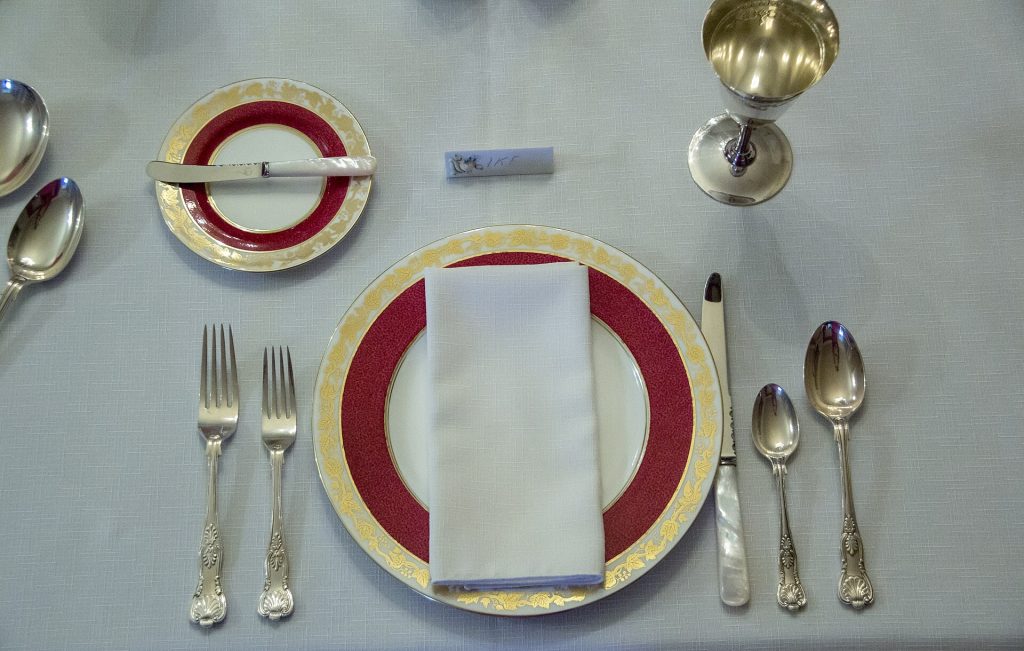
Featured photo: Eisenhower Christmas Dinner Table Setting (0e4555ea-867c-4951-90d8-122d77544ebe) by NPS Photo, CC0.