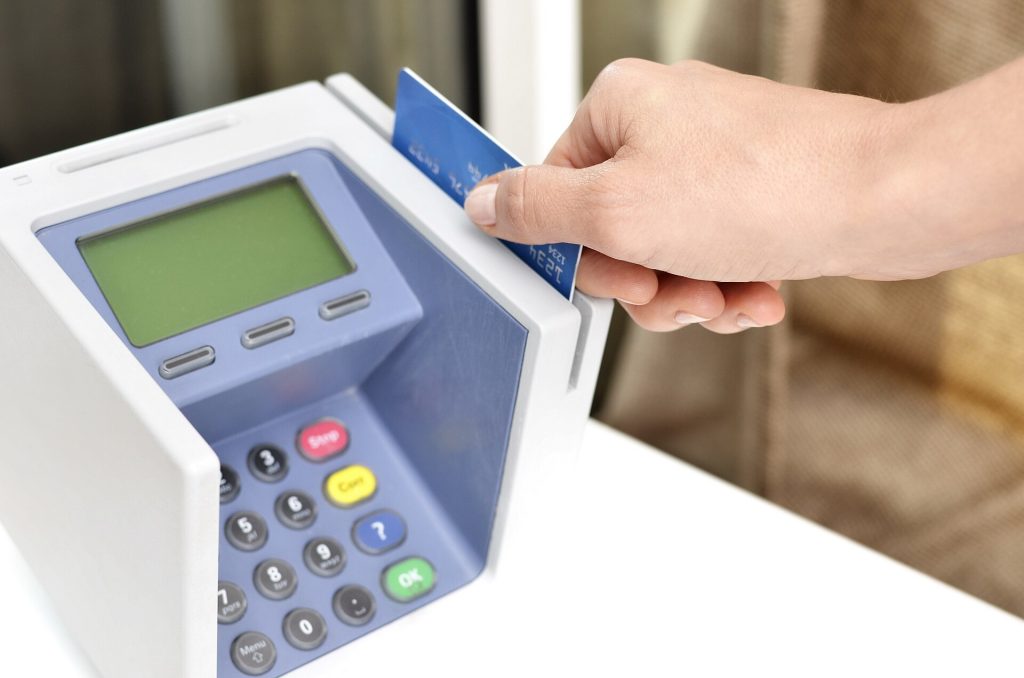
Restaurant credit card processing fees are made of three layers: interchange paid to the bank that issued the card, network fees paid to the card brand, and your processor’s markup. The first two are largely fixed for everyone. The markup, and the pricing model it is wrapped in, is the part you can negotiate.
Card fees are one of the few costs that grow automatically with sales, so a small difference in rate compounds across a year. Yet most owners only see one blended number on the statement and have no idea which part is negotiable.
This explainer breaks the fee into its parts, compares the pricing models, and sets out the Visa and Mastercard rules on surcharging so you can decide whether passing costs on is worth it.
Key takeaways
- Interchange goes to the card-issuing bank, network fees go to Visa or Mastercard, and the markup goes to your processor.
- Interchange-plus pricing shows each layer separately, which makes the markup easy to compare between quotes.
- Visa caps credit card surcharges at 3% and Mastercard at 4%, and neither allows surcharges on debit or prepaid cards.
- Both networks require at least 30 days’ notice before you start surcharging, plus clear disclosure and receipt itemization.
- PCI DSS applies to every business that stores, processes or transmits cardholder data, including restaurants.
The three layers of every card fee
Interchange
Visa describes interchange as transfer fees between acquiring banks and issuing banks on each card transaction. In practice, your processor’s bank pays it to the bank that issued your guest’s card, and it is passed through to you. Visa publishes its interchange schedules, and rates vary by card type and how the card is accepted.
Debit cards are a special case. Under the Federal Reserve’s Regulation II, interchange on debit transactions from large issuers is limited, while certain smaller issuers are exempt. That is one reason debit usually costs less to accept than a rewards credit card.
Network fees
Visa, Mastercard and the other networks charge their own fees on each transaction, often labelled assessments on statements. Like interchange, these are set by the networks, not by your processor.
Processor markup
This is what your processor charges for its service: a percentage, a per-transaction fee, a monthly fee, or a mix. It is the only layer that genuinely varies between providers, and the one worth negotiating.
You can’t negotiate interchange. You can negotiate everything wrapped around it.
Pricing models compared
Processors package those three layers in different ways. The same card mix can produce very different bills depending on the model.
| Model | How it works | Good for | Watch out for |
|---|---|---|---|
| Flat rate | One percentage plus a fixed fee on every transaction, regardless of card | New or small operators who want a simple bill | Paying the same rate on cheap debit as on premium credit |
| Interchange-plus | Actual interchange and network fees passed through, plus a fixed markup | Most full-service restaurants with steady volume | Monthly and per-batch fees added on top of the markup |
| Tiered | Transactions sorted into qualified, mid-qualified and non-qualified buckets | Rarely the best choice | The processor decides which bucket a card lands in, which hides cost |
| Subscription | A monthly fee plus interchange at cost and a small per-transaction fee | High-volume operators | Monthly fees that don’t pay off in slow seasons |
Interchange-plus is usually the easiest to audit because the markup sits in its own line. If a salesperson won’t quote interchange-plus, ask why.
Surcharging and cash discounts
Surcharging adds a fee to credit card transactions to cover the cost of acceptance. The card networks allow it, with strict conditions, and some states restrict it.
Visa’s rules
Visa’s merchant surcharging requirements say a surcharge can be no more than your cost of acceptance, with a maximum of 3% of the transaction. Surcharging applies only to credit transactions in the US and its territories, and debit and prepaid cards can’t be surcharged. You must notify your acquirer 30 days before you start, disclose the surcharge at the point of entry and the point of sale, and itemize it separately on the receipt.
Mastercard’s rules
Mastercard’s surcharge rules set a maximum cap of 4%, and you may charge up to the lower of that cap or your average effective merchant discount rate. Surcharges aren’t allowed on Debit Mastercard or Mastercard prepaid cards. You must give both Mastercard and your acquirer at least 30 days’ notice, and disclose the surcharge at the point of interaction with its dollar amount shown on the receipt.
State limits
Visa’s August 2023 guidance listed Connecticut, Maine, Massachusetts and Oklahoma as states that prohibit or limit surcharging. State law changes, so confirm your state’s current rules with your processor or attorney before you add a surcharge.
Cash discounts
A cash discount program works the other way round: the posted price reflects card payment, and guests paying cash get a lower price. It is a different legal structure from surcharging, and processors set their own requirements for how prices and signage must be shown. Ask for those requirements in writing before you change your menu.
- Guest experience: a visible fee on the check can prompt complaints and affect tips.
- Debit confusion: because debit can’t be surcharged, your POS must tell debit and credit apart correctly.
- Menu pricing: some operators simply build card costs into menu prices and skip the extra line.
PCI compliance and the fees around it
The PCI Security Standards Council describes PCI DSS as baseline technical and operational requirements to protect payment account data, applying to all entities that store, process or transmit cardholder data. That includes every restaurant that takes cards.
Whether a small merchant must formally validate compliance is set by the individual payment brands, and the Council says to ask your acquirer or the payment brand. Many small merchants validate with a Self-Assessment Questionnaire, and there are different questionnaires for different card-acceptance setups.
- Ask your processor which questionnaire applies to your setup, and complete it on time.
- Check your statement for a monthly or annual PCI fee, and for a separate non-compliance fee if a questionnaire is overdue.
- Pay-at-the-table and tokenized POS systems can reduce how much card data touches your own network, but ask your provider how they affect your questionnaire.
How to read your statement
- Find the effective rate. Divide total fees by total card sales for the month. That single number is your true cost.
- Separate pass-through from markup. On interchange-plus statements, interchange and network fees are listed apart from the processor’s charges.
- List every fixed fee. Monthly, statement, batch, PCI, gateway, terminal rental and chargeback fees all add up.
- Check the contract. Look for the term length, an early termination fee and any automatic renewal.
- Get two comparison quotes. Hand competitors a recent statement and ask for interchange-plus pricing on the same volume.
For more on choosing and running your systems, browse our restaurant tech and POS guides, including choosing a restaurant POS system.
FAQ
What is a typical credit card processing fee for a restaurant?
It depends on your card mix, average ticket and pricing model. Calculate your effective rate from last month’s statement and use it as your benchmark when comparing quotes.
Can a restaurant charge a credit card fee?
Yes, subject to network rules and state law. Visa caps surcharges at 3% and Mastercard at 4%, both exclude debit and prepaid, and some states prohibit or limit surcharging.
Can I surcharge debit cards?
No. Both Visa and Mastercard prohibit surcharges on debit and prepaid cards, even when the guest signs rather than enters a PIN.
Is interchange-plus always cheaper?
Not always, but it is the most transparent. The total still depends on the size of the markup and the fixed fees around it.
Your next step
Pull last month’s processing statement, calculate your effective rate, and list every fixed fee on it. That one page gives you what you need to renegotiate with your current processor or compare new quotes. If fees are part of a wider cost squeeze, our guide to managing prime cost is the next read.
Featured photo: Paying with a Credit Card (28886645201) by Hloom Templates, BY 2.0.