Most of the advice floating around about restaurant social media was written for brands with marketing departments. For an independent restaurant, the facts are simpler: consistent posting beats constant posting, local reach matters more than follower count, small targeted boosts can pay off, and anyone you give a free meal to in exchange for a post has to disclose it.
Below are six myths that cost operators time, money or, in a couple of cases, legal trouble, each followed by what actually holds up. Where rules apply, we link to the Federal Trade Commission’s own guidance.
Key takeaways
- Post on a schedule you can keep. Three strong posts a week beat seven rushed ones.
- Judge success on local reach, saves, directions requests and bookings, not raw follower totals.
- Small paid boosts aimed at a tight local radius, tied to a specific offer or event, are measurable and often worthwhile.
- The FTC says people who get free meals and post about them should disclose that. Put it in writing with every creator.
- Ask permission before reposting a guest’s photo, and reply to criticism publicly and calmly.
The post-every-day myth
The myth: the algorithm punishes you unless you post daily, so you need something new every day.
The fact: consistency matters more than volume. A restaurant that posts three good photos a week, every week, builds more trust than one that posts daily for a fortnight and then goes silent for a month. Daily posting also tends to drag quality down: blurry plates, repeated angles and captions that say nothing.
- Pick a rhythm your team can sustain through the busy season, then stick to it.
- Batch content: shoot the week’s dishes during one quiet prep hour.
- Use stories for the daily, low-effort updates, such as the soup of the day or a sold-out notice, and keep the main feed for your best work.
Why follower count misleads
The myth: the account with the most followers wins, so growing the number is the goal.
The fact: a restaurant lives on people who can physically get to it. Ten thousand followers spread across the world fill fewer tables than two thousand who live within a short drive. Look at the insights your platform provides for location, reach and actions: profile taps, website clicks, calls, directions requests and saves.
Buying followers is worse than useless. The FTC’s final rule on fake reviews and testimonials, announced in August 2024, also prohibits buying or selling fake indicators of social media influence, such as bot-generated followers or views, when they are used to misrepresent importance for a commercial purpose. Fake followers also drag your engagement rate down, which makes real posts reach fewer real people.
Paid boosts are not always wasted money
The myth: boosting posts is just giving money to the platform, and good content should spread on its own.
The fact: organic reach for business pages is limited, and a small, well-targeted budget can put a specific offer in front of the right people. The waste comes from boosting vague posts to broad audiences. Boost with purpose:
- Choose one goal: bookings for a set menu, tickets for an event, or awareness of a new lunch service.
- Target a tight radius around the restaurant and the neighbourhoods your regulars come from.
- Run it for a short, defined window with a fixed budget.
- Track results you can see in the till: a promo code, a named dish, or reservation source notes.
If a boost does not move a measurable number after two or three tries, change the offer or the audience before spending more.
Free meals for influencers still need disclosure
The myth: if you only gave a creator a free dinner rather than cash, there is nothing to disclose.
The fact: the FTC’s Disclosures 101 for Social Media Influencers says creators must disclose any financial, employment, personal or family relationship with a brand, and that free or discounted products count. Its Endorsement Guides FAQ addresses restaurants directly: if you give free meals to people and seek their endorsement, they should disclose it.
The disclosure should be hard to miss and placed with the endorsement itself, not buried in a bio or behind a “more” link. Plain words like “ad” or “sponsored” work. For video, the disclosure should appear in the video, and for live streams it should be repeated. The FTC also warns against relying on a platform’s built-in disclosure tool alone.
What to put in writing
- What the creator receives: the meal, drinks, a fee or anything else of value.
- That the post must include a clear disclosure, in the image or video and the caption.
- That you will not require the review to be positive. The FTC says endorsements must reflect honest opinions.
- Your rights to reshare the content, and for how long.
The same logic applies to your own team. The FTC FAQ says employees posting about their employer’s products should disclose the relationship.
If you picked up the bill, your guest’s post needs to say so.
A tag is not permission to repost
The myth: once a guest posts a photo and tags your restaurant, you can repost it or put it on your website.
The fact: the guest owns that photo. According to the U.S. Copyright Office, a work is protected by copyright the moment it is created and fixed in a tangible form, and registration is not required. A tag is not a licence.
- Reply or message to ask permission, and keep a screenshot of the yes.
- Credit the creator by handle when you share.
- For use beyond your social feed, such as your website, menus or paid ads, get explicit written permission for that specific use.
Guest content is some of the most convincing marketing a restaurant has. Getting permission takes a minute and keeps it that way.

Deleting bad comments backfires
The myth: a bad comment makes you look bad, so delete it, or ignore it and hope it sinks.
The fact: prospective guests read how you respond as much as what was said. A calm, specific reply that acknowledges the problem and moves the conversation to a private channel often reassures people more than a page of praise does.
- Reply within a day during business hours.
- Thank them, name the specific issue, and avoid arguing about details in public.
- Offer a direct contact, such as a manager’s email, to put it right.
- Hide or remove only comments that break the platform’s rules, such as abuse or spam.
There is also a legal edge here. The FTC’s 2024 rule prohibits using unfounded or groundless legal threats, physical threats or intimidation to get negative reviews removed, and prohibits offering incentives conditioned on reviews expressing a particular sentiment. You can ask happy guests to leave a review. You cannot pay only for good ones.
The six myths side by side
| Myth | Fact | What to do this week |
|---|---|---|
| Post every day | Consistency beats volume | Set a weekly posting schedule you can keep |
| Followers are the goal | Local reach and actions matter | Check location and action insights |
| Boosting is wasted money | Targeted boosts can be measured | Test one boost tied to one offer |
| Free meals need no disclosure | The FTC says they do | Add disclosure terms to every creator agreement |
| A tag means you can repost | The guest owns the photo | Ask permission and keep a record |
| Delete or ignore criticism | Reply calmly and publicly | Write two or three response templates |
FAQ
What should a small restaurant post about?
Dishes, specials, the people behind the food with their consent, events, and practical updates such as hours or holiday closures. Posts that answer a guest’s question tend to perform well.
Do I need to be on every platform?
No. Choose one or two where your guests already are and do them well. A dormant account looks worse than no account.
Is it fine to ask staff to share our posts?
Yes, but make it optional, and remind them that the FTC expects employees to disclose their connection when they promote their employer.
How do I measure whether social media is working?
Track actions tied to visits: reservation sources, promo code redemptions, directions requests and website clicks, and review them monthly.
Your plan for the next 30 days
Pick your posting days for the next month, write a one-page creator agreement with a disclosure clause, and set aside a small test budget for a single targeted boost. Then add two reply templates for complaints so whoever is on shift can respond calmly. For more on turning attention into bookings, read managing online reviews and browse our restaurant marketing guides. If you are planning a launch, promoting restaurant events is a good next step.
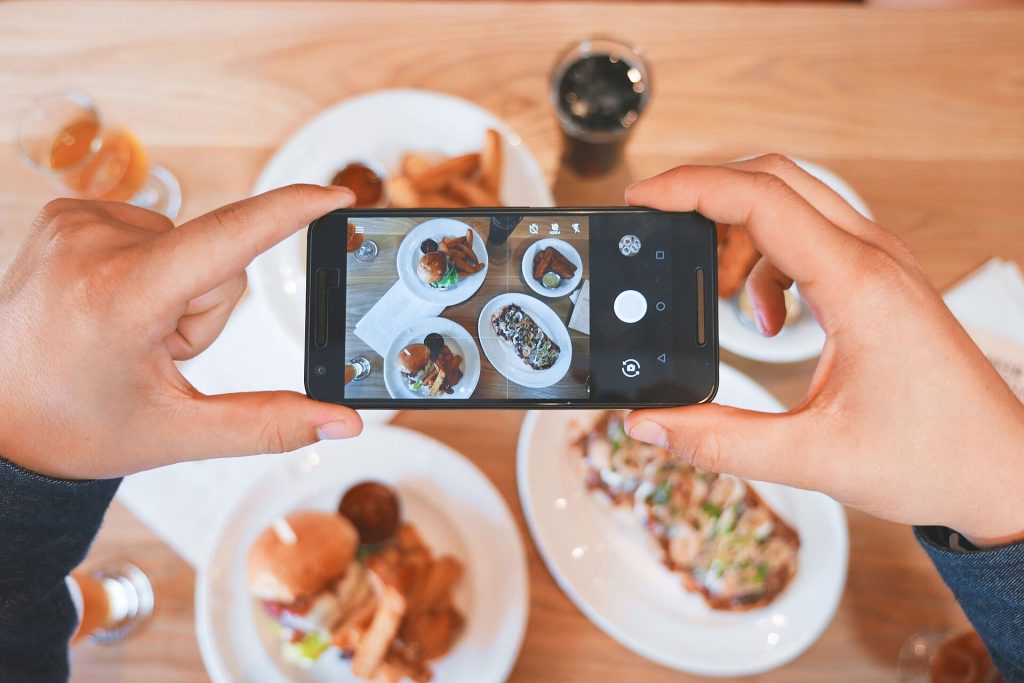
Featured photo: Person snapping food (Unsplash) by Eaters Collective eaterscollective, CC0.