This Jean-Talon Market guide is for chefs, buyers and food-business owners heading to Montreal. In brief: Marché Jean-Talon is a year-round public market in Little Italy at 7070 Henri-Julien Avenue, open Monday to Saturday from 8 a.m. to 6 p.m. and Sunday from 8 a.m. to 5 p.m. From late April it runs open-air; as winter approaches in October the walls go up and it moves indoors. Its strength is Quebec growers and specialist shops under one roof.
The market is run by Marchés publics de Montréal, the organisation that manages the city’s public markets, and Tourisme Montréal calls it one of North America’s largest open-air public markets.
Below: a short history, how the site is laid out, what to buy in each season, a handful of long-running vendors, and a routine for shopping it efficiently.
Key takeaways
- Inaugurated in May 1933 as Marché du Nord, the market took the Jean-Talon name in 1983.
- Hours: Monday to Saturday 8 a.m. to 6 p.m., Sunday 8 a.m. to 5 p.m.
- Walls go up as winter approaches in October; the open-air market returns towards the end of April.
- Metro stations Jean-Talon and De Castelnau are both close by, and there are nearly 400 parking spaces.
- Long-running businesses include Épices de Cru (since 1985), Les Jardins Sauvages (since 1986) and Le Marché des Saveurs du Québec (since 1998).
From Marché du Nord to Jean-Talon
According to Marchés publics de Montréal, the market was inaugurated in May 1933 under the name Marché du Nord. It became Jean-Talon Market in 1983, named for the first intendant of New France. The organisation’s history of Montreal’s public markets also notes how the market adapted to its neighbours: demand from the surrounding Italian community greatly increased the call for tomatoes.
That mix still defines it. You will find Quebec farm stalls next to Italian, Mediterranean, Middle Eastern and other specialist shops, which makes it useful for both seasonal produce and pantry sourcing in a single trip.
Jean-Talon is where you learn what Quebec actually grows, and when, before you write your menu.
Layout and getting there
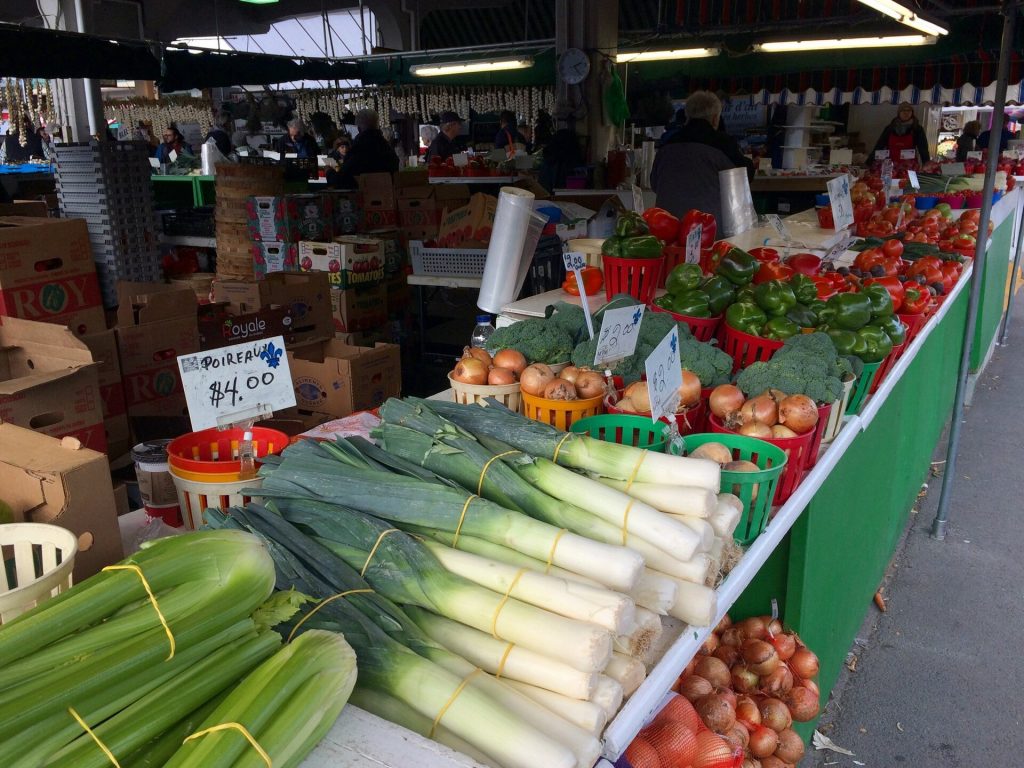
The market sits at 7070 Henri-Julien Avenue, at the corner of Jean-Talon Street, in the Little Italy and Villeray area. The core is the open central hall and aisles of farm stalls, ringed by permanent shops: butchers, fishmongers, cheesemongers, bakers, spice merchants and specialty grocers.
| Detail | What to know |
|---|---|
| Address | 7070 Henri-Julien Avenue, corner of Jean-Talon, Montreal |
| Hours | Mon–Sat 8 a.m. to 6 p.m.; Sun 8 a.m. to 5 p.m. |
| Winter | Walls go up as winter approaches in October |
| Open-air season | Returns towards the end of April |
| Summer car-free aisles | June to October, Thursday to Sunday, 11 a.m. to 5 p.m. |
| Metro | Jean-Talon or De Castelnau |
| Bus | Routes 51, 55, 92 and 93 |
| Parking | Nearly 400 spaces, underground and surface, plus 150 bike spaces |
Individual shops may keep their own hours inside the market’s schedule, so check with a vendor before planning an early pickup. Parking is paid beyond a short free window, and the market publishes its rates on its site.
Shopping by season
The best reason for a professional to visit is to see Quebec’s growing season up close. The harvest calendar published by the Association des Marchés Publics du Québec gives a useful outline of when local crops come in.
| Product | Quebec harvest window |
|---|---|
| Asparagus | Mid-May to mid-June |
| Strawberries | Early June to late October |
| Carrots | Mid-June to late October |
| Raspberries | Early July to mid-September |
| Fresh garlic | Mid to late July |
| Blueberries | Mid-July to late August |
| Squash and pumpkins | Early August to late October |
Winter visits
Once the walls go up, far fewer fresh local crops are in season, but the permanent shops keep trading through the winter. Winter is a good time to focus on cheese, charcuterie, spices, preserves and stored crops, and to build relationships with shop owners who have more time to talk.
Long-running vendors worth knowing
The market’s merchant directory lists well over a hundred businesses. These long-running names are a practical starting point for a buyer.
Le Marché des Saveurs du Québec
In business since 1998, Le Marché des Saveurs du Québec is a fine grocery devoted to local products. Marchés publics de Montréal describes it as featuring more than 400 Quebec producers, with a cheese shop, a butcher’s counter and a beer and spirits section. Its address is 280 Place du Marché-du-Nord. For a chef building a Quebec-focused menu, it is a fast way to sample the province’s pantry.
Épices de Cru
Épices de Cru has operated since 1985. It was founded by Ethné and Philippe de Vienne, and its market listing describes more than 300 spices and blends, including rare spices, plus some sixty privately imported teas. It is worth a visit for whole spices and blends you will not find through a broadline distributor.
Les Jardins Sauvages
Operating since 1986, Les Jardins Sauvages specialises in wild edible plants and wild mushrooms from Quebec, harvested sustainably, alongside fresh produce, preserves and prepared foods. It is the stall to know if foraged ingredients are part of your cooking.
Fromagerie qui lait cru
In business since 2004, Fromagerie qui lait cru offers more than 300 artisan cheeses, nearly 70% of them from Quebec, according to its market listing. It is a strong place to taste your way through Quebec cheesemaking before building a cheese course.
Aqua Mare Poissonnerie
Operating since 2005, Aqua Mare sells fresh fillets, Mediterranean fish and seafood, and has a frozen counter.
For Montreal restaurants that source from markets like this, browse the Montreal restaurant coverage on our site.
How to shop it like a buyer
- Go early on a weekday. The market opens at 8 a.m.; arriving near opening gives you first pick and more time to talk with growers and shop owners.
- Walk the full loop first. Compare quality and prices across several farm stalls before you buy anything.
- Taste before you commit. Many growers and cheesemongers will offer a sample; ask what came in that day.
- Ask about volume. If you need regular quantities, ask whether the vendor can hold product or take a standing order.
- Bring cold storage. Pack insulated bags or a cooler for cheese, meat and fish, especially in summer.
- Use transit if you can. Two metro stations and four bus routes serve the market, which saves paying for parking.
Collect contacts, not just produce
Each visit is a chance to meet producers directly. Take notes on who grows what, and when they expect it, and you will have a seasonal sourcing list by the end of your first year. Our guide to sourcing from local farms explains how to turn those contacts into regular supply.
FAQ
Is Jean-Talon Market open in winter?
Yes. As winter approaches in October, the market puts up its walls and moves indoors, then returns to open-air operation towards the end of April.
What are Jean-Talon Market’s hours?
Monday to Saturday from 8 a.m. to 6 p.m., and Sunday from 8 a.m. to 5 p.m. Individual shops may vary.
Which metro station is closest?
Jean-Talon and De Castelnau stations are both close to the market.
How old is the market?
It was inaugurated in May 1933 as Marché du Nord and renamed Jean-Talon Market in 1983.
Plan your first market run
Pick a weekday morning for your first visit. Walk the whole market once, taste at three farm stalls, and leave with the names of two growers and one specialist shop you want to buy from again. For more food travel ideas, browse our lifestyle guides and find places to eat nearby in our restaurant directory.
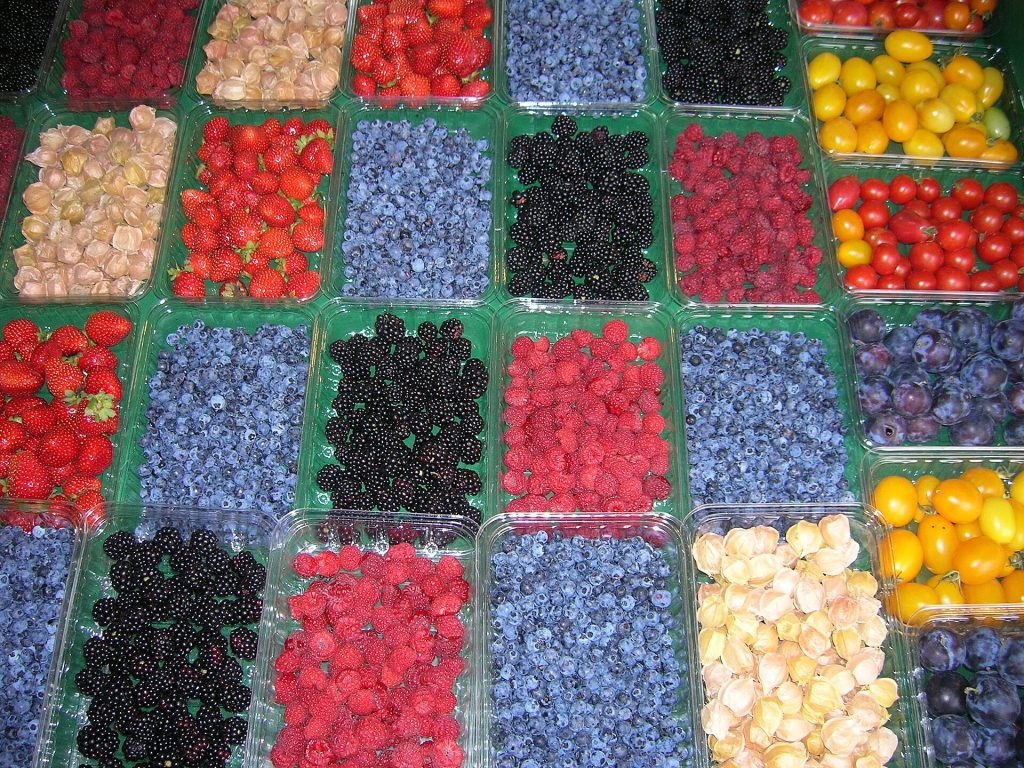
Featured photo: Jean-Talon Market MTL FruitBoxes 20060927 by Niranjan Arminius, BY-SA 4.0.