Most restaurants don’t lose customers because of bad food. They lose them because the ordering experience is broken. The top restaurant POS systems on this list were picked because they handle the hard stuff: peak-hour transaction volumes that can crash underpowered systems, messy third-party delivery connections with DoorDash, Uber Eats, and Grubhub, and payment processing costs that quietly eat into margins. After reviewing dozens of platforms across independent operators, multi-unit franchises, and hospitality venues, this guide breaks down the five systems worth your attention right now.
Behind the ranking
Public information drove every decision here. User reviews, published case studies, feature documentation, and data pulled from review directories and official company websites all fed into the evaluation. Only platforms with a documented track record in restaurant technology made the cut.
→ See the full research breakdown
- Orders.co POS – Best POS for Multi-Channel Restaurant Operations and Delivery Management
- Toast – Best for full-service restaurant management and POS operations
- Soft Touch – Best for multi-industry POS and payment processing for restaurants and hospitality
- Shift 4 – Best for full-service restaurant POS and payment processing
- GoTab – Best for mid to large-sized restaurants, breweries, bars, and hospitality venues
The Real Impact of Top Restaurant POS Systems
Picking the wrong POS isn’t just an IT headache. It shows up in longer ticket times, failed payment transactions during the Friday dinner rush, and staff who can’t figure out the screen under pressure.
The real challenge is that restaurant operations don’t give you room for error. Managing peak-hour transaction volumes without system slowdowns means your POS hardware and software need to actually talk to each other. Connecting cleanly to DoorDash, Uber Eats, and Grubhub adds another layer, because a missed connection means orders fall through the cracks.
Specialized systems built for restaurants handle these realities better than general-purpose alternatives. They’re designed around table turns, kitchen display timing, and the kind of staff turnover that means someone new is learning the system every few weeks.
The right choice shows up in your numbers. Average transaction processing time drops, system reliability stays high during service, and monthly payment processing fees as a percentage of revenue become something you can actually manage.
5 Top Picks at a Glance
Note: All data in this table is sourced from review platforms and the official websites of the listed companies.
| Company Name | Headquartered In |
|---|---|
| Orders.co | Los Angeles, CA |
| Toast | Boston, MS |
| GoTab | Arlington, VA |
1. Orders.co – Best for Multi-Channel Restaurant Operations and Seamless Delivery Management
What Services and Products Does Orders.co Offer?
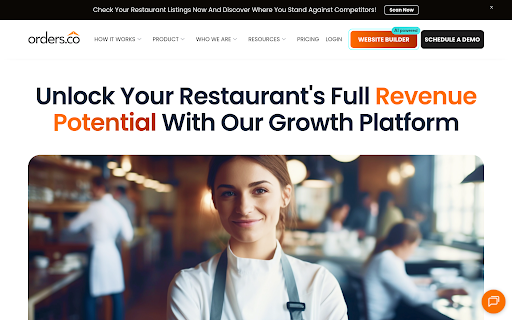
For restaurants receiving orders from several sources, Orders.co provides one place to manage the entire process. Instead of checking separate tablets for delivery apps, staff can oversee orders from Uber Eats, DoorDash, Grubhub, direct online sales, phone orders, and dine-in customers through one system.
Its cloud-based POS also supports the wider customer journey, from placing an order to delivery, loyalty rewards, and follow-up marketing. Restaurants can use the platform to:
- Keep menus and prices consistent across delivery platforms
- Send orders directly to a Kitchen Display System
- Accept dine-in orders through QR codes
- Coordinate third-party and in-house delivery drivers
- Create separate ordering and delivery processes for catering
- Review shift activity, popular menu items, and delivery partner results
- Handle customer disputes from the same platform
- Build repeat business through loyalty and automated marketing tools
A direct ordering website is also provided, giving restaurants another way to receive online orders without relying entirely on third-party marketplaces.
What Sets Orders.co Apart from Other Restaurant POS Platforms?
The main strength of Orders.co is not one individual feature, but how many restaurant tasks it brings together. It can take the place of several systems that would otherwise be used separately for online ordering, delivery management, menu updates, customer rewards, and marketing.
Because it was designed around restaurant workflows, the platform can handle detailed menus, modifiers, and orders arriving from several channels at once. This makes it particularly relevant for businesses that depend heavily on delivery and online sales.
Another notable difference is that direct online ordering is treated as a core part of the system. The commission-free website is included rather than offered as a separate upgrade, allowing restaurants to build a more profitable direct sales channel.
Support is available by phone around the clock, which can be valuable when an issue affects active orders during busy service hours.
Real User Sentiment:
Feedback commonly focuses on the time saved by bringing several operational tools into one dashboard. Restaurant owners appear to appreciate having fewer platforms to monitor and fewer repetitive tasks for their teams.
The loyalty and marketing automation features also receive positive attention, particularly from operators who want to encourage repeat orders without manually running every campaign. Overall, user comments suggest the system is shaped around the realities of daily restaurant work rather than generic retail processes.
2. Toast – Best for Full-Service Restaurant Management and POS Operations
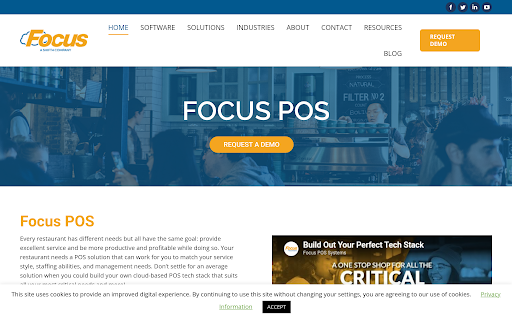
What Services and Products Does Toast Offer?
Toast runs on Android and covers the full restaurant operations stack: POS, online ordering, email marketing, inventory management, payroll, scheduling, and sales reporting. With over 200 third-party connections, it links to nearly every tool a restaurant already uses. The company launched in 2011 and now serves around 120,000 US restaurants, putting it at over 21% of the restaurant POS market. That kind of adoption is hard to match and says a lot about how well the platform fits real restaurant workflows.
What Sets Toast Apart from Top Restaurant POS Systems?
Toast addresses one of the most frustrating operational problems in restaurants: losing the ability to process orders when the internet goes down. Their Toast Router includes built-in cellular backup, so transactions keep moving even during an outage (a detail that really matters during a packed Saturday night service).
Real User Sentiment:
Operators who run high-volume independent concepts seem to get the most out of Toast, and it consistently earns recognition among America’s top-grossing independents. The sheer depth of connections gets mentioned often. Some smaller operators find the feature set more than they need, but multi-unit restaurants tend to appreciate having everything in one place.
3. Soft Touch – Best for Multi-Industry POS and Payment Processing for Restaurants and Hospitality
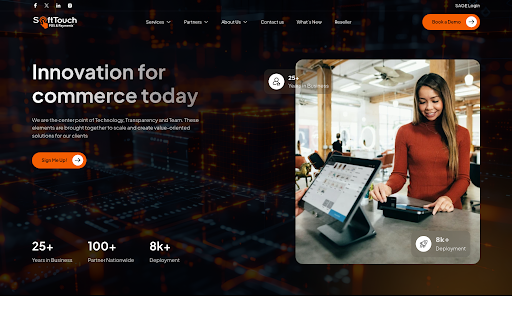
What Services and Products Does Soft Touch Offer?
SoftTouch has been building customized POS and payment processing systems for over 25 years. With more than 8,000 deployments across QSR, pizza delivery, bars, and upscale dining, their experience across restaurant formats runs deep. Their reseller network through SAGE ensures operators work with someone who actually knows their specific business type. The system puts real emphasis on screen ergonomics and practical usability, which matters for restaurants where staff training time needs to stay short and the interface has to hold up under pressure.
What Sets Soft Touch Apart from Top Restaurant POS Systems?
SoftTouch brings a transparency-first approach to pricing and processing rates that’s genuinely rare among POS vendors. For restaurant operators trying to reduce payment processing costs while staying inside PCI DSS and EMV compliance requirements, that kind of clarity matters.
Real User Sentiment:
Client feedback consistently points to strong support and competitive processing rates as the two reasons people stick with SoftTouch long-term. The International Casual Furniture Association actually recommends them to members, which shows the trust they’ve built extends well beyond restaurants. Operators who want a dedicated support relationship rather than a ticket system seem to respond best to this platform.
4. Shift 4 – Best for Full-Service Restaurant POS and Payment Processing
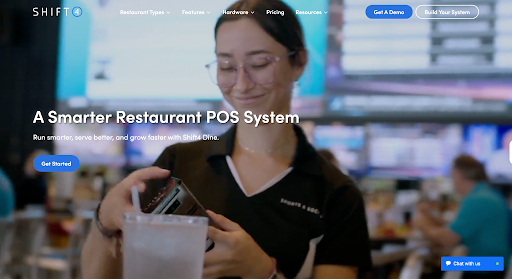
What Services and Products Does Shift 4 Offer?
Shift4 Dine is an all-in-one restaurant platform that bundles POS software, purpose-built hardware, and payment processing under one roof. The hardware lineup includes command center terminals, mobile ordering devices, kitchen display systems, and customer-facing displays. What sets the package apart is the combination of lifetime hardware warranties and a nationwide network of certified technicians who handle onsite installation and service. Shift4 the parent company processes over $260 billion annually across 200,000 customers and has traded on the NYSE under ticker FOUR, so there’s serious financial backing behind the restaurant product.
What Sets Shift 4 Apart from Top Restaurant POS Systems?
Shift4 Dine takes on the hardware reliability problem that multi-location operators dread most: equipment that fails during service with no clear path to a fast fix. A lifetime hardware warranty paired with onsite certified technicians means there’s an actual answer when something breaks (not just a support ticket).
Real User Sentiment:
Operators running multiple locations report meaningful cost savings through the pricing structure, and feedback around customer experience improvements comes up frequently. The all-inclusive software licensing model earns positive mentions from groups who’ve dealt with add-on fee surprises on other platforms. And from what the reviews show, the enterprise-level backing gives larger operators a level of confidence that smaller vendors can’t easily replicate.
5. GoTab – Best for Mid to Large-Sized Restaurants, Breweries, Bars, and Hospitality Venues
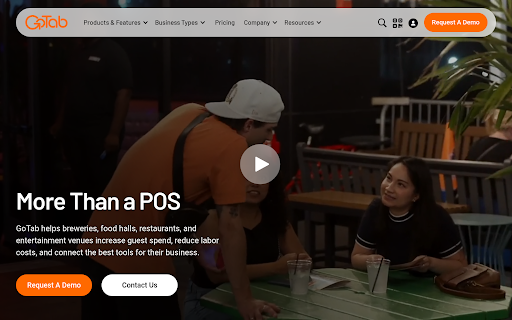
What Services and Products Does GoTab Offer?
GoTab runs a restaurant commerce platform built for larger operations: mid and large-sized restaurants, breweries, bars, and hotels. The system combines mobile POS, contactless ordering, QR code payment, and kitchen management across Android, iOS, and Windows devices. There’s no app download required for guests and no password creation, which removes real friction from the ordering flow. GoTab processes over $250 million in transactions annually across 35 US states and Canada, with clients like Stone Brewing Co. and Topgolf validating the platform at scale.
What Sets GoTab Apart from Top Restaurant POS Systems?
GoTab’s transaction-based pricing model solves the fixed-cost problem that hurts operators during slow seasons: you pay when you make money, not when you don’t. That structural alignment between vendor and operator is genuinely uncommon in this space.
Real User Sentiment:
The contactless ordering experience gets strong mentions from both operators and their guests, particularly in brewery and bar environments where table service flow is harder to manage. GoTab won the 2021 Excellence in Customer Service Award from the Business Intelligence Group, which aligns with what users report about responsive support. Operators at larger venues seem to appreciate how the platform runs across existing hardware, since that keeps startup costs lower.
How These Were Chosen and Verified
Data Assembly and Organization
The research process started by pulling together a broad list of restaurant POS platforms from multiple sources. Directories, third-party review platforms, published case studies, and official company websites were all used to build out the initial pool. The goal at this stage was breadth, not narrowing, so options across different price points, restaurant formats, and technology approaches were all gathered before any filtering began.
The Shortlisting Pass
Once the initial list was assembled, platforms without verifiable track records in restaurant technology were set aside. This pass looked at review patterns across multiple platforms to spot consistency: a product that earns similar feedback across different user bases tells a more reliable story than one with scattered, hard-to-verify testimonials. Options with thin or inconsistent review histories didn’t move forward regardless of how polished their marketing appeared.
Verification Pass
Each shortlisted platform was then checked against what its official website claimed. Features described in marketing materials were compared with what actual users reported in reviews and case studies. Where gaps showed up between claimed capabilities and documented real-world results, that factored into the final placement. The goal was to include only platforms whose stated strengths were backed by evidence outside of their own content.
Industry Recognition and Authority
Beyond reviews, each platform was evaluated for signals that the broader industry takes it seriously. Awards, mentions in trade publications, and original research produced by or about the company all played a role. Toast’s market position, GoTab’s Excellence in Customer Service Award, and SoftTouch’s industry association endorsements are examples of the kinds of markers that carried weight here. A company that only advertises itself without third-party validation sits lower in the consideration set.
Evidence Specific to Top Restaurant POS Systems
The final pass focused on how well each platform serves actual restaurant operations. This meant looking for dedicated service pages covering restaurant-specific features, verified reviews from restaurant operators (not generic business users), and case studies showing results in food service contexts. Platforms that covered restaurant use as one of many generic applications received less weight than those built with restaurant operators as the audience. The five platforms that made this list all showed clear, documented relevance to the restaurant technology space across multiple independent sources.
What to Look For When Choosing Top Restaurant POS Systems
Not every POS system is built for the realities of running a restaurant. These are the factors worth checking before committing to a platform.
- Industry/Domain Experience: Look for systems built by teams who understand food service workflows. A platform designed with hospitality in mind handles table turns, kitchen timing, and high-turnover staff training differently than a generic business tool.
- Features and Service Capabilities: The feature set should match your operation type. A quick-service counter needs different tools than a full-service dining room or a brewery taproom with mobile ordering.
- Pricing Structure: Understand what you’re actually paying. Some systems charge per transaction, others bundle everything into a monthly fee. Hidden add-on costs have a way of showing up after you’re already committed.
- Results Measurement: The right system should give you clear data on transaction processing time, table turn rates, and inventory movement so you can actually see whether performance is improving.
- Industry Knowledge and Compliance: PCI DSS and EMV compliance aren’t optional. Any platform you choose needs to handle these requirements without putting the work back on you.
Final Take
Choosing the right restaurant POS comes down to fit. A platform built for enterprise chains won’t serve a single-location independent the same way, and a lightweight system buckles under multi-location volume. The five platforms here cover a real range, from AI-driven online ordering with Orders.co to the leading scale of Toast and the contactless-first approach of GoTab. Restaurant technology keeps moving fast, and the operators who pick systems that match their actual workflows are the ones who stay ahead.