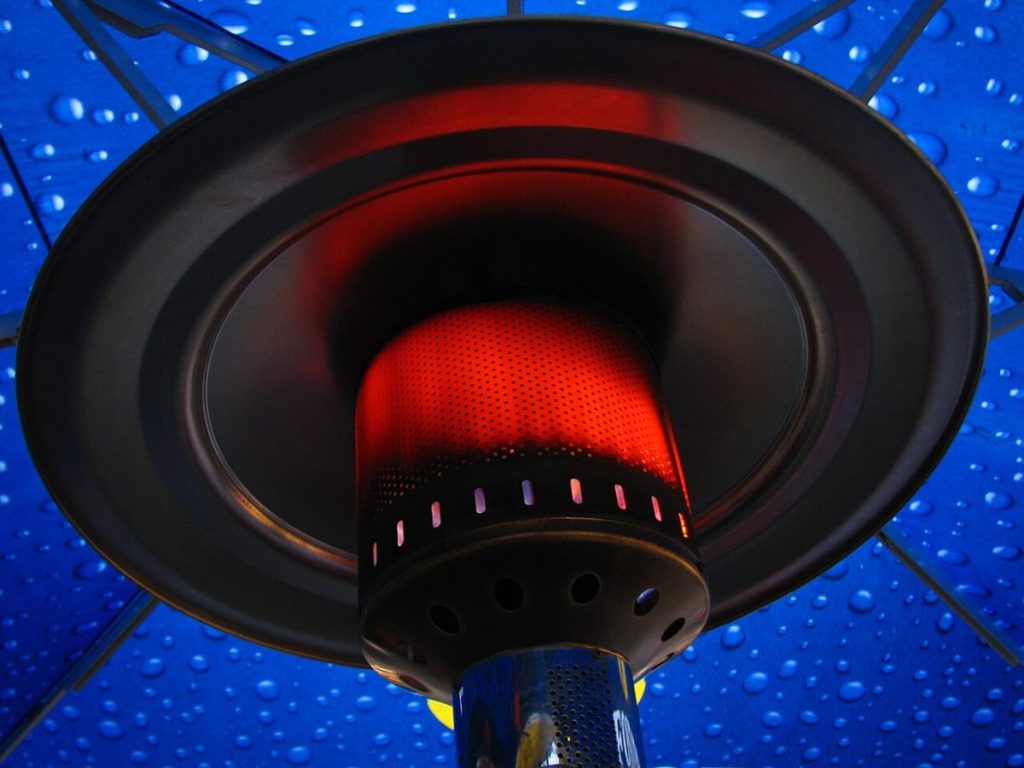
Restaurant patio heaters let you keep outdoor seats earning through autumn and winter. The main choices are portable propane, fixed natural gas and electric infrared, and the right one depends on your patio, your power supply and, above all, your local fire rules. Get those rules first, then compare running costs.
This guide walks through each type, the safety basics every operator should follow, and a simple way to estimate what heaters will cost to run.
Key facts
- The three common types are portable propane, fixed natural gas and electric infrared.
- NFPA guidance says to keep anything at least three feet from heating equipment and turn heaters off when an area is not monitored.
- Propane cylinders should never be stored or used indoors; check your fire marshal’s rules for spare-cylinder storage.
- Fuel-burning heaters need open air. In tents or enclosed patios, follow local rules and the manufacturer’s limits.
- Running cost depends on the heater’s rating and your fuel or electricity price; the rating plate gives you the number to work from.
What types of patio heaters do restaurants use?
Portable propane heaters
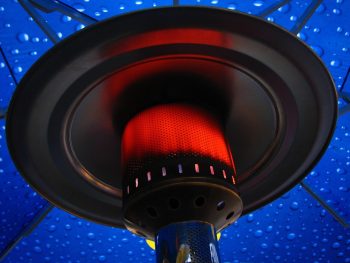
The familiar mushroom-top tower or pyramid flame heater, running on a cylinder in the base. They need no installation and can move with your layout. The trade-offs are cylinder logistics, storage rules and refuelling during service.
Fixed natural gas heaters
Wall, ceiling or post-mounted units piped to your gas supply. Higher upfront cost and a licensed installer, but no cylinders to swap. They suit patios used most of the year in the same layout.
Electric infrared heaters
Mounted under awnings, on walls or on poles. Infrared heats people and surfaces rather than air, so it works well in covered areas and is often the only option allowed in enclosed spaces. Check that your electrical panel and circuits can carry the load, and use an electrician.
| Type | Upfront cost | Flexibility | Best for |
|---|---|---|---|
| Portable propane | Low | High | Open patios, changing layouts, seasonal use |
| Natural gas | Medium to high | Low | Year-round patios with fixed seating |
| Electric infrared | Medium | Medium | Covered or enclosed areas, under awnings |
What safety rules apply to patio heaters?
Fire departments regulate outdoor heaters because they combine open flame or high heat with crowds, canopies and fuel. The NFPA outdoor heaters fact sheet sets out the basics for businesses. Your local code may add more.
- Clearance. Keep anything that can burn at least three feet from heating equipment, and follow any larger clearance in the manual, especially to umbrellas, awnings and decorations.
- Supervision. Turn heaters off when the area is not monitored or occupied, including between seatings and at close.
- Exits. Do not place heaters or cylinders in exit paths or where they block access for firefighters.
- Stability. Use heaters with tip-over shutoff, on level ground, out of main walkways. Anchor or weight them if your manual says to.
- Cylinders. Never store propane cylinders inside the building. Keep spares outdoors, upright and secured, in the location and quantity your fire marshal allows.
- Inspection. Check hoses and connections at the start of the season and after any knock. A soapy-water test shows leaks.
Tents and enclosed patios
Fuel-burning heaters produce carbon monoxide and need open air. Many jurisdictions restrict or ban them inside tents and enclosed structures, or set rules for how open the sides must be. If your patio has walls or a cover, check with the fire marshal before using any gas heater, and consider electric infrared instead.
Permits
Some cities require a permit or inspection for outdoor heaters, especially on sidewalk cafes. Ask before the season, not after a complaint. Keep the manual and any permit on site for inspectors.
How much do patio heaters cost to run?
You do not need a supplier’s estimate. The rating plate on the heater tells you how much energy it uses, and your bills tell you what you pay for it.
Propane
Propane heaters are rated in BTU per hour. The US Energy Information Administration lists the heat content of propane at about 91,450 BTU per gallon. So the gallons a heater burns per hour at full output are its BTU rating divided by that figure.
- Find the BTU per hour rating on the plate. Say it is 40,000.
- Divide by 91,450 to get gallons per hour: about 0.44.
- Multiply by what you pay per gallon of propane, from your supplier’s invoice.
- Multiply by the hours the heater runs in a typical night.
Run heaters on a lower setting when you can; the full rating is the worst case.
Electric infrared
Electric heaters are rated in watts or kilowatts. Cost per hour is kilowatts times your electricity rate per kWh. A 3 kW heater on for five hours uses 15 kWh. Check whether your utility charges demand fees that make heavy evening loads more expensive.
Natural gas
Your gas bill is in therms or cubic feet. One therm is 100,000 BTU, so a heater’s hourly therm use is its BTU rating divided by 100,000. Multiply by your price per therm.
How many heaters do you need?
Manufacturers state a heating area per unit; treat it as a guide for still air. Wind carries heat away, so exposed patios need more units or windbreaks. Start by heating the tables guests ask for first, watch which seats stay empty on cold nights, and add from there. Placing heaters between tables, rather than at the edge, puts more of the heat where people sit.
Making the patio pay in winter
- Price for it. Some operators add a small charge for heated or covered seats, or put heated seats on the reservation system as their own table type.
- Offer blankets, and launder them like linens.
- Shorten the patio menu to dishes that hold their heat on the walk out.
- Train staff to turn heaters on before seating and off when tables clear.
Think of heaters as equipment, with an owner, a checklist and a maintenance log, the same as your walk-in cooler. Our holiday staffing checklist covers the people side of the busy season.
Ask the fire marshal first, then the supplier. The rules decide which heater you can use.
More guides are in our kitchen and equipment section.
Frequently asked questions
Are propane patio heaters allowed at restaurants?
Usually, yes, but rules are set locally. Many fire departments require permits or inspections, limit where heaters and spare cylinders can go, and set clearances from exits and combustibles. Call your fire marshal before buying.
Can I use a propane heater inside a tent or enclosed patio?
Only where the manufacturer and your local authority allow it. Fuel-burning heaters need ventilation, and many jurisdictions restrict them in tents and enclosed structures. Electric heaters are often the simpler option for enclosed spaces.
How far should patio heaters be from tables and walls?
NFPA guidance is to keep anything at least three feet from heating equipment. Check the clearances in your heater’s manual too, especially to overhead canopies and umbrellas.
Which is cheaper to run, gas or electric?
It depends on local prices and the heater’s rating. Work out cost per hour from the rating plate: BTU per hour divided by the BTU content of your fuel, times your fuel price, or kilowatts times your electricity rate.
Where should I store spare propane cylinders?
Outdoors, upright, away from exits and heat, and in line with your fire marshal’s rules. Never store cylinders inside the building, including overnight.
The short version
Pick the heater type that suits your patio and your local rules: propane for flexibility, natural gas for fixed high-use spaces, electric infrared for covered or enclosed areas. Get the fire marshal’s sign-off first, keep three feet of clearance, store cylinders outside, and work out running costs from the rating plate before you decide how many to buy.
Featured photo: Patio heater – 2008-12-23 (4890055491) by CGP Grey, BY 2.0.