Good walk-in cooler maintenance comes down to a handful of habits: keep the door shut, leave room for air to move, clean the coils, hold food at 41°F or below, watch for ice, and replace worn gaskets. Most expensive walk-in failures trace back to one of those being skipped for months.
Refrigeration runs around the clock, so small leaks in cold air turn into large bills and, eventually, a compressor that gives out on a Saturday night. The trouble is that many kitchen habits feel sensible and are quietly wrong.
Below are six common myths, what the guidance from ENERGY STAR and the FDA actually says, and what to do instead.
Key takeaways
- ENERGY STAR advises that walk-in doors are never propped open and recommends automatic door closers and strip curtains.
- Overloading blocks airflow. The evaporator should never be covered by boxes or packaging.
- Clean evaporator and condenser coils on a schedule. ENERGY STAR suggests six-month service intervals for walk-ins.
- The FDA Food Code cold-holding limit is 41°F (5°C) or below. Set the unit to hold that, and verify with a thermometer.
- Heavy ice, worn gaskets and hot food loaded straight in are all signs of a walk-in working harder than it should.
| Myth | Fact |
|---|---|
| Propping the door for a delivery is harmless | Every open minute lets warm air in; use closers and strip curtains |
| A packed walk-in holds cold better | Blocked airflow creates warm spots and makes the unit work harder |
| Coils only need a tech when something breaks | Dirty coils cut efficiency; clean them on a schedule |
| Colder is always safer | Hold at 41°F or below, but freezing produce and dairy wastes food |
| Some ice on the evaporator is normal | Heavy ice blocks heat transfer; check defrost and door seals |
| If the door shuts, the gasket is fine | Torn or flattened gaskets leak cold air all day |
Myth 1: A propped door for a few minutes is harmless
The myth: wedging the door open while you unload a delivery or restock the line saves time and does no real harm.
The fact: the ENERGY STAR Guide for Cafés, Restaurants, and Commercial Kitchens tells operators to ensure doors are not propped open and to use automatic door closers. It also recommends adding strip curtains or plastic swing doors to walk-in refrigerators and freezers. Warm, humid kitchen air rushes in whenever the door is open, and the unit has to remove both the heat and the moisture.
What to do instead
- Stage deliveries on a cart outside the walk-in, then load in one or two trips.
- Fit or repair the automatic closer so the door swings shut on its own.
- Hang strip curtains and replace missing or cloudy strips so staff can see through them.
- Make “door shut” part of every station’s opening and closing routine.
Myth 2: A full walk-in is an efficient walk-in
The myth: a fully packed walk-in holds its temperature better because the cold product acts as a thermal battery.
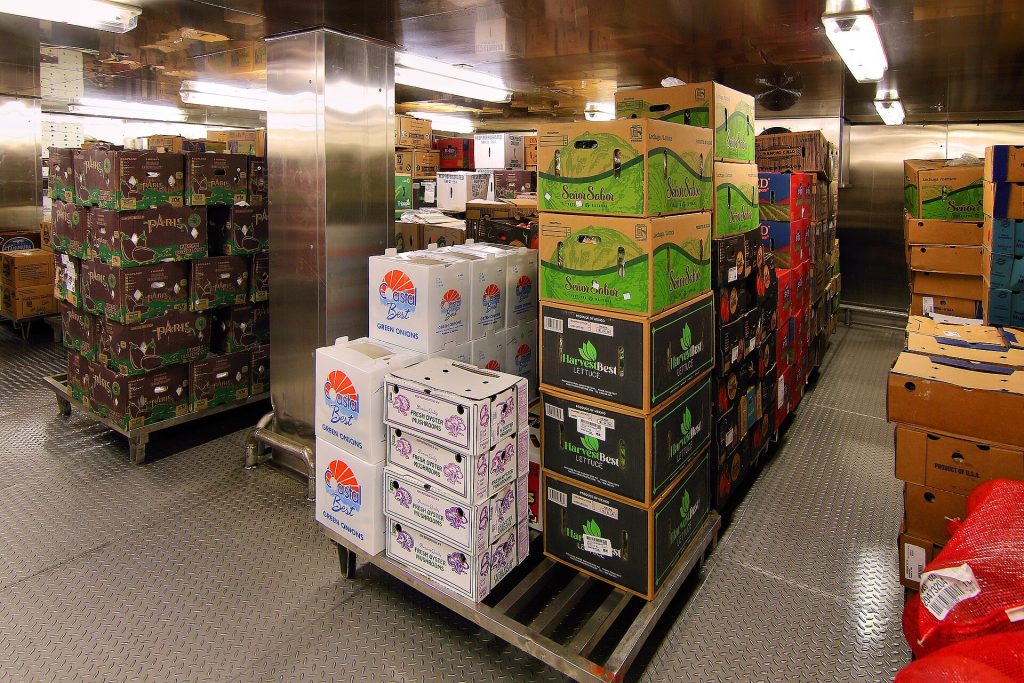
The fact: ENERGY STAR’s guide asks operators to ensure adequate airflow around the unit and the evaporator, and to confirm the evaporator is not blocked by product packaging. When cases are stacked against the walls and up to the fan, cold air cannot circulate. You get warm pockets near the door and the top shelves, even while the thermometer by the evaporator looks fine.
- Keep a gap between product and the walls, and leave clear space in front of and below the evaporator fans.
- Use slotted shelving rather than stacking cases on the floor.
- Order to par so the walk-in is not used as overflow storage for a whole week of product.
A walk-in is a machine for moving air. Block the air and you have an expensive insulated closet.
Myth 3: Coils only need attention when something breaks
The myth: coils are the refrigeration tech’s job, and they only need attention when the box stops holding temperature.
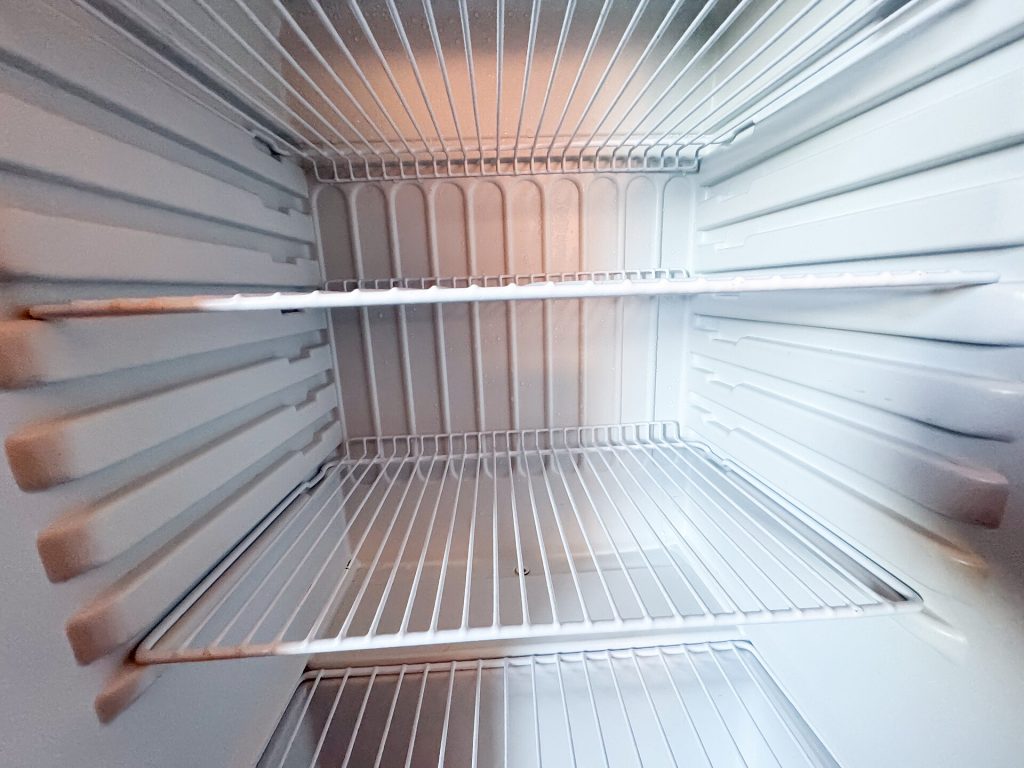
The fact: ENERGY STAR lists cleaning evaporator and condenser coils as routine maintenance, and its guidance on reducing refrigeration energy costs suggests six-month intervals for both evaporators and condensers on walk-ins, along with electrical and mechanical testing and general tune-ups. Grease and dust on the condenser make the compressor run longer to reject the same amount of heat.
A practical split
- Staff: keep the area around the condensing unit clear of boxes and debris, and report unusual noise or short cycling.
- Contractor: clean coils, check refrigerant charge and test electrical components on a set schedule, and log each visit.
If your condensing unit sits near the kitchen exhaust or on a greasy roof, it will need attention more often. Put the service dates in the same calendar as your hood cleaning schedule.
Myth 4: Colder is always safer
The myth: the colder you set the walk-in, the safer the food, so crank it down.
The fact: the FDA Food Code requires cold-held foods that need temperature control for safety to be kept at 41°F (5°C) or less, under section 3-501.16, as the FDA explains in its guidance on cut leafy greens. Below that, you gain little safety and start losing product. Lettuce, herbs, soft cheeses and some sauces suffer if they freeze near the evaporator.
- Set the unit so product, not just air, holds at or below 41°F.
- Check with a probe thermometer in product on different shelves, not only the wall dial.
- Keep delicate produce away from the evaporator discharge where air is coldest.
The related habit: loading hot food
Putting a stockpot of hot soup straight into the walk-in is not a shortcut. The FDA guidance on cooling cooked foods describes a two-stage process: from 135°F to 70°F within two hours, then to 41°F or less within a further four hours. Use ice baths, ice wands and shallow pans for that first stage so the walk-in is holding food cold, not doing the cooling for you.
Myth 5: A little ice on the evaporator is normal
The myth: a coat of frost or ice on the evaporator is just what cold boxes do.
The fact: a light frost that clears during each defrost cycle is normal. Thick ice that builds up is not. It insulates the coil, cuts airflow and makes the unit run longer. ENERGY STAR’s guide lists setting defrost timers as part of routine refrigeration maintenance.
- Look at the evaporator during your weekly check. If ice is growing week to week, call for service.
- Check the door and gaskets first. Humid air leaking in is a common source of the moisture that turns into ice.
- Never chip ice off coils with a knife or scraper. Damaged fins and punctured tubes are costly repairs.
Myth 6: If the door closes, the gasket is fine
The myth: if the door latches, the seal must be fine.
The fact: ENERGY STAR’s restaurant guide tells operators to check and replace door gaskets and to replace worn ones. A gasket can be torn at the bottom corner or flattened along the hinge side and still let the door latch. Cold air leaks out of that gap all day.
A quick gasket test
- Close the door on a strip of paper at several points around the frame.
- Pull it out. You should feel resistance at every point.
- Where it slides out easily, look for a tear, a flattened section or a door that has dropped on its hinges.
- Also check the door sweep at the bottom and the heater wire on freezer doors if you have one.
Gaskets are cheap compared with the energy they save. More guides on keeping equipment running are in our kitchen equipment section.
FAQ
What temperature should a restaurant walk-in cooler be?
Cold-held food must stay at 41°F (5°C) or below under the FDA Food Code. Set the unit so product holds at that temperature, and check it with a probe thermometer.
How often should walk-in coils be cleaned?
ENERGY STAR suggests six-month service intervals for walk-in evaporators and condensers. Kitchens with grease or dust near the condenser may need more frequent cleaning.
Are strip curtains worth it?
Yes, for most busy kitchens. ENERGY STAR recommends strip curtains or plastic swing doors on walk-ins to limit warm air entering when the door is open.
Why is ice building up in my walk-in?
Common causes include doors left open, leaking gaskets and defrost problems. Heavy ice needs a service call, not a scraper.
A 10-minute weekly walk-in check
Pick one day a week and have a manager run this list: door closes on its own, strip curtain intact, gasket paper test passed, evaporator free of heavy ice, fans and walls clear of product, and a probe reading at or below 41°F on the top shelf near the door. Log the results. When something fails twice, book the service call. For the food safety side of the same routine, see our guide to keeping temperature logs.
Featured photo: Refrigerator Harmony of the Seas 2026 by Larry D. Moore, BY 4.0.