To negotiate with food suppliers well, you need three things before you pick up the phone: an accurate record of what you buy and what you have paid for it, at least one genuinely comparable competing quote, and a clear list of what you want besides a lower price. Payment terms, delivery days, order minimums and price-lock clauses often matter as much as the number on the case.
Most operators skip the preparation and go straight to asking for a discount. The rep says they will see what they can do, a few items drop for a month, and everything drifts back. The steps below are built to avoid that pattern.
This is a how-to for owners and managers of independent restaurants and small groups. It names no distributors and promises no savings figure, because what you can win depends on your volume, your market and how disciplined your buying already is.
Key takeaways
- Pull 8 to 12 weeks of invoices and rank items by spend before any conversation; your top 20 or so lines drive most of the bill.
- Compare quotes line by line on the same spec, pack size and brand tier, or the comparison is meaningless.
- Terms, delivery days, minimums, fuel surcharges and rebates are all negotiable, and some cost the supplier less than a price cut.
- Get price locks, notice periods and substitution rules in writing, with a named review date.
- Review your core list on a fixed cadence and treat the rep as a partner, not an opponent.
In this guide
- Step 1: Know your usage and price history
- Step 2: Get competing quotes you can actually compare
- Step 3: Work the levers beyond unit price
- Step 4: Put the deal in writing
- Step 5: Set a review cadence and stick to it
- Step 6: Keep the relationship worth keeping
- FAQ
- Your first move this week
Step 1: Know your usage and price history
Your leverage starts with data the supplier already has and you probably do not have in one place. Gather your last 8 to 12 weeks of invoices, or export them if your distributor offers an online ordering portal, and put them in a single sheet.
- List every item you bought with its pack size, unit price and quantity per week.
- Sort by total spend. In most kitchens a small group of proteins, dairy, oil, paper and a few produce staples account for the bulk of the bill.
- Mark each item’s price on each invoice date, so you can see how often it moved and by how much.
- Flag anything you buy from more than one vendor, and anything where the invoice price differed from the price you were quoted.
Then look outward. The USDA’s Food Price Outlook publishes monthly forecasts for retail and wholesale food prices by category, which tells you whether a supplier’s increase on, say, beef or eggs matches the broader market. For produce, meat, dairy and eggs, USDA Market News issues free wholesale price reports you can use as a reference point when a rep says the market is up.
Walk in with your own numbers and the conversation is about facts. Walk in without them and it is about goodwill.
Step 2: Get competing quotes you can actually compare
A competing quote only helps if it is truly comparable. Suppliers know operators often compare a premium brand against a value label, or a 40-pound case against a 10-pound one, and draw the wrong conclusion.
Build an order guide for bidding
Take your top 20 to 30 items by spend and write a short spec for each: product, grade or brand tier, pack size, and expected weekly volume. Send the same list to two or three suppliers, including your current one, and ask them to price it as written. Ask each to note any substitution they are proposing rather than swapping silently.
Read the quote like an accountant
- Convert everything to a cost per usable unit: per pound, per portion or per each.
- Add delivery fees, fuel surcharges and small-order charges to the total, not just the item prices.
- Check how long the quoted prices are valid. A quote that expires in a week is a sales tool, not an offer.
- Note which items are market-priced and will move weekly.
Once you have the numbers, go back to your current supplier first. Share the lines where you are being beaten, without naming the competitor if you prefer. Many reps would rather adjust a handful of items than lose the account, and switching vendors has real costs of its own: new order cut-offs, new reps, new credit applications, and a learning curve for your team.

Step 3: Work the levers beyond unit price
Unit price is only one line in a deal. Several other terms cost the supplier relatively little but make a real difference to your cash flow and labour. Decide in advance which two or three matter most to you, so you can trade rather than just ask.
| Lever | What to ask for | Why it matters to you |
|---|---|---|
| Payment terms | Longer terms, such as moving from weekly to biweekly settlement | Keeps cash in the business between deliveries |
| Delivery days | Days that match your prep and receiving schedule | Fresher product and fewer rushed check-ins |
| Order minimums | A lower minimum, or a waived fee on one light day a week | Lets you order to par instead of padding orders |
| Fees and surcharges | Removal or a cap on fuel and small-drop charges | These add up quietly across a year of invoices |
| Rebates and volume tiers | Written thresholds for committed categories | Rewards the loyalty you are already giving |
| Credits and returns | A clear process for shorts, damages and temperature rejections | Stops you paying for product you refused |
| Substitutions | No substitutions without approval, or an approved list | Protects recipes, costing and allergen control |
Bundle your asks. Offering to consolidate a category such as paper and chemicals with one supplier, in exchange for a better price on proteins, gives the rep something to take to their manager.
Step 4: Put the deal in writing
Verbal promises disappear when reps change, and reps change often. Once you reach agreement, ask for a short written summary or a formal agreement that covers the points below.
- Price locks: which items are fixed, for how long, and what happens at the end of the term.
- Cost-plus or market items: how the price is calculated and what published reference it follows.
- Notice period: how many days’ warning you get before a price increase on locked or contract items.
- Substitution rule: whether the supplier may substitute, and whether the substitute must be equal or better at the same price.
- Credit process: how and when shorts, damaged goods and rejected deliveries are credited.
- Term and exit: the length of the agreement, any volume commitment, and how either side can end it.
If a clause is new to you, or the agreement ties you to large minimum volumes, have it read by someone who handles contracts before you sign. A cheap price is worth little if the exit terms trap you.
Step 5: Set a review cadence and stick to it
Negotiation is not a one-off event. Prices drift, invoices creep, and agreed terms get forgotten unless someone checks. Put a simple rhythm in the calendar.
- Every delivery: check invoice prices against your agreed price list for your top items, and log any mismatch.
- Monthly: review the top 20 items by spend and note any increase over the agreed price.
- Quarterly: sit down with the rep to go over price changes, service issues and upcoming menu changes.
- Annually: rebid your core order guide, even if you expect to stay with the same supplier.
Regular review also helps your food cost work. Controlling food cost depends on knowing what you actually paid, and a consistent inventory count shows whether better prices are reaching the plate or leaking through waste.
Step 6: Keep the relationship worth keeping
The best supplier relationships survive tough negotiations because both sides are straight with each other. You will need favours at some point: an emergency delivery, a hard-to-find item, a credit on a bad case. Those favours come faster to customers who are easy to work with.
- Pay on time, every time. It is the strongest bargaining chip you have.
- Place orders before the cut-off and keep your receiving area clear for the driver.
- Tell your rep about menu changes early, so they can source and price new items.
- Be honest about competing quotes. Inventing a lower number damages trust once it is found out.
For more on choosing and managing vendors, browse our supplier guides.
FAQ
How often should a restaurant renegotiate with suppliers?
Review prices on your top items monthly, meet your rep quarterly, and rebid your core order guide once a year. Renegotiate sooner if you see repeated unexplained increases or service problems.
Is it worth switching suppliers for a lower price?
Only if the saving holds up after fees, minimums, delivery schedule and service are counted. Switching has costs, so use the competing quote to improve your current deal first.
What should I ask for besides a lower price?
Better payment terms, delivery days that suit your prep, lower minimums, capped surcharges, written rebates, a clear credit process and a rule on substitutions.
Can a small restaurant negotiate at all?
Yes. Smaller accounts have less volume leverage, but clean data, reliable payment and a willingness to consolidate a category still give a rep reasons to improve the offer.
Your first move this week
Start with the data. This week, pull your last two months of invoices, rank your items by spend, and write specs for the top 20. That single sheet is the basis for every quote, every conversation and every review that follows, and it will show you where to push first.
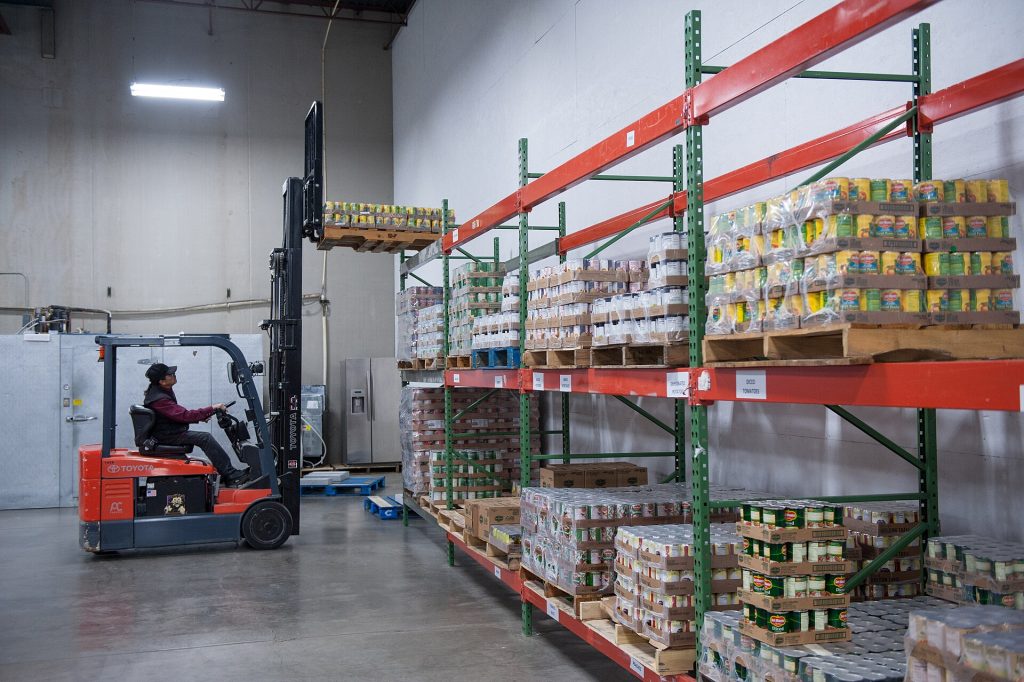
Featured photo: Food Distribution and Nutrition Training with Spirit Lake Tribe North Dakota (20161129-FNS-DH-0039) by USDAgov, CC0.