The two-stage cooling rule says cooked food held hot has to come down fast in two steps: from 135°F to 70°F within 2 hours, then from 70°F to 41°F or below within the next 4 hours. That is six hours total, but the first two are the ones that count most, because that is where the food passes through the warmest part of the danger zone.
The rule comes from the FDA Food Code, which state and local regulators use as the model for their own food rules. FDA’s own employee guide, Cooling Cooked Time/Temperature Control for Safety Foods, spells out both stages. Your local code decides what the inspector actually enforces, so check it, but the numbers are the same in most jurisdictions.
Below: what the rule says, the cooling methods that work, how to log it, and what to do when a batch misses.
Key takeaways
- Stage one: 135°F to 70°F within 2 hours. Stage two: 70°F to 41°F or less within the following 4 hours.
- Big, deep batches are the usual failure. Divide, spread thin and use metal pans.
- Ice baths, ice paddles, adding ice as an ingredient and rapid-cooling equipment all help.
- Log the start time and temperature, then check at least hourly.
- Know your corrective action for a missed stage before it happens.
What the rule actually says
FDA’s guide describes cooling cooked time/temperature control for safety (TCS) food as a two-step process:
- A two-hour “rapid cool” from 135°F to 70°F (57°C to 21°C).
- Over the next 4 hours, from 70°F to 41°F (5°C) or less.
The stages are cumulative. If a batch hits 70°F in 90 minutes, you do not gain an extra 30 minutes for stage two. Some jurisdictions state the second stage as a total of six hours from 135°F, as Washington’s food code does. Either way, the clock starts when the food drops below 135°F.
A separate, simpler rule covers food made from ingredients at room temperature, such as reconstituted foods or canned tuna. Washington’s version, for example, requires those to reach 41°F or less within four hours.
What changed in the 2026 Food Code
FDA released the 2026 Food Code in September 2026. The summary of changes lists no amendment to the cooling time and temperature section. It does amend the cooling methods section, adding one more cooling method option and a new paragraph that lets the regulatory authority approve an alternative cooling method. Your state will adopt those changes on its own timeline.
Why stage one is the one that trips kitchens up
Heat leaves food slowly from the centre. A full stockpot of chili or a deep hotel pan of braised short rib can sit well above 70°F for hours in a walk-in, even though the outside feels cold. Stack a few of those together and they warm the walk-in and everything else in it.
A walk-in cooler is built to hold cold food cold, not to pull the heat out of a 20-quart stockpot.
The common culprits are the same everywhere: stocks, soups, sauces, chili, rice, beans, braises and large roasts. If a product is dense and made in volume, assume it needs active cooling.
The fix is to plan cooling at the same time you plan the batch. If the recipe card says 20 quarts, it should also say how those 20 quarts get cooled: split into how many pans, into which ice bath, and who checks the first reading.
Cooling methods that work
FDA’s guide lists shallow pans, smaller or thinner portions, rapid cooling equipment, stirring in an ice water bath, containers that help heat transfer, and adding ice as an ingredient. Here is how each plays out on the line.
| Method | Best for | How to do it well |
|---|---|---|
| Shallow pans | Braises, rice, beans, mashed potatoes | Spread in a layer 2 inches or less, in metal pans, loosely covered or uncovered |
| Ice water bath | Stocks, soups, sauces | Set the pot in a sink or bath of ice and a little water, and stir often |
| Ice paddles (ice wands) | Large pots of liquid | Freeze filled paddles ahead, stir them through the product, sanitise between uses |
| Ice as an ingredient | Soups, stocks, sauces | Hold back some water in the recipe and add ice to make up the volume |
| Rapid cooling equipment (blast chiller) | High-volume batch cooking | Load uncovered or loosely covered, don’t overfill, and still probe the centre |
| Portioning | Roasts, large cuts | Cut into smaller pieces before cooling |
Pan depth and material
Washington’s code, which follows the Food Code model, allows cooling uncovered in a shallow layer of two inches or less in equipment holding 41°F or below. Use that 2-inch figure as your house standard, and pick metal pans over plastic so heat moves out through the container walls, as FDA’s guide asks.
Airflow
FDA says containers should be arranged for maximum heat transfer through the walls, and loosely covered or uncovered if protected from overhead contamination. In practice: top shelf, space between pans, never stacked.
If you are still deciding whether a blast chiller is worth the money, our kitchen equipment guides cover what to weigh up.
How to log cooling
A cooling log is your proof. The Southern Nevada Health District’s cooling log is a good model: date, food, start time and temperature, readings at each hour up to six, a yes/no for hitting 70°F at two hours and 41°F at six, corrective actions, who recorded it, and a person-in-charge review.
- Start the clock when the food drops below 135°F, not when it goes in the walk-in.
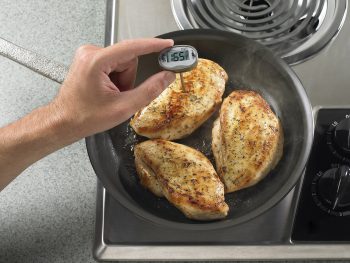
- Probe the thickest part or the centre of the pan, with a calibrated thermometer.
- Take readings at least hourly. More often in stage one gives you time to intervene.
- Set a phone timer or kitchen timer for each batch so checks don’t get missed during service.
- Have the manager review and initial the log every shift.
If you already use digital probes for temperature logging, add cooling as its own task so readings are time-stamped automatically.
When a batch misses
Southern Nevada’s instructions are typical: if food is above 70°F at two hours, reheat it to 165°F and start over, or discard it, and reheating can only be done once. If total cooling time goes past six hours, the food must be discarded. Your local rules may differ in detail, so confirm with your health department and write the answer on the log itself.
Then fix the cause. A repeat miss on the same item usually means the batch is too big, the pans are too deep, or the product went into the walk-in without active cooling first.
FAQ
Does the two-stage cooling rule apply to every food?
It applies to cooked TCS food. Food prepared from room-temperature ingredients, such as canned tuna salad, typically follows a single four-hour rule to 41°F instead.
Can I put hot food straight into the walk-in?
Only if it will still meet both stages. Large or dense batches usually need an ice bath, paddles or shallow pans first.
Do I need a written cooling log?
Requirements vary by jurisdiction, but a log is the simplest way to show an inspector the rule was met. Many health departments publish free templates.
Is a blast chiller required?
No. It is one option among several. Plenty of kitchens meet the rule with ice baths, paddles and shallow metal pans.
Start with tonight’s batch
Pick the largest item you cook ahead, usually a stock, sauce or braise, and log it hour by hour tonight. If it doesn’t reach 70°F in two hours, change one thing: split it, go shallower, or add an ice bath. Repeat until it passes comfortably, then write the method into the recipe card and train it into your food safety training.
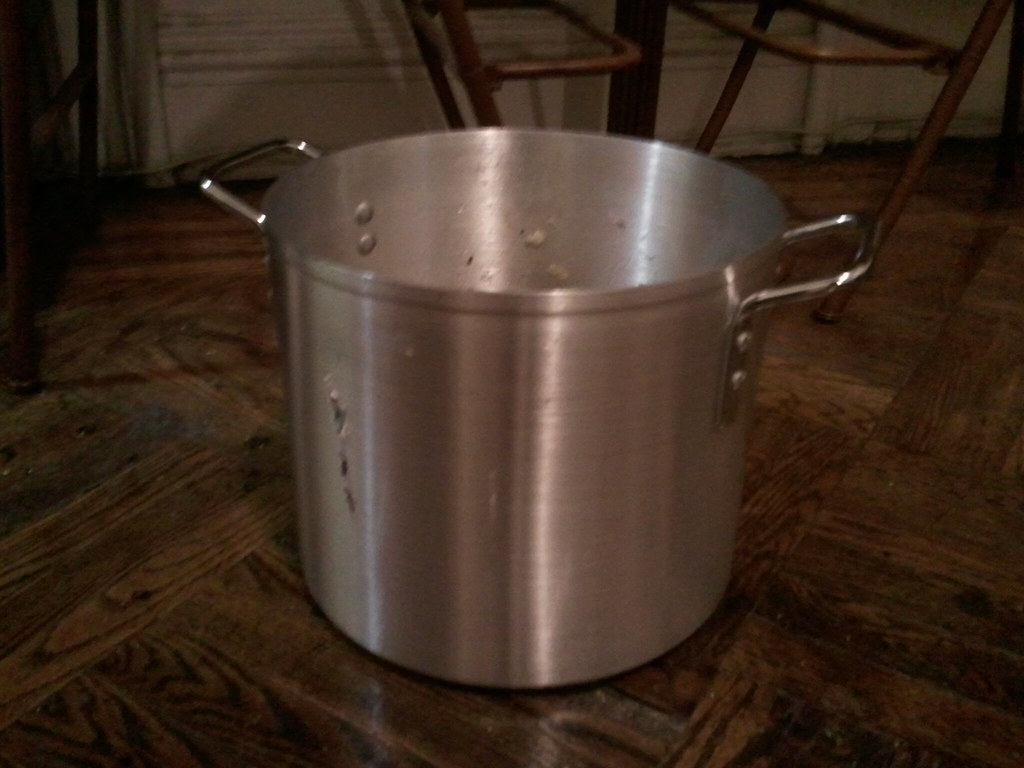
Featured photo: Stock Pot! by TheFoodGroupie, BY-SA 2.0.