Dinner often slows down before the heat goes on. The cutting board is occupied, an ingredient is still unopened, and the pan you need is at the back of a cabinet. Once cooking begins, those small delays become harder to manage.
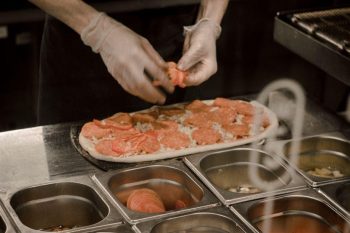
Restaurant prep stations offer useful lessons for this situation. Their organization gives ingredients, tools, and unfinished work clear places. A home cook can borrow that logic on a smaller scale, using ordinary household equipment and portions.
Read the meal as a sequence of jobs
Before taking ingredients out, read the whole recipe. Note anything that must thaw, marinate, soften, cool, or cook for a long time. These steps determine when preparation needs to begin.
Then identify dependencies. A sauce cannot be mixed until its ingredients are chopped, but it might be made while vegetables roast. A cold salad can wait in the refrigerator while the main dish finishes. Listing those relationships prevents you from doing every task in the order ingredients happen to appear.
For a simple meal of chicken, vegetables, and a cold side, the sequence might be to prepare the cold side, refrigerate it, cut the vegetables, handle the raw chicken separately, and then start cooking. Final timing depends on the recipe and equipment.
Home portions rarely require dozens of little bowls. Group ingredients that enter the dish together, and leave unnecessary measuring containers in the cupboard. Organization should reduce work across the whole meal, including washing up.
Give each part of the counter a job
A preparation station needs a stable board, tools within reach, and somewhere for ready ingredients. It also needs a place for scraps and packaging so those do not spread across the work surface.
Keep ready-to-eat foods away from raw meat, poultry, seafood, and their utensils. Clean and sanitize appropriately between tasks. A neat arrangement is useful, but it does not replace safe food handling.
Place frequently used tools where you can reach them without crossing the cooking area. A spoon rest beside the stove and a clear landing space for a hot tray may prevent more interruptions than a drawer full of specialized gadgets.
In a shared kitchen, tell the other cook what each area is doing. “Prepared vegetables here, used utensils there” is a simple instruction that prevents someone from accidentally moving unfinished work into a clean zone.
Match the equipment to the batch
Restaurant kitchens select equipment for particular jobs and volumes. At home, the same principle means checking the shape and amount of food before choosing how to cook it.
An air fryer toaster oven combo may suit a recipe arranged on a compatible tray, especially when the food benefits from a flat layout. Confirm that the cookware fits the specific model with the required clearance. A compact oven’s capacity is not interchangeable with a full-size range.
For smaller portions, air fryers for everyday cooking offer another format to consider. Basket dimensions, food thickness, and room for air circulation affect how much you can cook at once. A stated volume does not tell you how many pieces will fit in one layer.
Choose equipment you already have when it suits the job. Additional machines only help if the cooking tasks, counter space, and electrical arrangement support them. Household appliances should be used within their intended domestic applications; do not assume they meet commercial kitchen requirements.
Plan around the food that waits poorly
Some parts of a meal can wait; others lose their appeal quickly. A cold dressing can stay refrigerated until needed. A crisp side dish is better scheduled near serving time. Work backward from the most timing-sensitive component.
Use a short written order when several tasks overlap. It might say: set the table, start the main, assemble the cold side, finish the crisp side, check doneness, serve. The note keeps you from relying on memory while cooking.
Do not assign a shared finishing time simply because two foods enter the same appliance. They may need different temperatures or cooking durations. Use appropriate recipes, check progress, and remove each component when ready.
When cooking raw meat or poultry, use the recommended safe internal temperature for that food and measure it correctly. Color, crust, and a timer cannot independently confirm safe doneness.
Reset between stages
A professional habit worth adapting is clearing the station as the work changes. Once chopping is finished, put remaining ingredients away and clear the board. After handling raw food, complete the appropriate cleaning before using the space again.
Use natural pauses rather than trying to wash everything while a delicate cooking step needs attention. During a longer unattended stage permitted by the recipe and appliance instructions, load a few dishes or wipe a preparation surface.
Keep packaging and food scraps out of the serving area. Set clean plates and utensils aside before the last stage of cooking so they do not have to compete with used equipment.
These resets make the final minutes less crowded. They also leave a clearer view of what remains to be done, which is helpful when someone offers to assist.
Keep a useful note for next time
After the meal, record one practical adjustment. Perhaps the vegetables needed two batches, the tray was too small, or a sauce could have been prepared earlier. Specific observations improve the next attempt more than a vague judgment that dinner was stressful.
Repeat the successful sequence before making it more elaborate. Once a meal has a dependable order, small substitutions become easier to manage.
A home kitchen does not need to resemble a restaurant. It benefits from the same basic clarity: ingredients ready for their next step, enough room to work, and a cooking order that brings the meal to the table while it is ready to eat.