A good restaurant closing checklist splits the night into stations, gives each one a short list of checkable tasks, and ends with a manager walking the building and signing off. The food-safety items carry the most risk: hot food cooled on time, everything labeled and dated, and raw proteins stored below ready-to-eat food.
Most closing problems are not mysteries. The walk-in door was left ajar, a stockpot of chili sat on the line until midnight, the back door was never checked. A written list turns those misses into a two-minute review instead of a morning surprise.
Below is a station-by-station list you can copy, trim to your concept, and print for a clipboard at each station.
Key takeaways
- Split closing by station so each person owns a short list rather than one long shared one.
- The FDA Food Code standard for cooked food is 135°F to 70°F within 2 hours, then to 41°F or below within 6 hours total.
- Label and date ready-to-eat food made in house. The Food Code limit is 7 days at 41°F or below.
- Store raw poultry on the bottom shelf and ready-to-eat food on top.
- Finish with a manager walk-through, a signed sheet and a locked building.
In this guide
- Front of house
- Kitchen line and walk-in
- Dish pit and bar
- Office, cash and security
- Manager sign-off
- FAQ
- Put the list to work tonight
Front of house
Front of house closes first and fastest, which is why it is the station most likely to cut corners. Keep the list short and physical: things a manager can see at a glance on the walk-through.
- ☐ Clear, wipe and sanitize all tables, chairs and booth seats, including the undersides of table edges.
- ☐ Wipe and refill salt, pepper, sugar caddies and condiment bottles, then store perishable condiments in the cooler.
- ☐ Roll silverware and restock napkins, menus and kids’ packs for the morning shift.
- ☐ Sweep and mop the dining room, entry and restrooms. Put wet floor signs out until floors are dry.
- ☐ Clean and restock restrooms: soap, paper towels, toilet paper and trash liners.
- ☐ Empty host stand and server station trash, and wipe down POS screens.
- ☐ Check under tables and booths for lost property, then log it.
- ☐ Turn off dining room music, TVs and decorative lighting.
Assign one server as the FOH closer who signs this section. Shared ownership usually means no ownership.
Kitchen line and walk-in
The line is where closing mistakes become food-safety violations. Most US jurisdictions build their rules on the FDA Food Code, the model code the agency publishes for adoption by state and local governments, so the numbers below are a sound default. Your local health department’s version is the one you are inspected against, so check it for any differences.
Cooling hot food
Large batches of soup, rice, beans and braises are the classic end-of-night hazard. The Virginia Department of Agriculture’s cooling guidance, which follows the Food Code, sets out the two-stage standard: from 135°F to 70°F within two hours, and from 70°F to 41°F or colder within an additional four hours.
- ☐ Portion hot food into shallow pans or smaller containers before it goes into the walk-in.
- ☐ Use an ice bath and stir, add ice as an ingredient where the recipe allows, or use a blast chiller if you have one.
- ☐ Don’t cover pans tightly while they cool. Cover and label them once the food reaches 41°F or below.
- ☐ Take and record a temperature at the start of cooling and again at the two-hour mark.
- ☐ If food has not reached 70°F within two hours, follow your health department’s corrective action, which usually means reheating or discarding.
Nothing on the closing list matters more than the stockpot still steaming on the stove at midnight.
Labeling and dating
An FDA inspection form based on the Food Code spells out the date-marking rule: ready-to-eat, time/temperature-control-for-safety food prepared on site, or from an opened commercial container, is discarded if it exceeds 7 days at 41°F or below. Writing the discard date on the label, not just the prep date, saves the closer from doing arithmetic at midnight.
- ☐ Label every prepped item with its name and discard date.
- ☐ Pull and discard anything past its date before stocking tomorrow’s prep.
- ☐ Rotate first in, first out so older product sits in front.
Storage order in the walk-in
The Maryland Department of Health storage chart gives the shelf order from top to bottom: fully cooked and ready-to-eat foods, then raw seafood, then whole cuts of beef and pork, then ground meats and shell eggs, with raw poultry on the bottom shelf. The logic is simple: foods that need the highest cooking temperature go lowest, so drips land on food that will be cooked hotter.
- ☐ Check that raw proteins sit below ready-to-eat food on every shelf and rack.
- ☐ Cover or wrap everything before it goes on the shelf.
- ☐ Confirm cold-holding units read 41°F or below and log the reading.
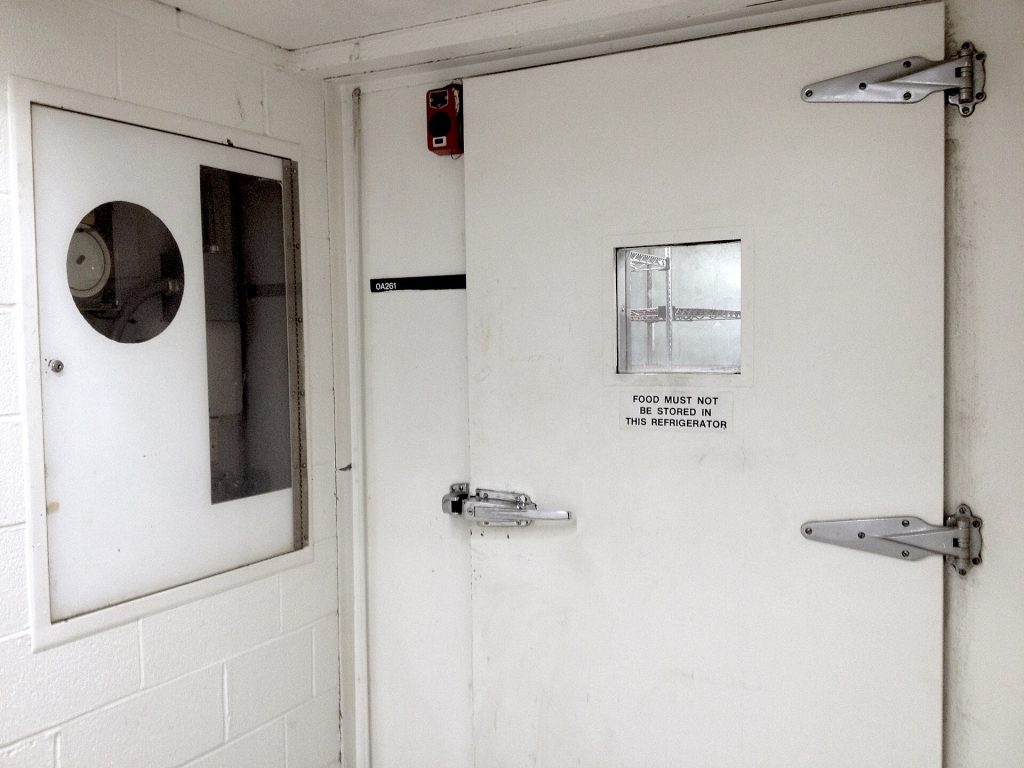
- ☐ Close and latch the walk-in and reach-in doors, and check gaskets are sealing.
Line equipment
- ☐ Turn off fryers, filter or change oil on your schedule, and cover the vats.
- ☐ Scrape and clean the flat-top and grill, and wipe down ranges.
- ☐ Empty, clean and sanitize steam wells, cutting boards and prep sinks.
- ☐ Wipe hood filters as scheduled, and log deep cleans.
- ☐ Confirm every pilot, burner and oven is off, except equipment designed to stay on.
Dish pit and bar
Dish
- ☐ Run the last loads, then drain, clean and delime the dish machine per the manufacturer’s schedule.
- ☐ Check sanitizer levels with test strips during the final loads, and log the reading.
- ☐ Clean the three-compartment sink, drain boards and floor drains.
- ☐ Take out trash and recycling, and rinse the bins.
- ☐ Store clean dishes inverted on clean shelving, off the floor.
Bar
- ☐ Cover or refrigerate fruit garnishes and dairy, and discard anything that won’t hold.
- ☐ Clean and sanitize bar mats, speed rails, blenders and the soda gun nozzle.
- ☐ Wipe and cap liquor bottles, and cover pour spouts.
- ☐ Record inventory counts on high-value bottles if you track them nightly.
- ☐ Restock ice bins and glassware for opening, or empty and clean the ice bin on your schedule.
- ☐ Lock the liquor storage and the beer cooler.
For a deeper routine on keeping these areas inspection-ready, see our food safety guides.
Office, cash and security
The office list protects your money and your building. It should be done by a manager, ideally with a second person present for the cash count.
- ☐ Run end-of-day reports on the POS and reconcile card batches.
- ☐ Count each drawer against the report, record overages and shortages, and have both counters initial the sheet.
- ☐ Prepare the deposit and store it in the safe. Leave only the agreed starting bank in each drawer.
- ☐ Review voids, comps and discounts for anything unusual.
- ☐ Back up or close out the day’s labor and sales data.
- ☐ Check that every exterior door is locked, including the back and delivery doors.
- ☐ Confirm the alarm is armed and exterior lighting is on.
- ☐ Make sure nobody is left in the building, including restrooms, walk-ins and storage rooms.
If cash handling is a recurring headache, our piece on tightening cash controls goes further.
Manager sign-off
A checklist without a sign-off is a suggestion. The last step should be a manager walking the building with the completed station sheets and checking a handful of items in person.
| Area | Manager spot-check | Record |
|---|---|---|
| Kitchen | Cooling food on track, walk-in at 41°F or below, raw below ready-to-eat | Cooling log, temperature log |
| Dish | Sanitizer reading taken, machine drained | Sanitizer log |
| Bar | Garnishes stored, liquor locked | Bar sheet |
| FOH | Floors dry, restrooms stocked, lights off | FOH sheet |
| Office | Deposit in safe, drawers reconciled | Cash sheet, initials |
| Building | Doors locked, alarm set, no one inside | Manager signature and time |
Keep the signed sheets for a few weeks. They are how you spot patterns, like the same cooler running warm every Tuesday, and they give you a record if a health inspector asks about cooling.
FAQ
How long should closing take?
It depends on your size and menu, but splitting duties by station and starting side work before the last seating keeps it predictable. Time your closes for two weeks and trim tasks that can move to opening.
Can I put hot food straight into the walk-in?
You can, but a deep, covered stockpot will cool too slowly and warm everything around it. Divide it into shallow pans or use an ice bath first so it meets the two-stage cooling times.
Does the 7-day date mark apply to everything?
No. It applies to ready-to-eat, time/temperature-control-for-safety food prepared on site or taken from an opened commercial container and held at 41°F or below. Check your local code for the full list and exemptions.
Who should sign the closing checklist?
Each station closer signs their section, and the closing manager signs the whole sheet after the walk-through. Two signatures on the cash count are worth the extra minute.
Put the list to work tonight
Print one sheet per station, tape it inside a sheet protector, and run it for a week before changing anything. Then cut what nobody needed and add what the morning crew keeps finding. Pair it with a matching restaurant opening checklist so each shift hands the next a clean start.
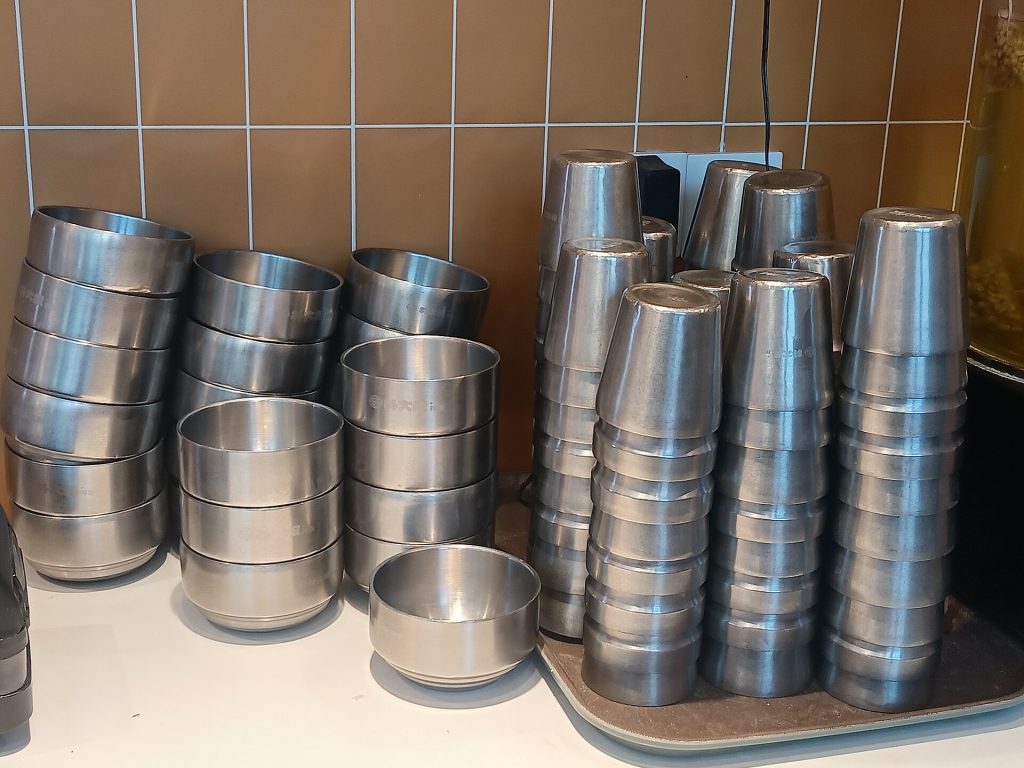
Featured photo: Stacked stainless steel bowls by Fumikas Sagisavas, CC0.