Commercial ice machine cleaning comes down to a simple rule: follow the manufacturer’s schedule for a full clean and sanitize, and inspect the machine often enough that slime, mold and scale never get a head start. For most kitchens that means a short monthly check by your own team and a full deep clean on the interval the manufacturer sets.
It’s easy to forget because ice looks clean. The inside of the bin and the evaporator tell a different story: cold, wet surfaces that sit in the dark are exactly where biofilm grows.
Use this checklist to split the work into what your staff do every month and what gets done at each deep clean, with the warning signs that mean you shouldn’t wait.
Key takeaways
- The FDA Food Code treats ice as food, so ice machines face the same cleanliness standards as other food equipment.
- Clean at the frequency the manufacturer specifies, or often enough to prevent soil or mold building up.
- Cleaning, sanitizing and descaling are separate steps with separate chemicals. Don’t skip any of them.
- A monthly inspection catches slime and scale early; the deep clean follows the manufacturer’s manual.
- Store the scoop properly and never scoop ice with a glass.
Ice is food, so the machine is food equipment
According to Food Safety Magazine, the FDA Food Code defines ice as food, which means it follows the same handling and cleanliness standards as everything else in retail food, including the equipment that makes it. A Florida industry bulletin on ice protection puts it plainly: ice is a ready-to-eat food and must be clean, safe, from an approved source and protected from cross-contamination.
That has practical consequences. Ice has to be made from drinking water, and the same Florida bulletin says ice used as a cooling medium, such as ice around bottles, must also be made from drinking water. Your ice bin is a food storage container, and your scoop is a food utensil.
Cleaning, sanitizing and descaling are three jobs
Staff often use these words interchangeably. They aren’t the same, and each one handles a different problem.
- Cleaning removes soil, slime and biofilm from surfaces, using the manufacturer-approved ice machine cleaner, brushes and clean cloths.
- Sanitizing reduces the microorganisms left on food-contact surfaces after cleaning, using an approved food-contact sanitizer at the concentration on its label.
- Descaling removes mineral deposits (scale) left by hard water, using the manufacturer-approved scale remover run through the machine’s clean cycle.
Order matters. You clean first, because sanitizer can’t reach microbes under a layer of grime, and Food Safety Magazine notes that ice-contact surfaces must be sanitized after each cleaning. It also points out why biofilm deserves respect: Listeria living in a protective biofilm can be 1,000 times harder to eliminate.
How often each task needs doing
The rule on frequency is set out in state food codes adopted from the FDA model. Ohio’s rule, for example, says ice bins and ice makers must be cleaned at a frequency specified by the manufacturer, or, without manufacturer specifications, at a frequency necessary to preclude accumulation of soil or mold. Food Safety Magazine reports that manufacturer schedules typically call for two to four cleanings a year.
Treat that as the floor, not the target. Kitchens with hard water, high heat, yeast from a nearby bakery station or heavy use often need to clean more often. Your local health department’s code is the version that applies to you, so check it.
| Task | Frequency | Who |
|---|---|---|
| Wipe scoop holder, bin door and exterior | Daily | Closing crew |
| Interior inspection and bin wipe-down | Monthly | Kitchen manager |
| Air filter and condenser check (air-cooled units) | Monthly | Kitchen manager |
| Full clean, descale and sanitize | Manufacturer’s interval, or sooner if soil or mold appears | Trained staff or service technician |
| Water filter change | Manufacturer’s interval | Trained staff or service technician |
The monthly checklist
Print this and keep it by the machine. It takes about fifteen minutes and needs no disassembly beyond what the manual allows.
Inside the bin
- ☐ Look under the bin lip and along the door for pink or black slime.
- ☐ Check the ice itself: clear, firm and odour-free.
- ☐ Wipe the bin walls and door gasket with a clean cloth and approved cleaner, then sanitize.
- ☐ Confirm nothing but ice and the scoop has ever been stored in the bin.
Scoop and handling
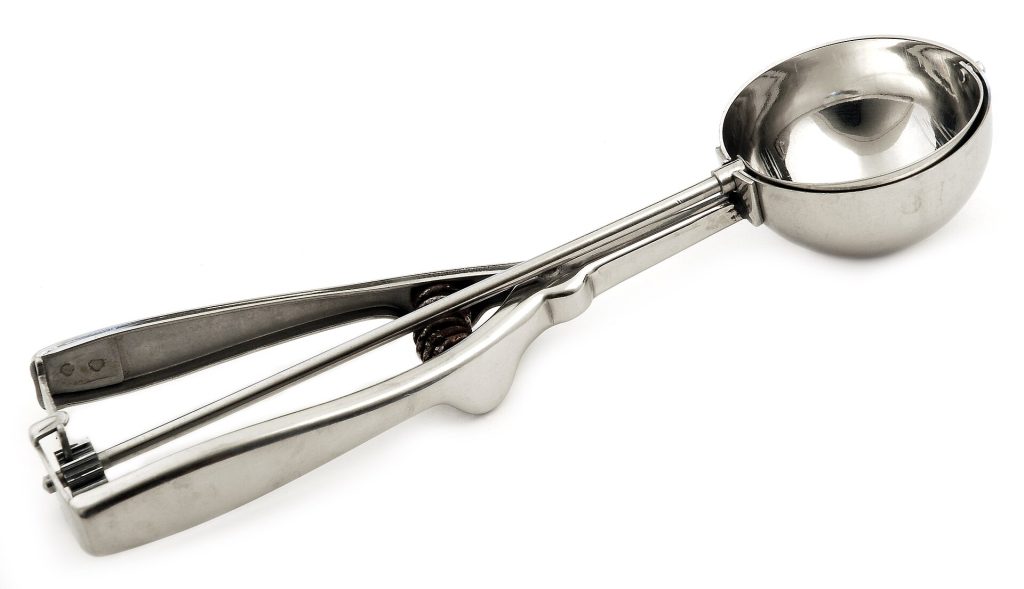
- ☐ Scoop has a handle and is stored on a clean surface or handle-up, as the Florida bulletin describes.
- ☐ Scoop holder is clean and draining.
- ☐ Staff know never to scoop with a glass or bare hands.
Machine and water
- ☐ Water filter date is within the manufacturer’s interval; note the next change date.
- ☐ Air filter is clear of dust and grease (air-cooled units).
- ☐ Drain runs freely with no standing water under the machine.
- ☐ Ice production looks normal for the time of day.
Sign and date the log each month. A dated record shows an inspector that you have a system, and shows you when a problem started.
If you can see slime, you are already late. The monthly check exists so you never see it.
The deep-clean checklist
Follow the manufacturer’s manual for your model, since cleaning cycles and chemical types differ. This checklist covers the steps most machines share.
- ☐ Plan the clean for a quiet period and bag or discard all ice in the bin.
- ☐ Switch the machine to its clean mode or turn it off, per the manual.
- ☐ Remove parts the manual allows: curtain, water trough, distribution tube, bin baffles.
- ☐ Run the descaling solution through the clean cycle using the manufacturer’s recommended product.
- ☐ Scrub removed parts and interior surfaces with the approved cleaner and a soft brush.
- ☐ Rinse everything thoroughly with drinking water.
- ☐ Sanitize all ice-contact surfaces and parts with an approved sanitizer at label concentration.
- ☐ Reassemble, restart and discard the first batch of ice if the manual says to.
- ☐ Replace the water filter if due, and record the date.
- ☐ Log the date, the person and anything unusual you found.
Food Safety Magazine reports manufacturers attributing 70% of ice machine performance problems to the water supply, so treat filtration as part of the clean, not an optional extra. For more on the rest of your line, see our fryer maintenance routine and other kitchen equipment guides.
Signs your machine needs attention now
Don’t wait for the next scheduled clean if you see any of these.
- Pink, orange or black film on the bin, door or curtain. That’s biofilm, and the Florida bulletin tells operators to keep interiors free of mold, mildew and slime.
- White, crusty deposits on the evaporator or water trough. That’s scale, and it slows harvesting.
- Cloudy, soft or small cubes where you used to get clear, full ones.
- Off smells or tastes that guests or staff notice in drinks.
- Falling production or a machine that runs longer to fill the bin.
Any of these belongs in the log and gets a full clean straight away. If the problem returns quickly, call a service technician and ask about water treatment. A clean machine is part of broader kitchen food safety habits that inspectors look for.
FAQ
How often should a commercial ice machine be cleaned?
At the frequency in the manufacturer’s manual, or often enough to prevent soil or mold building up. Manufacturer schedules are commonly two to four times a year, and many kitchens need more.
Is ice really considered food?
Yes. The FDA Food Code defines ice as food, and state codes based on it apply the same handling and equipment rules.
Can I use bleach to clean an ice machine?
Use the cleaner and sanitizer your manufacturer approves. Some chemicals damage evaporator coatings or components, and the wrong product can void a warranty.
What is the pink slime in my ice machine?
It’s a biofilm, a colony of microorganisms growing in a protective layer on wet surfaces. Clean and sanitize the machine and shorten the interval between cleanings.
Put it on the calendar
Find your machine’s manual today, note the manufacturer’s cleaning interval and water filter interval, and put both on the kitchen calendar with a named owner. Then tape this monthly checklist to the machine and start the log this month.
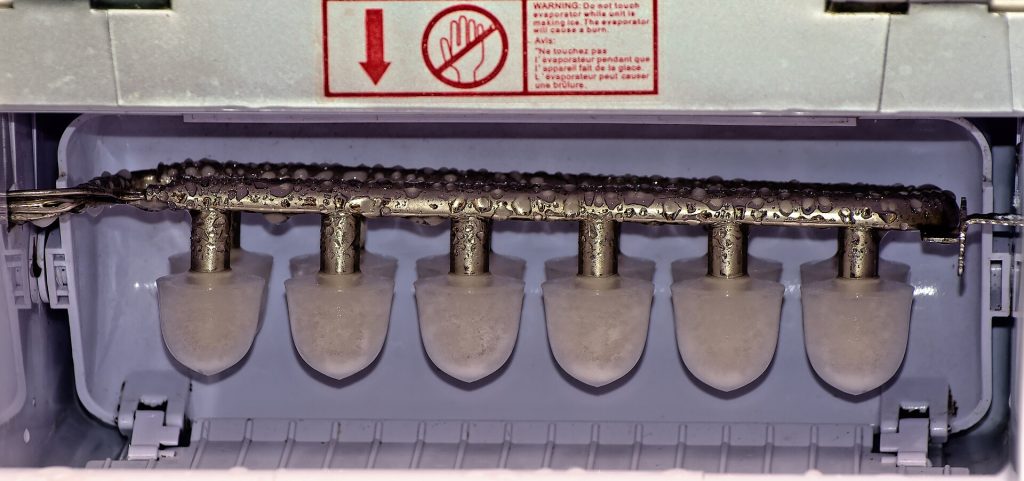
Featured photo: Лёд в льдогенераторе by Pannet, BY-SA 4.0.