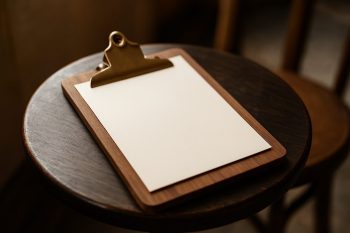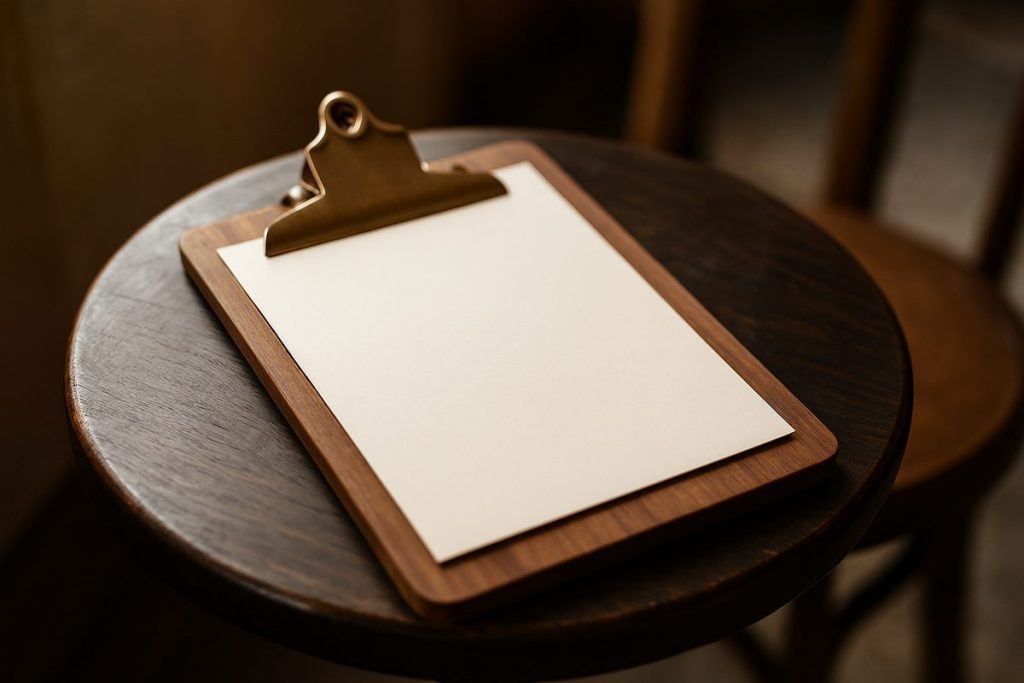
When I talk about menu holders for restaurants, I mean the handheld kind: a rigid wood, leather, or acrylic board or folder that a guest holds to read a printed sheet or a few sheets. A menu holder for restaurant service has to survive the floor, the bar, and the back office, and the choice touches paper costs, service flow, and table look. Compare a holder to laminated sheets or a menu book: laminated sheets are cheap and wipeable but can cloud at the edges and corners can peel, while menu books can protect pages and books with replaceable inserts only need new pages when the menu changes. A handheld board is not automatically better; it earns its place when you want quick page changes on standard paper and a rigid feel without committing to a permanent format.
Station by Station
Different parts of the restaurant damage menus differently. Buy with the specific location in mind.
The Host Stand: Menus stack and get grabbed, dropped, and slid across the counter. Sturdy wood or thick leather usually handles that friction and constant handling well.
Dining Room Tables: Aesthetic matters most. A dark walnut finish suits white tablecloths; a light ash board fits a bright cafe. Keep the size appropriate for the table, because a large board on a small bistro table annoys guests.
The Bar: Moisture, water rings, and syrup are constant. The holder must wipe down easily and resist warping. Sealed wood works, but clear acrylic is often fastest to clean between rounds if staff actually wipe it down.
The Patio: Wind will blow out loose sheets, so test the fastening in typical conditions before buying. Sun is also a factor. UV rays fade printed paper and can crack cheap plastic over a summer.
Counter Service: Store a neat stack near the register or pass holders on a small tray. Keep extra sheets nearby for fast swaps, and do not let holders eat up counter space needed for orders.
Matching Materials to Daily Service
Lacquered Birch Plywood and Ash: The workhorse. Usually light and affordable, and a well-finished board shrugs off everyday knocks. A good choice for high-volume operations where holders get stacked and moved often. A black or white finish on plywood suits casual concepts that want a consistent, modern look at a lower cost.
Walnut and Mahogany Finishes: Sometimes these names describe a stain color rather than a solid wood species. The underlying panel may be plywood, MDF, or another wood. Weight and warp resistance depend on that core and the protective coating, so ask what the base panel is.
Leather: Classic and soft. Double holders with corners or top and bottom pockets are traditional and break in nicely over time. Leather dislikes grease. At a burger or BBQ spot it can soak up fat and develop a greasy sheen that is hard to reverse. Ask about the finish and whether it can be conditioned or protected. Some leather holders can be wiped with a slightly damp cloth, but test an inconspicuous spot first.
Clear Acrylic with Brass Bolts: Modern and minimalist. It lets the paper provide the color and allows the table setting to show through. It scratches when stacked in a drawer and shows fingerprints the moment a server touches it with dirty hands. A microfiber cloth helps for quick wipe-downs. If scratches appear, assess the depth. Acrylic can often be polished to restore clarity, but follow the manufacturer’s repair guidance. Replace a holder when damage cannot be safely repaired.
Fastening and Page-Swap Speed
The mechanism that holds the paper matters as much as the board. Know how often the menu will change and when those changes happen.
Clips: One convenient option for frequently changed sheets. Open, swap, close. Not the only option; corner pockets and other easy-access designs can also work. Time page changes with each design before ordering.
Brass or Leather Planks: Usually held by two screws. Slower to change but very clean-looking. Best for seasonal menus or wine lists that do not move for months.
Metal Rings: The book style. Good for multi-page drinks lists or static menus. Flipping pages feels good, but a lost ring or screw disables the holder until replaced.
Elastic Bands: Low-profile and secure until the band stretches. Check if the band is replaceable, or pages may slip on the patio.
Corner Pockets and Leather Corners: Easy sliding but stitching tears if servers force pages or pull roughly. Ask if pockets can be repaired. Best for static menus that change only once a season.
Compatibility: Before ordering, bring a sample of your printed menu to test fit. A holder that is too tight makes page changes slow, and one that is too loose lets the sheet slide.
Timing Test: Time how long a staff member needs to change a page in each design you are considering. Match that speed to how often the menu changes and when changes happen. A clip or pocket that swaps in seconds suits a menu updated between services or shifts. A screwed plank or ring binding works for a seasonal menu that can be changed during prep or after close. You do not want a manager stuck fixing menus during a busy Friday night, so pick a fastening that fits your change schedule.
Running Them Day to Day
How many to order: Do not assume a fixed one-per-seat rule. Peak demand may be higher or lower than your seat count depending on how you turn tables, share menus, and reset the room. Walk the floor during the busiest turn and count the holders actually in use at one time across dining tables, the bar, and the patio. Add a buffer for spares. Keep spares in a bus tub under the host stand. When a holder gets greasy or damaged, set it aside in a dirty-holder bin and put a clean spare into circulation. Clean the dirty one before reuse using the manufacturer’s material-specific instructions.
Routine checks: During normal cleaning, staff should remove any holder that is sticky, greasy, or has a sharp, chipped, or cracked edge. Those go straight to the dirty-holder bin, not back on the table. Assign a manager or lead server to do a more thorough weekly inspection for loose screws, peeling edges, and worn fastenings.
Cleaning: Follow the manufacturer’s care instructions for each material. Wood should not be soaked. Acrylic should avoid alcohol-based cleaners, which can cause fine cracks called crazing. If sanitizing is required between uses, verify the sanitizer is compatible with the material and coating. A blanket damp cloth and mild detergent is not safe for every leather finish or lacquer.
Storage: Keep spare holders in a dry bin, not near a heat lamp or dishwasher vent. Heat warps wood and leather, and moisture causes mold in pockets.
When to retire: Remove a holder from service as soon as it has a sharp, chipped, or cracked edge. Do not wait until a guest or server is scratched. Also retire a holder if a stripped screw will not tighten or a warped board will not hold a page flat. A menu holder should look intentional, not like a leftover prop. If it looks rough, it reflects poorly on the food.
Branding and Consistency
These are part of your visual identity. Engrave a logo in wood for a rustic brand or deboss it in leather for an upscale one. Keep holders consistent across stations, so the bar list clearly belongs to the same restaurant as the dining room menu. Buy the holder that matches your paper size. Standard letter is 8.5 x 11 inches, half-letter is 5.5 x 8.5, and a narrow drinks list may be 4.25 x 11. Custom-cut paper is a hidden recurring cost that slows reordering. If you use multiple paper sizes, use a different holder style or color for the drinks list so hosts and servers can grab the right one without checking.
Pre-Order Checklist
Before you spend money, verify these points:
- Paper size: Confirm the holder fits standard paper you already buy or print on.
- Station match: For patio use, test that the fastening holds sheets in typical wind.
- Fastener access: Know if page changes need a screwdriver or can be done by hand.
- Cleaning rules: Confirm which cleaners and sanitizers are safe for the material and finish.
- Spares: Order extra clips, screws, rings, or elastic bands if detachable and easy to lose.
- Branding lead time: Get a production timeline for engraving or debossing so it does not delay opening.
- Weight: A holder that is too heavy annoys servers and guests.