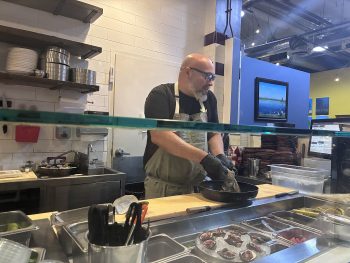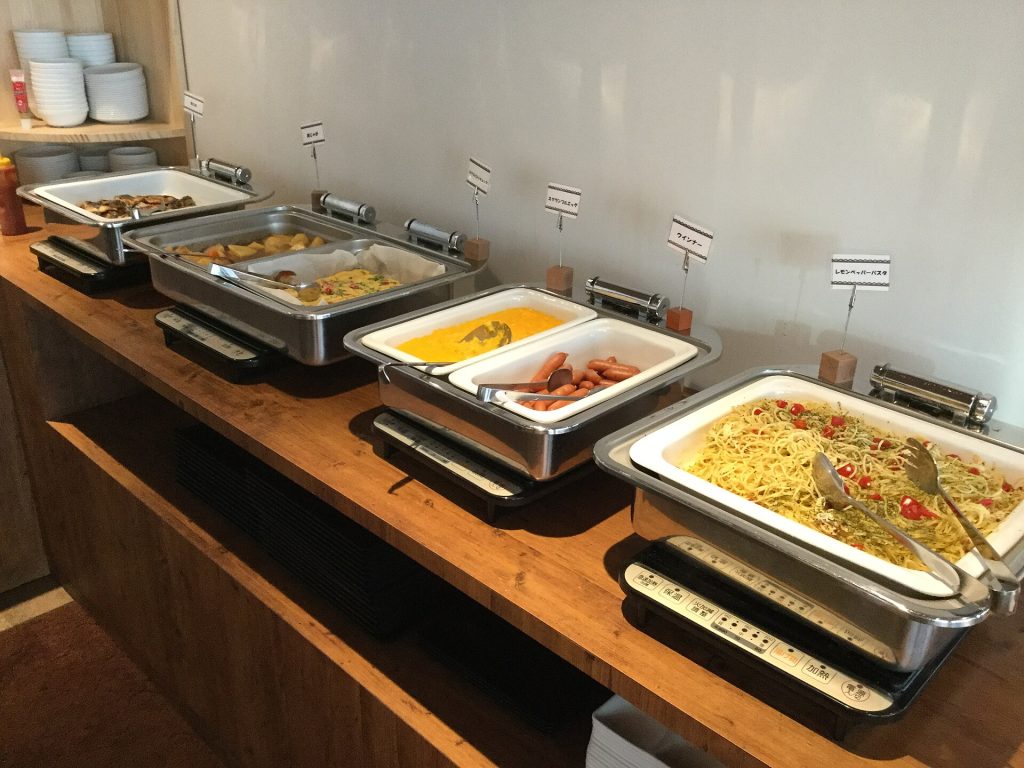
Good catering food safety for holiday orders rests on a few rules: build a menu that holds and travels well, keep hot food at 135°F or above and cold food at 41°F or below, use proper insulated transport, track time when food leaves temperature control, label allergens on every tray, and decide in advance what happens to leftovers. The checklist below turns each of those into tasks your team can tick off.
Holiday catering is where restaurant kitchens take on the most risk. Volumes jump, food leaves your building, and service happens in someone else’s space with someone else’s power sockets. The controls that work in your dining room need to be planned rather than assumed.
Use this as a working list for your managers. Your state or local health code has the final word, so check it before the season starts, especially if you need a separate catering permit.
Key takeaways
- Choose dishes that hold safely for the whole service, not just ones that sell well.
- Health codes based on the FDA Food Code set hot holding at 135°F or above and cold holding at 41°F or below.
- Time as a public health control allows up to four hours, or six hours for cold food kept at 70°F or below, but only with written procedures.
- Label every tray with its major allergens, and give the client a written allergen list.
- Write a leftovers policy before the first order and tell the client what it is.
In this guide
- Plan a menu that travels
- Hot and cold holding targets
- Transport equipment checklist
- Using time as a public health control
- Allergen labels for every tray
- On-site setup and service
- A leftovers policy you can defend
- FAQ
- Before your first holiday order
Plan a menu that travels
Some dishes that shine on a plate fall apart after an hour in a chafing dish. Build the catering menu around items that hold their temperature, texture and safety for the length of the event.
- ☐ Favour braises, roasts carved on site, grain dishes and sturdy salads over delicate fried items and dressed greens.
- ☐ Limit the number of dishes that need both hot and cold components on the same tray.
- ☐ Cook high-risk items such as poultry, stuffing and gravy to finish as close to departure as your schedule allows.
- ☐ Plan cold desserts and dairy-heavy dishes around your cold holding capacity, not your fridge space at the restaurant.
- ☐ Cap the order size per event at what your transport equipment can actually keep at temperature.
The FDA Food Code is a model that state, local, tribal and territorial agencies adopt, so most restaurant rules in the U.S. trace back to it. That is why the temperatures in this guide look familiar, even though the details of catering permits vary from place to place.
Hot and cold holding targets
Holding temperatures are the heart of catering safety. The DC Health hot and cold holding fact sheet puts the rule plainly: all hot foods held for service must stay at 135°F or above, and all cold foods at 41°F or below. The range in between is where bacteria grow.
| Stage | Hot food target | Cold food target | Check |
|---|---|---|---|
| Leaving the kitchen | 135°F or above | 41°F or below | Probe each pan and log it |
| Arrival on site | 135°F or above | 41°F or below | Probe again before setup |
| During service | 135°F or above | 41°F or below | Probe at set intervals |
| Under time control | Discard at the time limit | Discard at the time limit | Label with the discard time |
- ☐ Calibrate probe thermometers before the season and keep spares in the transport kit.
- ☐ Pre-heat hot boxes and pre-chill cold carriers before loading.
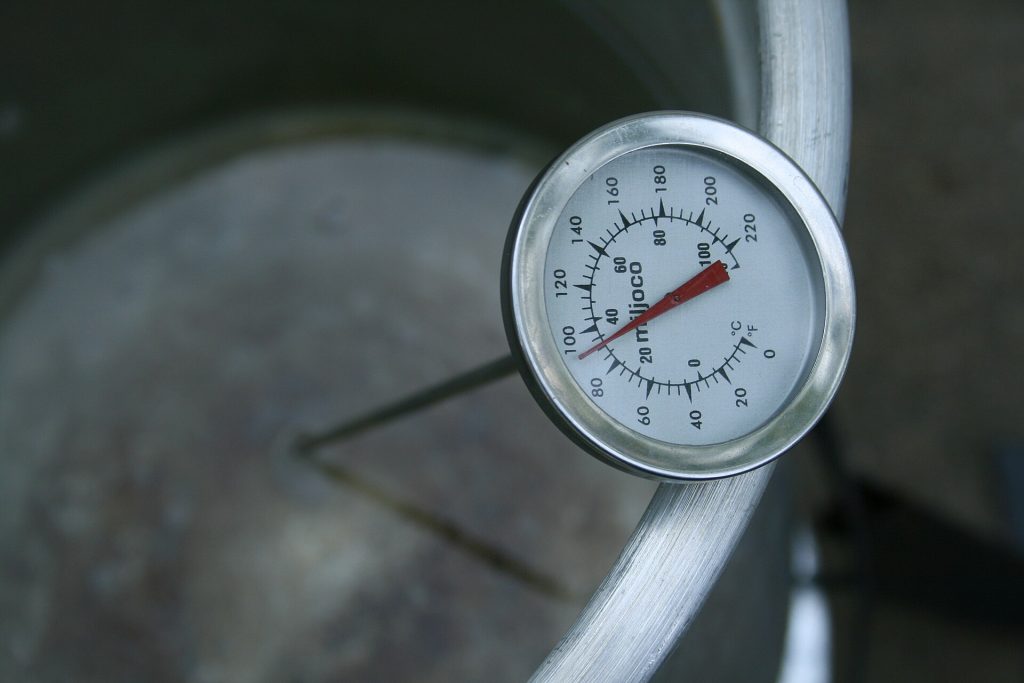
- ☐ Probe the coolest part of hot units and the warmest part of cold units, as DC Health advises, because display readings can mislead.
- ☐ Keep a temperature log per event, with times, readings and initials.
If a pan is not on the temperature log, as far as an inspector is concerned it was never checked.
Transport equipment checklist
Transport is the stage where most catering temperatures slip. Pack a standard kit and check it off for every job.
- ☐ Insulated food carriers sized for your pans, pre-heated or pre-chilled.
- ☐ Ice packs or frozen gel packs for cold carriers, and a cooler reserved for drinks so it is not opened constantly.
- ☐ Lids for every pan and wrap for anything that could spill.
- ☐ Separate containers for raw items finished on site, packed below and away from ready-to-eat food.
- ☐ A clean, dedicated vehicle area with nothing else loaded on top of the food.
- ☐ Probe thermometers, sanitiser wipes, gloves, serving utensils and spare labels.
- ☐ Chafing dishes and fuel, or confirmed access to power for electric holding equipment.
- ☐ A printed copy of the order, the allergen list and the event contact’s phone number.
Plan the route and the loading order. Load cold items last and hot items in carriers that stay closed until setup. If the drive is long, factor that time into your holding plan.
Using time as a public health control
Sometimes you cannot keep every item at 135°F or 41°F, for example on a buffet with no power. Many codes allow time as a public health control instead, but only under strict conditions. The Kansas Department of Agriculture guide summarises the model rules clearly.
- ☐ Hot food must be at 135°F or above when it comes out of temperature control. It can then stay out for up to four hours before it must be discarded.
- ☐ Cold food must be at 41°F or below when removed. It can stay out for up to four hours, or up to six hours if it stays at 70°F or below and is monitored. If it goes above 70°F, discard it immediately.
- ☐ Written procedures must be in place before you use time as a control, listing which items it applies to and how discards are handled.
- ☐ Each pan must be marked with the time it came out and the discard time. Memory does not count.
- ☐ Once the time is up, the food is thrown away. It cannot be re-chilled or reheated to start the clock again.
Check your local code before relying on this. Some jurisdictions require notice or approval, and some set their own shorter limits. DC Health, for example, tells operators to discard food held out of temperature for longer than two hours.
Allergen labels for every tray
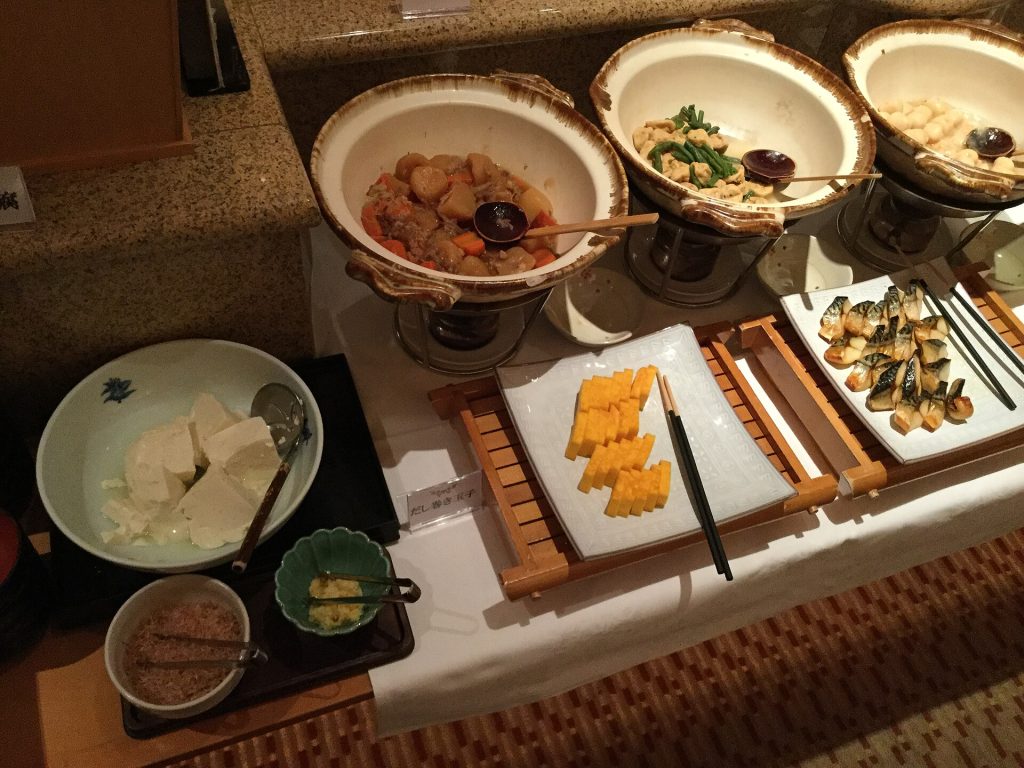
Guests at a holiday party cannot ask your server about every tray. The label has to do that work. The 2022 Food Code added a provision requiring establishments to inform consumers of major food allergens in unpackaged foods by written means, and expanded allergen awareness training for staff.
- ☐ Label every tray and pan with the dish name and the major allergens it contains: milk, eggs, fish, crustacean shellfish, tree nuts, peanuts, wheat, soybeans and sesame.
- ☐ Give the client a written allergen list for the whole menu with the order confirmation.
- ☐ Ask at booking whether any guests have allergies and note them on the order.
- ☐ Pack any allergy-safe meals separately, sealed and labelled with the guest’s name.
Keep your allergen matrix current. A holiday special that uses a new sauce or garnish needs its own entry before it is sold. Our guide to allergen training for staff covers the kitchen side.
On-site setup and service
On site, your team becomes the kitchen. Treat setup with the same discipline as a restaurant line check.
- ☐ Wash hands on arrival, or use the handwashing setup you brought if the venue has none near the service area.
- ☐ Probe and log every hot and cold item before it goes out.
- ☐ Set out smaller pans and replace them rather than topping up, so fresh food is not mixed with food that has been out.
- ☐ Keep backup pans in carriers at temperature until they are needed.
- ☐ Mark discard times on any item held under time control.
- ☐ Assign one person to check temperatures at fixed intervals and log them.
- ☐ Keep raw items, if any are finished on site, separate from ready-to-eat food.
Brief the client on when food will be cleared and why. Agree a cut-off before the party starts, not halfway through it.
A leftovers policy you can defend
Leftovers are where good intentions often go wrong. Decide your policy in advance, write it into the catering agreement, and train staff to apply it the same way every time.
- ☐ Food held under time control is discarded at its time limit. It does not go back into your kitchen.
- ☐ Food that has been on a buffet or handled by guests is not returned to your stock.
- ☐ Untouched backup pans kept at temperature throughout can be treated according to your local code and your own written procedures.
- ☐ If you let clients keep leftovers, set clear rules on which items, in what containers, and with written storage instructions.
- ☐ Record what was discarded, so you can size the next order better.
For more checklists like this one, browse our food safety guides and read up on preparing for a health inspection.
FAQ
What temperature should catered hot food be held at?
Codes based on the FDA Food Code require 135°F or above for hot holding. Check that each pan meets it when it leaves the kitchen, on arrival and during service.
How cold should catered cold food be?
41°F or below. Pre-chill food and carriers, and use ice or cold packs under cold items on a buffet line.
Can catered food be left out for four hours?
Only if your local code allows time as a public health control and you have written procedures in place. The food must start at the correct temperature, be marked with a discard time, and be thrown away when the time runs out.
Do catering trays need allergen labels?
The 2022 Food Code calls for written notification of major allergens in unpackaged food. Labelling each tray and giving the client a written list is the practical way to meet it.
Before your first holiday order
Before you accept the first holiday order, print this checklist, walk it through with your catering lead, and check your local code for the time-control and catering permit rules. Then do one dry run: pack the transport kit, load a pan of hot water and a pan of ice, drive your usual route, and probe both on arrival. That single test will tell you whether your equipment is ready for the season.
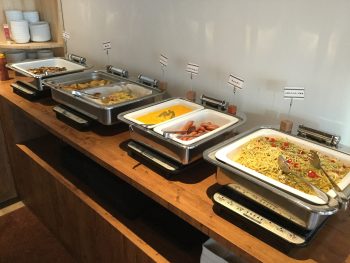
Featured photo: ホテルサンリバー四万十 (49845078402) by inunami, BY 2.0.