When it comes to kitchen knives, many people focus on sharpness or brand. However, the shape and design of the blade, also known as blade geometry, plays a huge role in how a knife performs. No matter if you are slicing fish or chopping vegetables, the way a knife is shaped affects its precision, comfort, and efficiency.
Blade geometry might sound like a complicated topic, but it’s actually something every cook can understand. With just a few key details, you’ll begin to see why it’s worth paying attention to how a knife is built.
Let’s take a closer look at what blade geometry really means and how it impacts your cooking.
What Is Blade Geometry?
Blade geometry refers to the shape and design of the knife’s blade, from the spine down to the edge. It includes details like the thickness of the spine, the angle of the edge, and the style of grind used on the blade. These features work together to determine how a knife slices through different types of food.
Geometry doesn’t just affect how sharp a knife feels, but also how easily it moves through food, how well it releases ingredients, and how long the edge stays sharp. A knife with good geometry feels balanced, cuts cleanly, and reduces hand strain over time.
Key Features That Shape a Blade
Edge Angle
The edge angle is the degree to which each side of the blade slopes toward the cutting edge. Japanese knives often have a more acute angle, sometimes as low as 10 to 15 degrees per side. Western knives tend to have a wider angle, often around 15 to 20 degrees.
A smaller angle produces a sharper edge, which makes it ideal for precise tasks like slicing vegetables or filleting fish. However, these finer edges can be more delicate and may require more frequent sharpening. In contrast, a wider angle provides added durability, better suited for cutting through tougher ingredients.
Spine Thickness and Taper
The spine is the thickest part of the blade, opposite the edge. Some knives maintain this thickness along most of the blade, while others taper thinner toward the tip.
A thinner spine or pronounced taper improves control and maneuverability, especially during detailed work. A thicker spine offers more strength and stability, which can be helpful when working with dense or hard foods.
Blade Grind Styles
The grind refers to how the blade transitions from the spine to the edge. There are a few common types of grinds used in kitchen knives:
- Flat Grind: Even taper from spine to edge. Great for general use and easy sharpening.
- Convex Grind: Slight outward curve near the edge. Helps food slide off and boosts edge strength.
- Concave / Hollow Grind: Slight inward curve, creating a thin, sharp edge. Excellent for delicate slicing but more fragile.
- Chisel or Scandi Grind: One-sided bevel used in traditional Japanese single bevel knives. Offers extreme precision and sharpness for specific tasks.
Each grind changes how a knife feels in your hand and how it moves through different foods. Some knives use a blend of grinds, depending on their purpose.
Cross-Section and Food Release
Food release is how easily sliced items fall away from the blade. Knives with flat or concave faces often cause food to stick. Blades with a slight convex shape tend to release food more easily, which makes prep work faster and less frustrating.
This is especially important for tasks like slicing potatoes, cucumbers, or meats, where sticking can slow you down and affect the look of your cuts.
How Geometry Affects Cooking Tasks
Different tasks in the kitchen call for different blade shapes. Blade geometry is what makes a knife excel at one job while struggling with another.
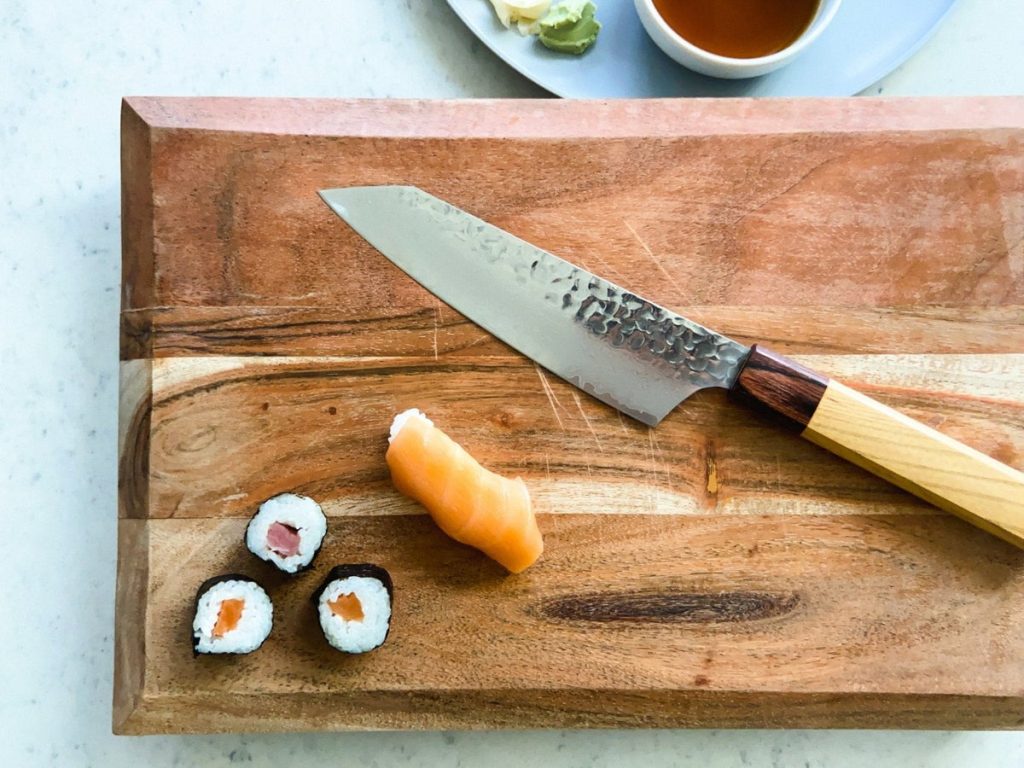
- Slicing Meats and Fish: A thin blade with a fine edge angle glides through meat and fish without tearing. Japanese-style slicers, such as the Yangiba or Shobu often have long, narrow profiles and delicate tips to create clean, uniform cuts.
- Chopping Vegetables: For chopping root vegetables or herbs, a blade with a wider grind and some weight helps deliver clean, strong cuts. A bit of curve in the belly of the blade also supports rocking motions.
- Push Cuts vs. Rocking Cuts: Cutting style helps determine the best blade shape. Push cutting works well with straight edges and fine tips. Meanwhile, rocking motions are better suited to curved blades, ideal for mincing herbs or dicing soft vegetables.
- Hard vs. Soft Ingredients: For dense items like squash or sweet potatoes, a thicker blade with solid geometry offers strength and control. For soft ingredients like tomatoes or raw fish, a thinner, sharper blade reduces crushing and preserves texture.
Japanese Blade Geometry and Tradition
The design of many Japanese knives traces back to sword smithing traditions. Knife makers have spent centuries refining blade shapes for different types of cooking.
By building your own unique Japanese knife set, you can include a mix of single and double bevel knives, each built for a specific role in the kitchen. These sets often reflect a deep knowledge of how blade geometry matches ingredient type and technique.
Even today, Japanese craftsmen use time-honored methods to shape blades by hand. This includes forging, grinding, and finishing the blade with exact angles and balance.
Maintenance and Blade Geometry
Different blade shapes affect how a knife should be sharpened. Sharper angles need more frequent but gentler honing. Single bevel knives must be sharpened carefully to keep their precise angle and flat side. If the blade has a complex grind, sharpening can take more time and skill. However, once you understand your knife’s geometry, maintenance becomes easier and more effective.
Picking the Right Geometry for Your Style
You don’t need to be a chef to benefit from the right knife geometry. Think about how you cook, what ingredients you use most, and what cutting style feels natural. If you cook mostly vegetables and prefer clean slices, a thinner blade with a flat grind might suit you. If you often work with fish or meats, consider something more specialized with a fine edge.
Visiting a store or speaking with knowledgeable knife experts can help you match your style with the right geometry. Feeling the knife in hand and trying a few cuts can reveal what works best for you.
Geometry Is the Hidden Key to Knife Performance
Blade geometry is more than a technical detail. It affects how a knife feels, cuts, and lasts. Understanding it helps you choose the right tool for your kitchen and get the most out of every meal you prepare. A good knife doesn’t just slice; it works with your hand, your ingredients, and your technique. When the geometry is right, cooking becomes smoother, faster, and more enjoyable.
Next time you pick up a kitchen knife, take a closer look. The curves, angles, and grind lines all tell a story about what the knife was made to do and how well it will do it in your hands.