A restaurant health inspection is mostly predictable. The inspector checks whether your team washes hands properly, whether cold food stays cold and hot food stays hot, whether cooked food cools fast enough, and whether the building is clean and pest-free. Violations are sorted by risk, and the serious ones must be fixed fast.
To make that concrete, follow a hypothetical. Say you run a 50-seat cafe doing breakfast and lunch, with a two-person line, a soup program and a walk-in. The inspector arrives unannounced at 8:45 on a Tuesday, mid-prep.
What follows is how that visit typically unfolds, what gets checked at each stop, and how the owner handles the findings. Your local code sets the exact rules, so treat the details as a model.
Key takeaways
- Most US jurisdictions base their rules on the FDA Food Code, a model code that the FDA updated with a 2026 edition.
- Violations fall into priority, priority foundation and core items, in descending order of risk.
- Common Food Code-based limits: cold holding at 41°F or below, hot holding at 135°F or above, and cooling from 135°F to 70°F within 2 hours.
- FDA’s restaurant risk factor study found improper holding time and temperature and poor personal hygiene were the most common problems.
- One Texas health district gives 3 days to correct priority items, 10 for priority foundation and 90 for core.
In this guide
- How inspectors grade what they find
- 8:45 a.m.: hands and hand sinks
- 9:05 a.m.: the temperature walk
- 9:30 a.m.: storage, pests and the building
- 10:00 a.m.: the report and the fixes
- FAQ
- Run your own mock inspection next week
How inspectors grade what they find
Your inspector works from your state or local food code, and most of those are built on the FDA Food Code. The FDA describes it as a model that food control jurisdictions use to develop or update their own rules, and it issued a 2026 edition. Your jurisdiction may still be on an earlier version, so ask your health department which one applies.
The Code sorts every requirement into three tiers. The Colorado Department of Public Health and Environment summarises them this way:
- Priority items directly eliminate, prevent or reduce foodborne illness hazards. Examples include cooking, reheating, cooling and handwashing.
- Priority foundation items support priority items, such as personnel training, infrastructure, documentation and labeling.
- Core items cover general sanitation, operational controls, facilities, equipment design and general maintenance.
Inspectors don’t choose these at random. FDA’s 2017-2018 restaurant risk factor report found the two most common risk factors were improper holding time and temperature and poor personal hygiene, while inadequate cooking was the least out of compliance. Expect the visit to concentrate where problems actually happen.
8:45 a.m.: hands and hand sinks
Our inspector introduces herself to the manager, asks who the person in charge is, and heads straight to the kitchen. The first thing she watches is people, not equipment.
What she checks
- Whether each hand sink is reachable and used only for handwashing, not propped with a bus tub or full of utensils.
- Whether sinks are stocked with warm running water, soap and a way to dry hands, plus a handwashing sign.
- Whether staff wash when they should: before handling food, before putting on gloves, and when switching from raw to ready-to-eat food.
The Minnesota Department of Health handwashing sheet is a clear benchmark: rub hands for 10 to 15 seconds within a washing process that lasts at least 20 seconds in total, and don’t treat gloves, wet wipes or hand antiseptics as substitutes.
The finding
A prep cook breaks down raw chicken, pulls off his gloves and starts slicing tomatoes for sandwiches without washing. The inspector notes it. Because handwashing is a priority item, it goes on the report even though he washes immediately when asked. The back hand sink also has a stack of sheet pans in front of it, which she records separately.
Inspectors watch your people before they open your walk-in. Train the hands first.
9:05 a.m.: the temperature walk
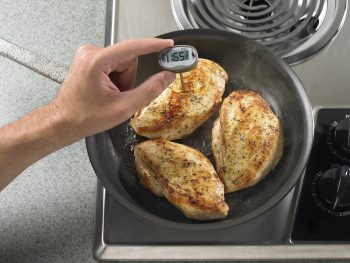
Next she probes food with a calibrated thermometer. The numbers below come from the Minnesota time and temperature control sheet and match the limits used in most Food Code-based rules.
| Check | Common Food Code-based limit | What our cafe showed |
|---|---|---|
| Cold holding (walk-in, reach-ins, sandwich rail) | 41°F or below | Walk-in fine; sandwich rail at 45°F because the lid was left open during prep |
| Hot holding | 135°F or above | Soup well at 150°F |
| Cooling cooked food | 135°F to 70°F within 2 hours, then to 41°F or below within 6 hours total | Yesterday’s chili still at 52°F in a deep stockpot |
| Cooling food made from room-temperature ingredients | 41°F or below within 4 hours | Not applicable this visit |
| Reheating for hot holding | At least 165°F for 15 seconds, reheated within 2 hours | Morning soup reheat logged at 168°F |
The sandwich rail is a common and fixable problem. The chili is the real concern: a deep pot of dense food cools slowly, and there is no record of when it went into the walk-in. Cooling is a priority item, so the inspector asks the manager to discard it.
How the owner fixes it on the spot
- Discards the chili and shows the inspector it went in the bin.
- Closes the rail lid and moves the tomato and deli trays into the reach-in until the rail recovers below 41°F.
- Switches the soup program to shallow pans and ice baths, and starts a cooling log with time and temperature at each stage.
9:30 a.m.: storage, pests and the building
The last walk covers dry storage, the dish area, restrooms and the building itself. The Northeast Texas Public Health District lists what its inspectors cover across 47 violation items, including approved food sources, protection from contamination, plumbing and backflow prevention, physical facilities and pest control documentation.
Pest control
The inspector looks for droppings, live or dead insects, and gaps around doors and pipe penetrations, and she asks for the pest control service records. The cafe has a monthly contract, and the most recent service report is in the office binder. That takes two minutes instead of twenty.
The core items
- Grease buildup on the floor under the fryer.
- A cracked floor tile by the dish machine.
- A torn door gasket on one reach-in.
None of these will make a guest sick tomorrow, which is why they are core items. They still go on the report, and a pattern of them tells an inspector how the kitchen is run.
10:00 a.m.: the report and the fixes
Before she leaves, the inspector reviews the report with the person in charge. Correction deadlines depend on your jurisdiction. The Northeast Texas district, for example, allows 3 days for priority violations, 10 days for priority foundation and 90 days for core, with follow-up inspections to re-check items that were out of compliance.
| Finding | Tier (as typically classified) | Fix |
|---|---|---|
| No handwashing between raw chicken and ready-to-eat food | Priority | Retrain on the spot; add raw-to-RTE rule to line checklist |
| Chili cooled too slowly in a deep pot | Priority | Discarded; shallow pans, ice baths, cooling log |
| Hand sink blocked by sheet pans | Varies by code | Cleared; sheet pans get a dedicated rack |
| Sandwich rail at 45°F | Varies by code | Lid-closed rule; product moved; rail temp added to opening checks |
| Grease under fryer, cracked tile, torn gasket | Core | Deep clean scheduled; repairs booked |
Fixing an item while the inspector is still on site is the best outcome. It shows active managerial control, and some codes record it as corrected on site. For everything else, write the fix, the owner and the date on a copy of the report, and keep the evidence: photos, invoices and logs.
The follow-up visit
When the inspector returns, she checks only the items that were out of compliance. The cafe shows its cooling log, the cleared hand sink, the repaired gasket receipt and the updated line checklist. Clean follow-ups are usually short.
FDA’s study also found that well-developed food safety management systems were the strongest predictor that risk factors would be minimized. Logs, checklists and training are what turn a good inspection day into a normal day.
FAQ
How often will my restaurant be inspected?
It depends on your jurisdiction and risk category. Colorado, for example, says restaurants receive one to three inspections a year based on their complexity and risk.
Can I refuse an inspection?
Inspection authority comes from your local code, and refusing typically leads to more serious enforcement. Ask for identification, then cooperate and walk with the inspector.
What is the difference between a priority and a core violation?
A priority violation directly affects the risk of foodborne illness, such as improper cooling or missed handwashing. A core violation relates to general sanitation and maintenance, like a cracked tile.
Should I argue with a finding?
Ask questions and understand the reasoning on site. If you still disagree, use your health department’s formal review process rather than debating in the kitchen.
Run your own mock inspection next week
Pick a mid-prep time next week and walk your own kitchen in the same order an inspector would: hands and sinks, temperatures, cooling, storage and pests, then the building. Write down every finding and sort it into priority, priority foundation and core. Our food safety plan guide and staff training checklist can help you build the logs, and you’ll find more in our food safety guides.
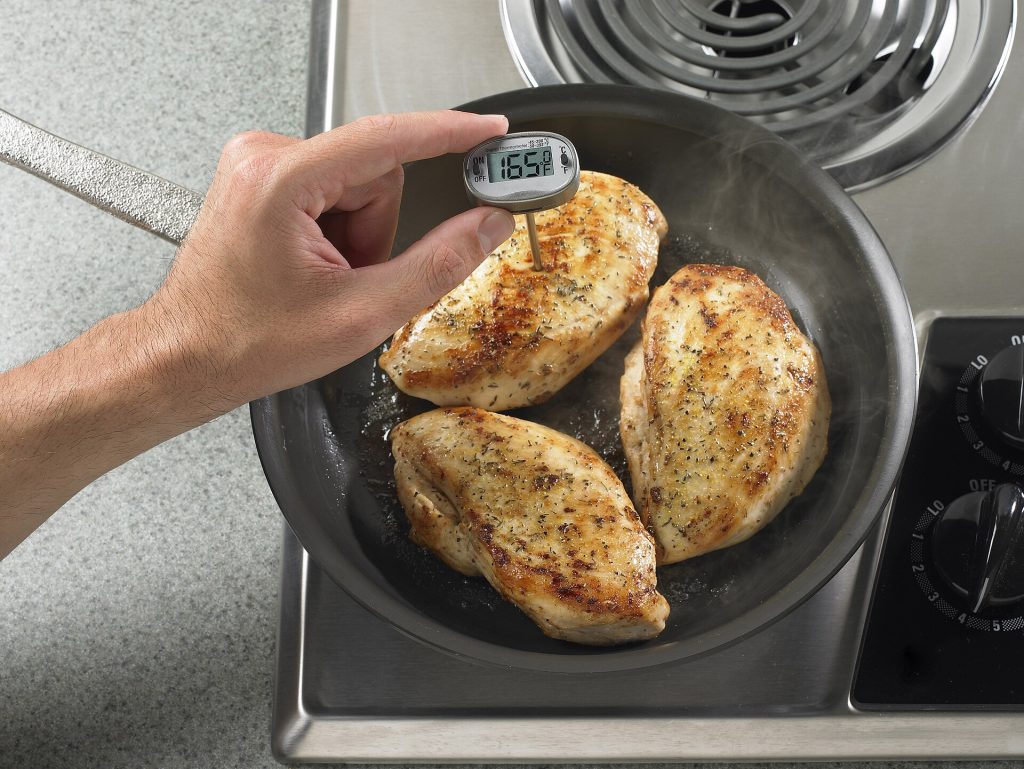
Featured photo: Proper Food Safety Behaviors-Appliences and Thermometers (20120106-OC-AMW-0080) by USDAgov, CC0.