In the hyper-competitive landscape of the modern hospitality industry, serving delicious food is merely the price of entry. It is the baseline expectation. To truly stand out, increase check averages, and build a base of fiercely loyal regulars, restaurants must pivot from simply selling meals to selling experiences. The most underutilized asset in achieving this? The stories behind your ingredients.
Ingredient storytelling is a powerful psychological tool. It shifts the diner’s focus from price to value. When a guest understands the heritage, the craft, and the origin of what is on their plate, the meal transcends simple sustenance and becomes a memory. This is particularly true for pantry staples that often go overlooked, yet define the finish of a dish.
Consider the difference between a generic condiment and a product with gravitas. Choosing the original balsamic vinegar of Modena by Giusti over an industrial alternative is not just a culinary decision; it is a business decision. It provides your front-of-house team with a narrative hook. Similarly, when you explicitly highlight a certified product like balsamic vinegar of Modena IGP on your menu, you are signaling to your guests that you refuse to cut corners. You are telling them that you value authenticity, and by extension, you value them.
The Psychology of “The Story”
Why does storytelling work so effectively in a dining context? We live in the age of the “conscious consumer.” Diners today, especially Millennials and Gen Z, are more educated about food systems than any previous generation. They want to know the “who,” “where,” and “how” behind their dinner.
When a server places a dish on the table and walks away, it is a transaction. But when a server places that same dish and explains, “The chef finishes this with a balsamic vinegar from the oldest producer in Italy, founded in 1605,” it becomes an interaction. That small nugget of information adds perceived value. It validates the guest’s choice to dine with you. It creates an emotional connection that turns a first-time visitor into a brand ambassador who will recount that same story to their friends.
Leveraging Heritage Brands as Menu Anchors
Successful menu engineering isn’t just about placement and pricing; it is about adjectives and brand association. Associating your restaurant with heritage brands—those with centuries of history—allows you to borrow their prestige.
Giusti, for example, has been producing balsamic vinegar since the 17th century. By sourcing such a product, you aren’t just buying vinegar; you are buying 400 years of history that you can leverage in your marketing.
Strategies for Menu Descriptions
Don’t let your high-quality ingredients hide in plain sight. Rewrite your menu descriptions to bring them to the forefront.
- Weak Description: Caprese Salad – Mozzarella, tomatoes, basil, balsamic glaze.
- Strong Description: Heirloom Caprese – Buffalo mozzarella, vine-ripened tomatoes, fresh basil, finished with Giusti ‘3 Gold Medals’ Balsamic Vinegar of Modena.
The second description not only sounds more appetizing but also justifies a higher price point. The specificity suggests expertise and exclusivity.
Training Your Front-of-House (FOH) to be Storytellers
Your servers are your sales force. However, they cannot sell a story they don’t know. To make ingredient storytelling effective, you must integrate it into your pre-shift meetings and staff training manuals.
You don’t need your waitstaff to memorize a history textbook, but they should be armed with “soundbites”—short, interesting facts that they can drop effortlessly during service.
The “Tableside Pour” Technique
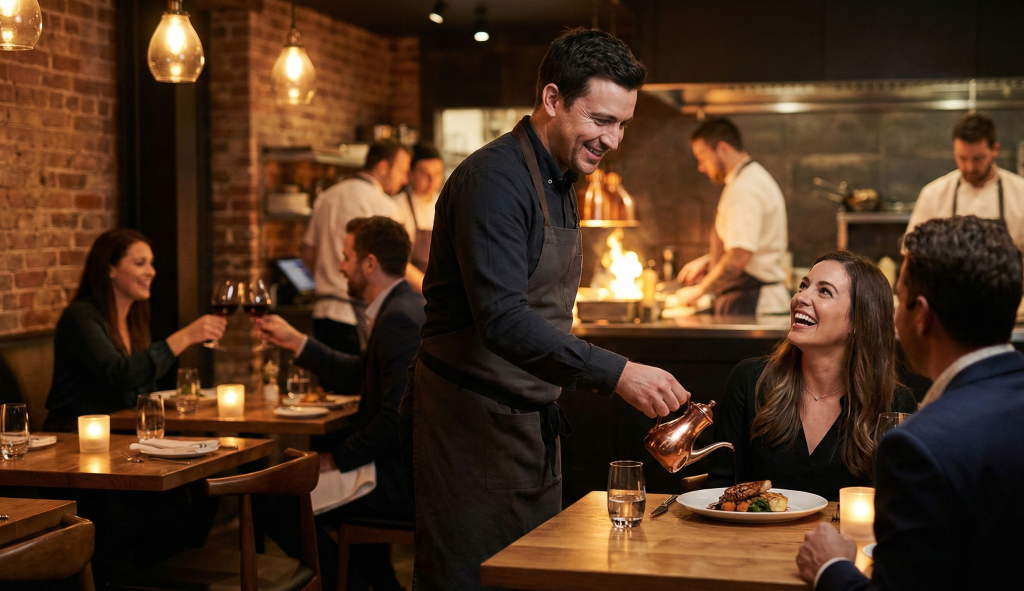
One of the most effective ways to showcase a premium ingredient is to bring it out of the kitchen. Consider finishing dishes tableside. If a guest orders a Risotto or a Tagliata, have the server bring the bottle of Balsamic Vinegar to the table.
- The Action: The server presents the bottle, briefly mentions its origin, and drizzles it over the hot dish right in front of the guest.
- The Result: The heat of the food releases the aroma of the vinegar immediately, engaging the guest’s sense of smell before they even take a bite. It adds theatricality to the service without slowing down the kitchen.
Key Talking Points for Staff
Equip your team with three simple talking points regarding your premium vinegar selection:
- The Age: “This producer has been around since 1605—that’s before the US was even a country.”
- The Woods: “The flavor comes from aging in ancient barrels made of different woods like cherry, chestnut, and juniper.”
- The Complexity: “Unlike industrial vinegar which is just sour, this has notes of plum, honey, and vanilla.”
The ROI of Authenticity
A common objection among restaurant owners is cost control. Why pay more for a premium IGP balsamic when a generic commercial brand is half the price?
This is where the “Cost vs. Value” analysis is critical.
- Yield and Potency: High-quality Balsamic Vinegar of Modena is thicker, more viscous, and significantly more flavorful than watery imitations. You need less product to achieve the desired flavor profile. A few drops of a premium aged balsamic have more impact than a tablespoon of a cheap substitute.
- Perceived Value: Using name-brand, heritage ingredients allows you to command a premium price for the dish. If switching to a premium vinegar costs you an extra $0.30 per plate, but allows you to raise the price of the dish by $2.00 because of the enhanced description and quality, the ROI is immediately positive.
- Reputation Management: In the era of Yelp and TripAdvisor, consistency is key. Industrial products vary batch by batch. Artisanal producers like Giusti are obsessed with consistency. Using the best ingredients protects your reputation against bad reviews.
Elevating the Non-Food Menu: Cocktails and Mocktails
Ingredient storytelling shouldn’t stop at the kitchen pass; it should extend to the bar. The trend of savory and complex cocktails is booming.
Bartenders can use Balsamic Vinegar of Modena to create signature drinks that intrigue guests. A “Modena Mule” or a Balsamic-infused Strawberry Smash offers a perfect opportunity for the bartender to engage with the guest.
- The Pitch: “I’m using a balsamic aged in cherry wood barrels to balance the sweetness of the fruit instead of simple syrup.”
- The Benefit: This positions your bar program as sophisticated and culinary-driven, encouraging guests to stay for a second round.
Building a Culture of Excellence
Ultimately, the decision to use and highlight specific ingredients defines your restaurant’s brand identity. Are you a place that cuts corners, or are you a place that obsesses over details?
When you commit to ingredient storytelling, you create a culture of excellence that permeates the entire staff. Chefs take more pride in their plating because they respect the ingredients. Servers feel more confident selling because they believe in the quality of the product. Guests feel taken care of because they perceive the thought that went into their meal.
Review your current menu and your pantry. Identify the “silent heroes”—the olive oils, the cured meats, the vinegars. Are they generic, or do they have a story? If they have a story, start telling it. If they don’t, it might be time to source ingredients that do. In a market where everyone serves food, the restaurants that serve stories are the ones that survive and thrive.