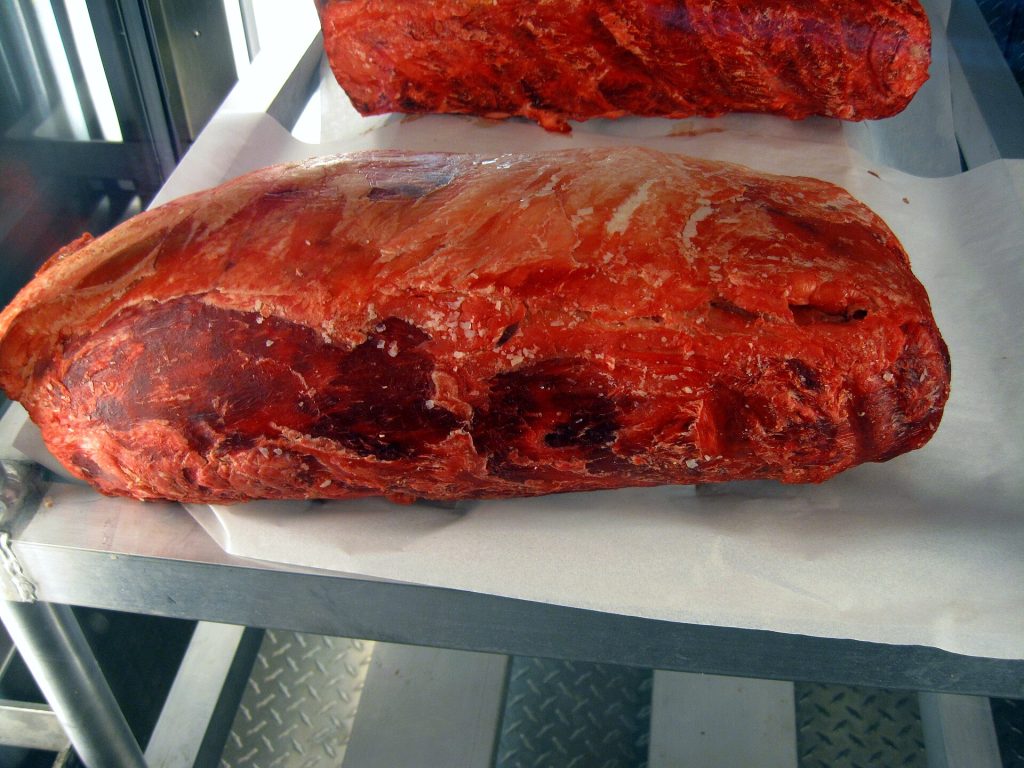
Dry-aged beef is beef held unpackaged in a controlled cold room for weeks, so it loses moisture and develops a more concentrated flavour. Wet-aged beef ages in a vacuum bag and loses almost no weight. Research shows dry aging reliably changes flavour, but it does not reliably beat wet aging on tenderness, and it costs you real yield.
That gap between reputation and evidence is where menu decisions go wrong. Operators buy a cabinet expecting a tenderness miracle, or skip dry aging entirely because they assume the shrink makes it unprofitable.
Below are seven common myths, taken one at a time, checked against meat science from the Beef Checkoff’s research summary and university extension work.
Key takeaways
- Studies disagree on tenderness: some found dry and wet aging equal, others found wet-aged steaks more tender.
- Trained panels scored dry-aged beef higher for beefy and brown/roasted flavours.
- In one retail study, 14-day dry-aged ribeyes yielded 72.2% against about 88% for wet-aged.
- Most studies held dry-aging rooms between 0 and 4°C with humidity around 80%.
- Price dry-aged cuts on cost per sellable pound after shrink and trim, plus the extra labour.
Seven myths at a glance
| Myth | Fact |
|---|---|
| Dry-aged is always more tender than wet-aged | Findings are mixed; several studies found wet-aged beef as tender or more tender |
| Longer aging is always better | The research summary finds no magic threshold beyond about 14 days |
| Dry aging is just leaving beef in the fridge | It depends on controlled temperature, humidity and airflow |
| Every guest prefers dry-aged flavour | In one study, more Choice-steak consumers preferred wet-aged than dry-aged |
| The weight loss is only water, so it’s free | Shrink plus trim cut sellable yield sharply and add labour |
| Every cut ages equally well | Yields varied widely between shortloins, ribeyes and sirloin butts |
| Surface mould means the beef is unsafe | Controlled dry aging is managed; the dried exterior is trimmed off |
Myths about tenderness and time
Myth 1: Dry-aged is always more tender than wet-aged
All aging improves tenderness, because natural enzymes break down muscle proteins over time. The question is whether dry aging does it better. The Beef Checkoff’s executive summary on dry aging collects the studies, and they don’t agree. Warren and Kastner found vacuum and dry aging improved tenderness equally over unaged beef. Parrish and colleagues found wet-aged beef significantly more tender than dry-aged, and Sitz and colleagues found the same for Prime steaks.
For a menu, that means you should not sell dry-aged beef as the tender option. Sell it as the flavour option.
Myth 2: The longer you age, the better
Long-aged steaks make good headlines, but the evidence flattens out. The summary notes that dry aging typically runs from one to five weeks, and that there does not seem to be a magical threshold beyond about 14 days. The Beef Checkoff’s post-mortem aging fact sheet adds that tenderness depends on the individual muscle, the USDA quality grade and aging time, and some muscle and grade combinations only need the standard 14-day period.
Flavour is where extra time shows up. Campbell and colleagues found aged and brown-roasted flavour increased significantly at 14 days and beyond. Choose your aging time on the flavour you want, and remember that every extra day costs yield.
Dry aging buys you flavour. It doesn’t buy you tenderness, and it never comes free.
Myths about flavour and guests
Myth 3: Every guest prefers dry-aged flavour
Trained panels do taste a difference. In Warren and Kastner’s work, dry-aged beef scored significantly higher for “beefy” and “brown/roasted” flavours, while vacuum-aged beef scored higher for “bloody/serumy,” “metallic” and “sour.” The literature describes dry-aged beef with terms such as buttery, rich, earthy and nutty.
Consumers are more divided. In the Sitz study summarised by the Beef Checkoff, 39.2% of consumers tasting Choice steaks preferred wet-aged, 29.3% preferred dry-aged and 31.5% had no preference. For Prime, 45.8% preferred wet-aged and 27.5% dry-aged. Dry-aged beef is a feature for guests who seek it out, not a default upgrade for everyone.
What that means for your menu
- Offer dry-aged as a named, distinct item with its aging time stated, rather than replacing your house steak.
- Train servers to describe the flavour honestly: deeper, beefier, roasted and nutty.
- Pair it with simple preparations so the aged flavour carries the dish.
Myths about cost and yield
Myth 4: The weight loss is just water, so it doesn’t cost anything
Water is weight, and you buy beef by the pound. South Dakota State University Extension’s carcass aging trial found dry-aged sides lost 4.9% of their weight on average by day 21, with the biggest drop in the first three days. Then comes trim: the dried exterior has to come off before cutting steaks.
The retail yield data make the point. In the studies the Beef Checkoff summarises, dry-aged ribeyes yielded 72.2% at 14 days and 63.5% at 35 days, while wet-aged ribeyes held at about 88%. Dry-aged shortloins also took longer to fabricate, 331.6 seconds each against 243.1 for wet-aged.
Myth 5: Every cut ages the same way
Different subprimals lose very different amounts. In the same data, dry-aged sirloin butts yielded 61.4% at 14 days and 52.0% at 35 days, well below ribeyes and shortloins. Most operators start with bone-in ribs and shortloins for that reason.
| Subprimal | Dry-aged 14 days | Dry-aged 35 days | Wet-aged |
|---|---|---|---|
| Shortloin | 76.5% | 69.8% | About 85-88% |
| Ribeye | 72.2% | 63.5% | About 88% |
| Sirloin butt | 61.4% | 52.0% | About 76-82% |
Myths about safety and equipment
Myth 6: Dry aging is just leaving beef in the walk-in
Dry aging is a controlled process, not storage. The studies in the Beef Checkoff summary held beef between 0 and 4°C, and relative humidity around 80%, with a considerable range. If humidity runs too high, spoilage bacteria can grow; too low, and shrink climbs. One study recirculated air through ultraviolet light every 30 minutes. SDSU’s facility ran at 37°F, give or take 3 degrees, at about 80% humidity.
That is why operators use dedicated dry-aging cabinets or rooms instead of a shared walk-in. A dedicated unit holds steady conditions, keeps airflow around the meat and stops other products from picking up odours or being crowded in.
Myth 7: Mould on the surface means the beef is unsafe
The dried, darkened exterior that forms during aging is expected, and it is trimmed away before cutting. The Beef Checkoff summary notes University of Wisconsin work describing dry aging as an intervention treatment to reduce pathogens. That is not a licence for shortcuts. Controlled temperature and humidity, clean equipment and consistent trimming are what keep the process safe.
Some operators also use moisture-permeable aging bags. In Ahnström and colleagues’ study, bag-aged beef lost less weight at 21 days than traditional dry-aged beef, and sensory traits did not differ.
FAQ
What is the difference between dry-aged and wet-aged beef?
Dry-aged beef ages unpackaged in controlled cold air and loses moisture. Wet-aged beef ages in vacuum packaging, which is the main method used today, and loses almost no weight.
How long should beef be dry-aged for a restaurant?
Most studies cover one to five weeks. Research found flavour gains from 14 days onward but no clear threshold beyond that, so test a few aging times with your own guests.
Is dry-aged beef more tender?
Not reliably. Some studies found dry and wet aging equal for tenderness, and others found wet-aged beef more tender.
Why is dry-aged beef more expensive?
Because you lose weight to evaporation and trim, and fabrication takes longer. Those costs have to be recovered in the menu price.
Price your first dry-aged cut
Before you commit to a cabinet, run the maths on one cut. Take your cost per pound for a bone-in rib, divide it by the yield you expect after aging and trimming, and compare it with the same calculation for wet-aged. At the ribeye yields above, dry-aged product costs roughly 22% more per sellable pound before any extra labour. Then set your price to hit your target margin on that true cost, not on the invoice price.
Our guide to menu pricing walks through margin targets, and our steak program coverage has more on building a beef menu. For more ideas from the dining floor, see our food and dining guides or browse the restaurant directory to see how other steak restaurants present their aged cuts.
Featured photo: Dry aging beef by Jo Anna Barber, BY-SA 2.0.