When you walk into a restaurant, the first thing you notice is the table setting. It’s like a little storefront, and it can make or break your dining experience. Even before your server greets you, you’ve already gotten a feel for the place just by looking at what’s on the table. A thoughtfully set table can make you feel like you’re in good hands, and it can also be a subtle sales tool – drawing your eye to the specials of the day or encouraging you to try a little something extra. So, how do you create a table setting that really works?
Start With the First Ten Seconds
When people sit down at a table, they take a look around to get an idea of what kind of service they can expect and how much things might cost. If the table is clean and everything is nicely spaced and matches, it gives a good impression. On the other hand, if the table is cluttered or things don’t match, it can give a bad impression. It’s like the table is sending a message about the kind of experience you’re in for.
Keep things simple when it comes to your table setting. Make sure each item has a purpose, and get rid of anything that doesn’t. A cluttered table can be really frustrating to use, and it doesn’t leave much space for the important stuff like menus, food, and drinks. You want to be able to easily move around and enjoy your meal without feeling cramped.
Build a Clear Visual Hierarchy
Guests look at the center of the table first, then at the spot directly in front of them. Use this natural flow to your advantage:
- Place the menu or featured offer within easy reach of the guest’s hand, not pushed to the edge
- Keep the center of the table for one focal point, such as a small lamp, a seasonal display or a promotion
- Leave open space around the cutlery and glassware so the setting feels premium rather than busy
Use Stands to Put Offers at Eye Level
You can easily overlook a flat card on a table, but when it’s standing upright, it really grabs your attention. That’s where good table stands comes in – it lets you showcase all sorts of things, like a special dessert, a wine pairing, or a new cocktail, without disrupting the meal. Plus, they’re stable, so they won’t tip over, and they keep the card clean and protected. And when you need to change the offer, you can just swap out the card quickly and easily. It’s a simple way to make a big impact.
Material matters here. Acrylic works well in modern venues, wood suits casual and rustic concepts and leather fits upscale dining rooms and hotel lounges. Choose the one that matches the rest of your table setting.
Make the Menu Part of the Experience
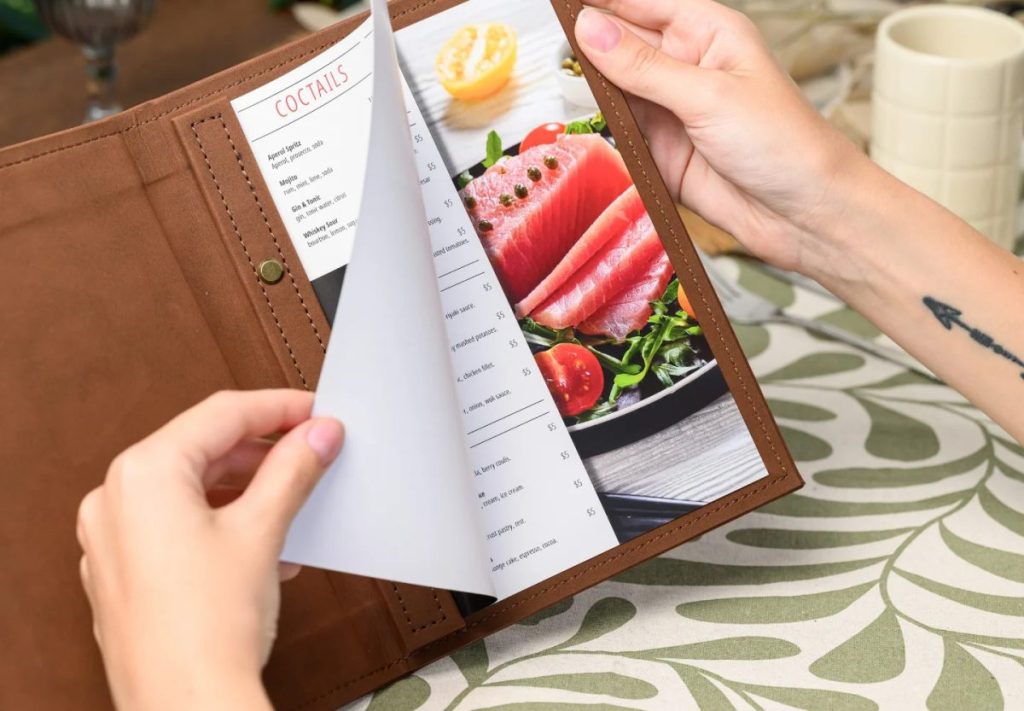
The menu is something that everyone at the table is going to handle, so it’s worth putting some thought into it. If you have a menu with a nice, sturdy cover, it gives the impression of quality and helps set the tone for the rest of the meal. When people feel like they’re in a high-end setting, they’re more likely to want to try some of the fancier options, like sharing a starter, having a glass of wine, or saving room for dessert. This can make a big difference in the overall experience, and it’s not just about the food – it’s about creating a certain atmosphere.
Consistency helps too. When menu covers, check presenters and table accessories share the same materials and finish, the whole setting looks intentional. Suppliers such as Inko Horeca offer ready-made and custom-made pieces, which makes it easier to align every item with your brand.
Highlight High-Margin Items Without Pushing
Guests respond better to suggestions than to pressure. Subtle visual prompts can lift sales while keeping the experience relaxed.
- Feature one or two items per display instead of a full list
- Add a short description with a sensory detail, such as smoked, house-made or seasonal
- Place beverage and dessert prompts early in the meal, when guests are still deciding what to order
Plan for Service Flow
When it comes to a table that’s meant to sell, it’s not just about looking good – it’s also about being functional for the staff. Servers need to be able to set down plates and clear them quickly, so the table needs to have enough space for them to do that. And let’s be real, displays that are light enough to move around and easy to wipe clean are a must. You don’t want your staff struggling to keep things tidy, right? At the end of the meal, a tidy check presenter can make all the difference – it keeps the final impression polished and makes the payment process smooth. It’s all about creating a seamless experience for both the staff and the customers.
Review and Refresh Regularly
Tables are not something you set up once and forget about. You need to keep an eye on what guests are ordering after you put up a new display, and compare it to what they were ordering before. Sometimes, making small changes to where things are placed, the words you use, or the materials you choose can make a big difference. It’s also a good idea to update the content of your tables every season, so that regular guests always see something new and interesting. This way, you can keep things fresh and exciting, and make sure your guests keep coming back for more.
Final Thoughts
A well-designed table can make all the difference. It’s got to be clean, straightforward, and reflect your brand’s style. Think about creating a clear visual hierarchy, so your offerings stand out and have a nice home. Every item on the table should have a purpose, and if it doesn’t, get rid of it. When you get it right, you’ll see the average check go up, and your guests will have a better time. It’s all about making every detail count, from the layout to the items on display. By doing so, you’ll create a welcoming and engaging experience that keeps people coming back.
Partner’s article