Building a restaurant wine list starts with your menu and your guests, not with a catalogue. Decide how many wines your concept can actually sell and store, build a by-the-glass program that moves every open bottle, price with a clear and consistent markup, and choose distributors who will support you. Then protect the investment with proper storage, tight inventory and a team that can talk about what is on the list.
A wine list is a buying decision as much as a menu. Every bottle on it is cash on a shelf until a guest orders it, and every open bottle behind the bar is losing value by the day.
This buyer’s guide covers the criteria to weigh at each step and how the budget changes as a list grows. It deliberately names no brands or producers, because the right wines depend on your food, your market and what your distributors carry.
Key takeaways
- Match list size to your concept, storage and staff knowledge; a short list that sells beats a long one that sits.
- Academic research cites two to three times cost as perhaps the most common restaurant wine pricing method, often with lower percentage markups on pricier bottles.
- One common by-the-glass approach sets the price so two glasses recover the bottle cost.
- Wine Spectator puts ideal storage between 45°F and 65°F, with 55°F often cited as close to perfect, and 50% to 80% humidity.
- In the US three-tier system, restaurants buy from licensed wholesalers rather than directly from most producers.
In this guide
- Size the list to your concept
- Design the by-the-glass program
- Pricing: what the research says
- Working with distributors
- Storage and inventory control
- Training the team to sell it
- FAQ
- Draft a one-page list this week
Size the list to your concept
There is no correct number of wines. The right size is the smallest list that covers your menu, your price range and the styles your guests ask for, and that your team can describe with confidence. Start with the food: list your main dishes and the flavours that dominate them, then choose styles that work alongside, before choosing any specific bottle.
Buyer’s criteria
- Menu fit: does each wine earn its place next to at least two or three dishes?
- Style coverage: sparkling, light and fuller whites, rosé, light and fuller reds, and something sweet or fortified if you serve dessert.
- Price ladder: an entry bottle most guests are comfortable with, a clear middle and a few step-ups.
- Storage space: every label needs a home at the right temperature, plus backup stock.
- Supply: can you reorder it for the whole season, or will it vanish in a month?
Budget tiers
| Tier | Typical concept | What the list looks like | Opening investment and upkeep |
|---|---|---|---|
| Focused | Casual, bistro, pizzeria, cafe | A short list with most wines also by the glass, one or two per style | Lowest; stock fits in a reach-in or small cooler |
| Balanced | Neighbourhood full-service restaurant | Broader coverage by style and region, a separate glass list and a few special bottles | Moderate; needs dedicated wine storage and regular counts |
| Destination | Fine dining, wine-focused concept | Deep list with older vintages and multiple producers per region | Highest; significant cellar space, a sommelier and slow-moving stock |
Most restaurants are best served by the first two tiers. A deep list only pays when guests come for the wine and someone on staff owns it.
Design the by-the-glass program
By-the-glass wines are often the heart of the program, because they let guests try something without committing to a bottle and let you pair across a tasting menu. They are also where waste happens, so size this part of the list to how many glasses you really pour each night.
How restaurants price by the glass
A 2023 paper in the Wine Business Journal describes two main approaches. One sets the glass price so the cost of the bottle is recovered in two glasses. The other divides the bottle’s list price by the number of servings, sometimes with a small surcharge to encourage bottle sales and to cover waste and preservation.
Research also suggests the glass list affects bottle pricing. A study by Lehigh University economists, summarised by Lehigh Business, found bottle prices were about 5% higher, and margins about 12% higher, for wines offered both by the glass and by the bottle. Restaurants tended to pour lower-wholesale-cost wines by the glass and keep higher-cost wines bottle-only.
- Choose glass pours that are versatile with your food and familiar enough to sell steadily.
- Date every opened bottle and check it at the start of each shift.
- Consider a preservation system if you want to pour higher-priced wines by the glass.
- Review glass sales weekly and swap slow sellers before they become waste.
Every open bottle is on a clock. Build the glass list around what you can pour before it runs out.
Pricing: what the research says
The same Wine Business Journal paper notes that restaurant managers use many pricing schemes, and cites setting the price at two or three times cost as perhaps the most common method. It also describes a progressive markup, where the percentage markup falls as the wine’s cost rises, and points out that this is a cost-based approach that considers neither demand nor what competitors charge.
Pricing criteria to settle before you print
- One consistent formula for each price band, so guests don’t find wild jumps between similar bottles.
- A lower multiplier on expensive wines, so special bottles stay within reach and actually sell.
- Local check: compare your entry bottle and your most popular glass against nearby restaurants with a similar check average.
- Cost tracking: recalculate when distributor prices change, rather than once a year.
Wine pricing sits inside your wider beverage cost targets. Our guide to managing beverage costs shows how to track them.
Working with distributors
In the US, most restaurants buy wine through a licensed wholesaler rather than straight from the winery. The National Alcohol Beverage Control Association describes the three-tier system as an hourglass, with producers at the top, wholesalers in the middle where product tracking and excise tax collection happen, and retailers, including restaurants, at the bottom. Rules vary a great deal by state, including where some states control distribution themselves.
What to ask a distributor
- Which of their wines are reliably in stock all year, and which are allocated or seasonal?
- What are the minimum orders, delivery days and cut-off times?
- Do they offer quantity pricing or case discounts, and how are they billed?
- Will the rep taste with your team and bring samples for menu changes?
- How do they handle damaged, corked or mis-shipped bottles?
Working with two or three distributors usually gives you enough choice without turning ordering into a full-time job.
Storage and inventory control
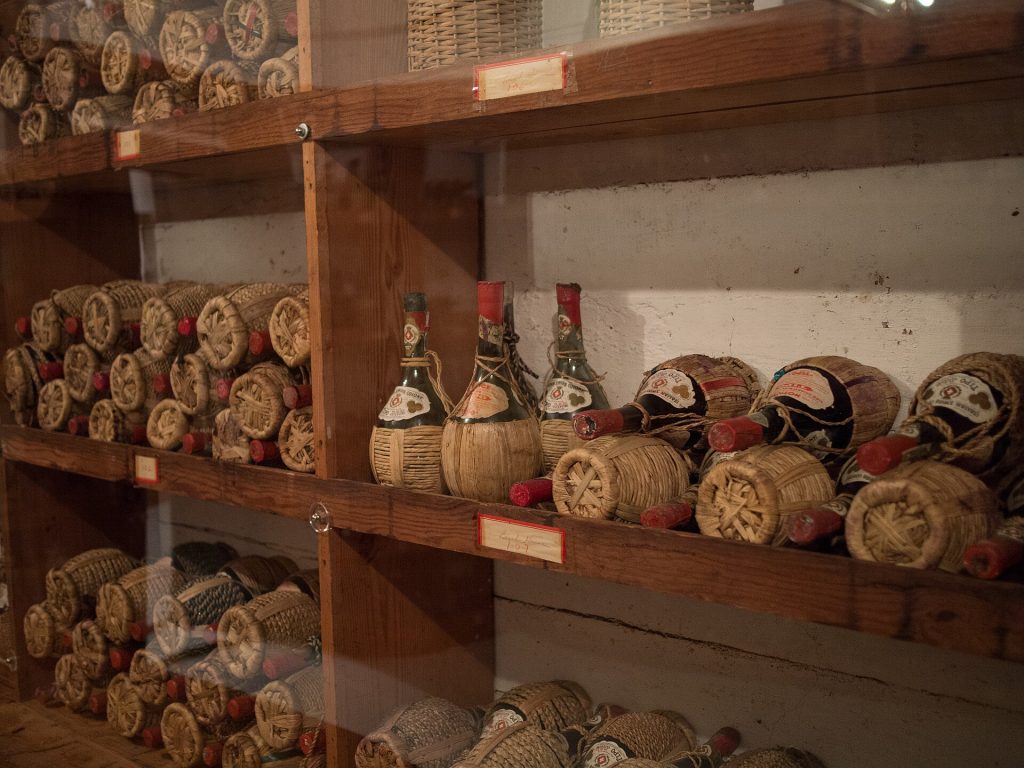
Heat and swings in temperature spoil wine faster than anything else in a restaurant. Wine Spectator gives the ideal storage range as 45°F to 65°F, with 55°F often cited as close to perfect, and warns against rapid, extreme or frequent temperature swings. It considers 50% to 80% humidity safe, advises keeping wine away from sunlight, and notes that bottles are traditionally stored on their sides to keep the cork moist.
- Keep back stock away from the kitchen line, dish machine and sunny windows.
- Give every wine a fixed bin number that matches the list and your inventory sheet.
- Count wine at least monthly, and high-value bottles more often.
- Reconcile counts against sales to spot over-pouring, breakage and missing bottles.
- Order to par so you are not carrying months of stock of a slow seller.
Training the team to sell it
A list only sells if the people carrying it can describe it. Short, regular tastings do more than an annual seminar.
- Taste every new glass pour with front-of-house staff before it goes on the list.
- Give each wine a two-line description servers can remember: style, and the dish it suits best.
- Teach one or two pairing suggestions for each main dish.
- Train opening, presenting and pouring to a standard measure.
- Make sure everyone who serves alcohol completes the responsible service training your jurisdiction requires.
FAQ
How many wines should a restaurant wine list have?
As many as you can sell, store and explain well. For most casual and neighbourhood restaurants, a focused list beats a long one.
How are restaurant wines usually priced?
Research cites two to three times cost as perhaps the most common approach, often with a lower percentage markup as the bottle cost rises.
How do I price wine by the glass?
A common method is to set the glass price so two glasses recover the bottle cost. Another is to divide the bottle’s list price by the number of pours.
What temperature should restaurant wine be stored at?
Wine Spectator gives 45°F to 65°F as the ideal range, with 55°F often cited as close to perfect, and advises avoiding big swings.
Draft a one-page list this week
Print your menu and write one wine style next to each dish. Turn that into a one-page draft list of your best-fit styles, a price ladder and a glass list you can realistically pour through, then take it to two distributors and ask for samples. For more front-of-house ideas, see our food and dining guides, look at how other rooms present their drinks through the restaurant directory, and read our tips on menu design.
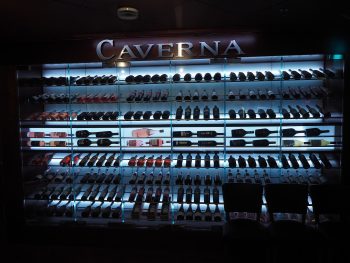
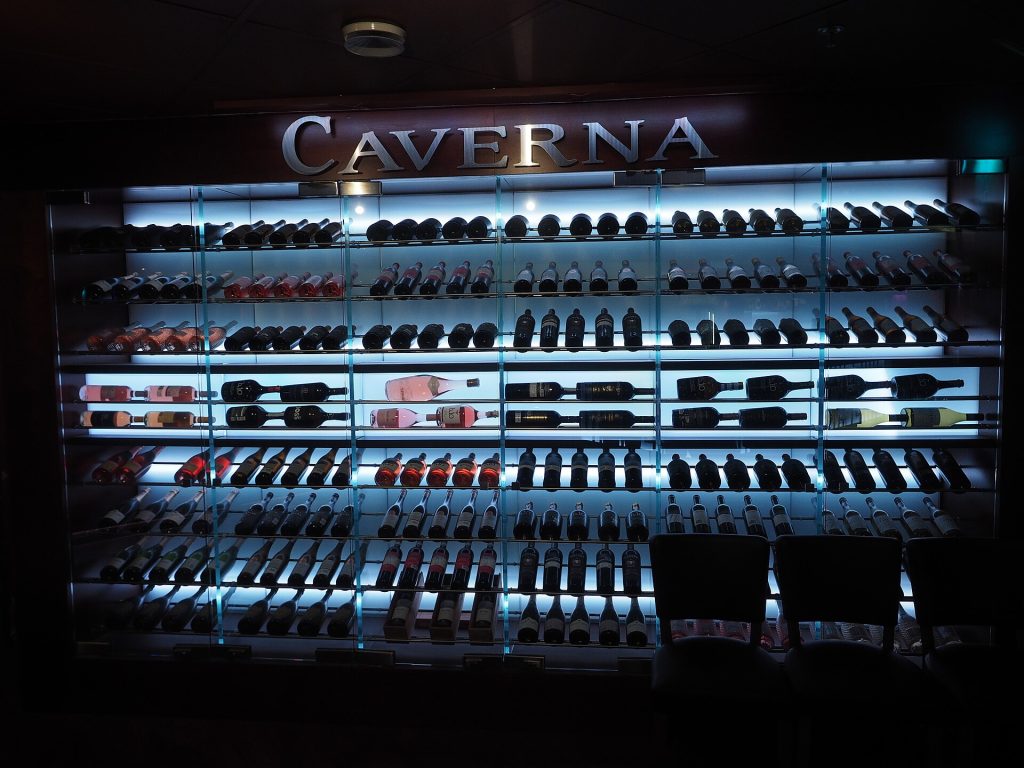
Featured photo: Wine bottles at restaurant Caverna by JIP, BY-SA 4.0.