Every restaurant sanitizer in common use works when it is mixed and used correctly. Chlorine is the cheapest and fastest but is sensitive to pH, food soil and heat. Quaternary ammonium (quat) is stable and gentle on equipment but is weakened by hard water. Iodine works well in acidic conditions and shows its strength by colour, but it can stain and costs more.
What matters most is not which one you pick. It is whether your staff mix it to the right concentration, use water at the right temperature, leave it on long enough and test it.
This comparison uses the FDA Food Code limits, as adopted into state regulation, plus public-health guidance on each chemical’s strengths and weaknesses.
Key takeaways
- Food Code concentrations: iodine 12.5 to 25 mg/L; quat as the EPA-registered label directs; chlorine 25 mg/L and up, with a minimum water temperature that depends on strength and pH.
- Minimum contact time is 10 seconds for chlorine (7 seconds in some conditions at 50 mg/L) and 30 seconds for other chemical sanitizers.
- Quat must be used in water with hardness of 500 mg/L or less, or the limit on its label.
- The Food Code requires a test kit that measures sanitizer concentration in mg/L.
- Wiping cloths must be held in sanitizer solution between uses and laundered daily.
Chlorine, quat and iodine side by side
The FDA Food Code is a model that states and local jurisdictions adopt into their own rules, and FDA published a 2026 edition. The figures below come from section 4-501.114 as adopted in Delaware’s food code, which follows the model closely. One note on units: mg/L and ppm are the same thing for sanitizer solutions.
| Factor | Chlorine | Quat | Iodine |
|---|---|---|---|
| Concentration | 25–49 mg/L, 50–99 mg/L, or 100 mg/L and above | As specified on the EPA-registered label | 12.5–25 mg/L |
| Minimum water temperature | 120°F at 25–49 mg/L; 100°F (pH 10 or less) or 75°F (pH 8 or less) at 50–99 mg/L; 55°F at 100 mg/L and above | 75°F | 68°F |
| pH | Weaker as pH rises | Active over a wide pH range | 5.0 or less, or as the label specifies |
| Water hardness | Not affected | 500 mg/L or less, or the label limit | No Food Code limit |
| Minimum contact time | 10 seconds; 7 seconds at 50 mg/L under set pH and temperature conditions | 30 seconds | 30 seconds |
| Food soil | Loses strength quickly | Relatively stable | Less affected than chlorine |
| Equipment and staff | Corrosive, irritating to skin | Non-corrosive, non-irritating | Non-corrosive; may stain some plastics |
| Cost | Generally inexpensive | Relatively expensive | Relatively expensive |
The contact times come from section 4-703.11, shown here in the same state code. The pros and cons come from the Alabama Department of Public Health guide to cleaning and sanitizing.
Chlorine: cheap, fast and fussy
Chlorine bleach is the default in many kitchens because it is cheap, works on a wide range of microorganisms and is easy to test. Its weak points are all about conditions. The Alabama guide notes that food soil quickly reduces its effectiveness, that it gets weaker as pH increases, that it dissipates in hot water and that it is corrosive and irritating to skin.
Reading the temperature table
The Food Code ties chlorine strength to water temperature and pH. At 25 to 49 mg/L you need water at 120°F. At 50 to 99 mg/L you need 100°F if the pH is 10 or less, or 75°F if the pH is 8 or less. At 100 mg/L and above, 55°F is enough. In practice, mixing a stronger solution in cooler water is simpler than trying to hold a weak one at 120°F.
- Use plain, unscented bleach meant for sanitizing, and follow its label for dilution.
- Change the solution when it is visibly dirty or tests low; food soil burns through chlorine fast.
- Don’t leave it on stainless steel longer than the label directs, and rinse where the label says to.
A sanitizer bucket that nobody tests is just wet towels and hope.
Quat: stable, but check your water
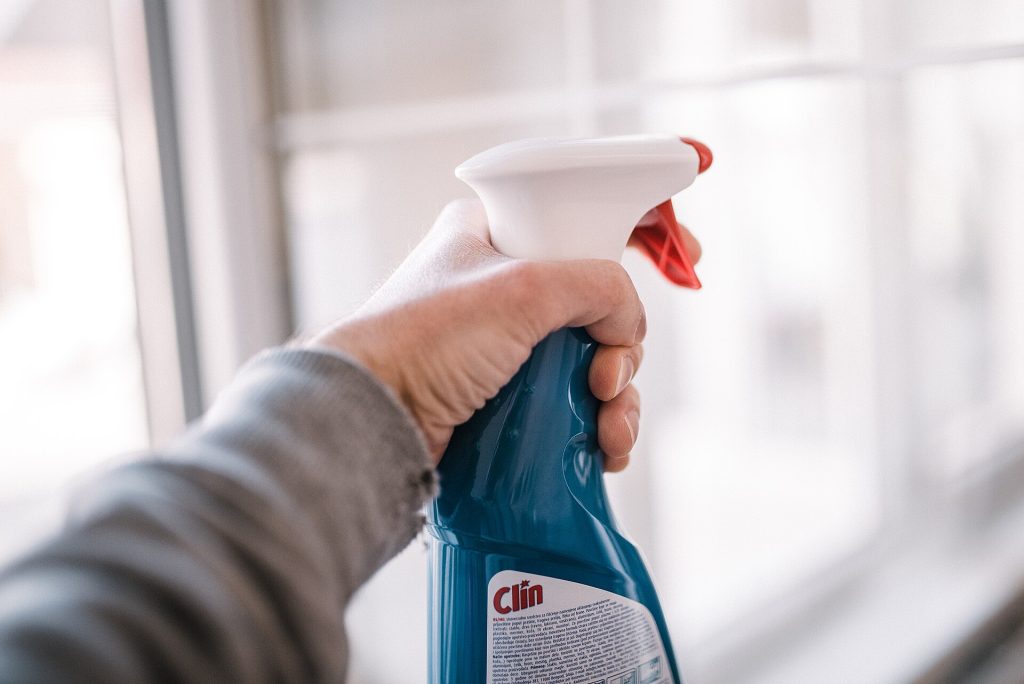
Quats are popular for wiping cloth buckets and spray bottles because they are stable, non-corrosive, non-irritating and keep working in the presence of some food soil. The Alabama guide also notes they are active over a wide pH range and leave a bacteriostatic film on surfaces.
The hard water problem
The main catch is water chemistry. The Food Code allows quat only in water with a hardness of 500 mg/L or less, or no greater than the limit on the EPA-registered label, and the Alabama guide lists incompatibility with hard water and most detergents as a key disadvantage. If your area has very hard water, ask your chemical supplier for a product rated for it, or consider a softener on the line feeding your dispenser.
- Mix it at 75°F or warmer.
- Give it 30 seconds of contact, or longer if the label says so.
- Rinse detergent off surfaces first; detergent residue can interfere with quat.
- Expect foam in mechanical systems and a film on surfaces, which some operators dislike on glassware.
Iodine: acidic and colour-coded
Iodine sanitizers, often called iodophors, are less common in restaurants but still used, particularly in bars and some manual warewashing setups. The Food Code requires 12.5 to 25 mg/L, water at 68°F or warmer and a pH of 5.0 or less, unless the manufacturer’s label specifies a different effective pH.
According to the Alabama guide, iodine acts quickly in acidic conditions, is less affected by food soil than chlorine, is non-corrosive and has a long shelf life. Its amber colour gives a rough visual check on strength. The trade-offs: it is slow above pH 7, vaporises at 120°F, can stain some plastics and porous surfaces, and costs more than chlorine.
Test strips, cloth buckets and EPA labels
Test every batch
Section 4-302.14 requires a test kit or other device that accurately measures sanitizer concentration in mg/L. Test strips are chemical-specific, so a chlorine strip will not read a quat solution. Keep the right strips next to every bucket, sink and dispenser, and check a fresh batch and any batch that looks dirty.
Wiping cloth buckets
Under section 3-304.14, as adopted in the state code, cloths used on counters and equipment must be held between uses in sanitizer at the correct concentration and laundered daily. The solution must be free of food debris and visible soil, and the bucket stored off the floor. Cloths used for raw animal foods must be kept separate from cloths used for anything else.
Read the EPA label
Food-contact sanitizers are registered pesticide products, and the label is the legal set of directions. EPA’s label requirements for food-contact sanitizers call for the label to state the dilution, how to apply it, the contact time and whether a potable water rinse is needed. Surfaces must also be pre-cleaned before sanitizing. When the label and the code differ, follow the stricter of the two.
For the bigger picture on cleaning schedules, see our kitchen cleaning schedule guide.
FAQ
Which restaurant sanitizer is best?
None is best everywhere. Chlorine suits operators who want low cost and can control pH and soil; quat suits cloth buckets and spray bottles where water is not too hard; iodine suits acidic conditions. Pick one per task and train to it.
How often should I change sanitizer buckets?
Whenever the solution is dirty or tests below the required concentration. The Food Code requires the solution to be free of food debris and visible soil, and your local code may set a time interval as well.
Can I mix chlorine and quat?
No. Use one chemical per container, mixed only as its label directs, and test it with the matching strip.
Is hotter water always better?
Not for every sanitizer. Chlorine dissipates in hot water and iodine vaporises at 120°F, so stay within the temperature range the code and label set.
Audit your sanitizer setup this week
Walk your kitchen with a set of test strips. Check every bucket, sink and spray bottle, and write down the chemical, the reading and the water temperature. Anything off goes on a retraining list. Then post a one-line mixing guide at each station. Our health inspection walkthrough shows how inspectors check this, and you will find more in our food safety guides.
Featured photo: Stainless kitchen container with cover by Yapparina, CC0.