The right commercial convection oven for most restaurants is the smallest size that handles your peak sheet-pan load, on the fuel your building already supports, with an ENERGY STAR certification. Size and fuel decide most of the cost and installation work. Features come after.
It is an easy purchase to get wrong. A full-size double stack looks like insurance until it idles half-empty all night, and a countertop half-size looks like a bargain until the Saturday bake runs in three rounds.
This buyer’s guide walks through the decisions in the order that matters, then sorts the market into budget tiers so you know what each step up actually buys.
Key takeaways
- Size to your busiest hour: full-size cavities take five or more standard 18 x 26-inch sheet pans.
- Match the fuel to your building’s existing gas line or electrical service before comparing models.
- Double stacking adds capacity in the same footprint, but only pays off if you fill both cavities.
- Combi ovens add steam and replace several appliances, at a higher price and with water and drain needs.
- ENERGY STAR says certified convection ovens are on average about 27% more energy efficient than standard models.
Size: full, half or bakery depth
Capacity is the first filter. According to Foodservice Equipment & Supplies, full-size units have cavities that hold five or more standard 18 x 26-inch sheet pans, while half-size units suit lower volumes. Bakery-depth models add interior depth for more flexible pan loading.
How to size it
- List what the oven will cook during your busiest hour: roasts, sheet-pan vegetables, bread, desserts, reheating.
- Convert each item into pans per hour.
- Add the pans you need in the oven at once at peak, then allow a margin for growth.
- If the answer is three pans or fewer, a half-size unit is usually enough. If it is five or more, look at full-size.
Then measure the space. Countertop half-size units fit tight kitchens, while floor models on stands need clearance for door swing and service access. FE&S notes some convection ovens need as little as 10 square feet of floor space.
Single or double stack
A double stack puts two ovens in one footprint. It is the standard answer for bakeries, high-volume banquet work and kitchens that roast and bake at the same time at different temperatures.
- Choose single if one cavity covers your peak and you would rather keep the spare budget for another appliance.
- Choose double if you regularly run two temperatures at once, or your peak load exceeds one cavity.
- Consider phasing: buy one full-size oven on a stand now, and add a second on a stacking kit later if volume grows. Confirm the model supports this before you buy.
An oven you only half fill is a heater you pay to run.
Gas or electric
For most operators, the building decides this one. If you have spare gas capacity and a hood, gas is the usual choice for full-size ovens. If you are in a food hall, a leased space with no gas, or a small counter-service kitchen, electric may be the only practical option.
| Factor | Gas | Electric |
|---|---|---|
| Utility need | Gas line with enough capacity, plus electrical for fans and controls | Dedicated circuit at the correct voltage and phase |
| Heating design | Direct-fired or indirect-fired through a heat exchanger | Electric elements |
| ENERGY STAR cooking efficiency | At least 49% | At least 71% (half-size) or 76% (full-size) |
| Best fit | High-volume kitchens with gas already in place | Kitchens without gas, smaller footprints, bakery work |
On gas units, FE&S distinguishes direct-fired designs, where the burner sits under the cavity and combustion gases contact the food, from indirect-fired designs that fire into a heat exchanger. Ask which one you are looking at, because it affects both evenness and maintenance.
Convection or combi
A combi oven adds steam to convection heat. FE&S describes combi ovens as able to smoke, roast, steam and bake, combining the jobs of a steamer, convection oven, proofer and holding cabinet in one unit. That versatility is the reason to buy one, and the reason they cost more.
When a combi makes sense
- You steam vegetables, seafood or rice in volume and want to free up a steamer.
- You roast proteins and want better yield and moisture control.
- You are short on space and want one unit to cover several jobs.
What changes with a combi
- Capacity: floor models typically have 20 shelves for 20 sheet pans or 40 hotel pans, while countertop units run 6 to 11 shelves.
- Steam generation: boiler units boil water in a separate generator, while boilerless units use the oven’s own heat to warm water run through a tube system, and are pitched on faster recovery and energy savings.
- Water and drain: you need a water supply and a drain connection, so ask the dealer what water treatment the manufacturer recommends.
- Ventilation: FE&S notes that ventless combis use more advanced technology and don’t require an exhaust hood.
If none of your menu needs steam, a plain convection oven is the better value.
Utilities, ventilation and energy
Get the installation right before you fall in love with a model. Walk the kitchen with your installer or a contractor and confirm:
- ☐ Gas supply size and pressure, or electrical voltage, phase and breaker capacity, against the spec sheet.
- ☐ Hood coverage and clearance to combustibles, as required by your local building and fire officials.
- ☐ Door swing, service clearance and a path to move the unit into the kitchen.
- ☐ Water and drain lines, if you are buying a combi.
On energy, ENERGY STAR says certified gas and electric convection ovens are on average about 27% more energy efficient than standard models. It estimates a certified electric convection oven saves about 1,200 kWh and about $150 a year, and about $1,300 over its lifetime, while a certified gas convection oven saves about $1,500 in utility bills over its lifetime. For combis, the savings estimates rise to about $1,200 a year for electric models and $500 a year for gas.
Those are averages against standard models, but they belong in the comparison. Search the ENERGY STAR certified list for any model you are quoted, and ask your utility whether it offers a rebate on certified equipment.
Budget tiers and what you get
Prices move too much by region and dealer to quote usefully, so think in tiers. Get at least two written quotes that include delivery, installation and startup.
Entry tier
Countertop or half-size units with analog dials and a basic fan. Good for cafés, bars with small menus and backup capacity. Check warranty length and parts availability closely, because this is where service support varies most.
Mid tier
Full-size, single-deck floor models with digital controls, multiple fan speeds, programmable cook cycles and ENERGY STAR certification. This is where most full-service restaurants land, and it is often the best value over the oven’s life.
Premium tier
Double stacks, bakery-depth cavities, advanced programming and connected controls, plus combi ovens at the top. Worth it when volume or menu demands it. Budget for installation and water treatment on combis, not just the unit price.
Compare this purchase against your other big-ticket items in our kitchen equipment guides, and see keeping kitchen equipment running to protect it once it is installed.
FAQ
Is a half-size convection oven enough for a restaurant?
For small menus, cafés and backup capacity, often yes. If your peak load is five or more sheet pans at once, a full-size unit is the safer choice.
Do convection ovens need a hood?
Requirements depend on the appliance and your local codes, so ask your building and fire officials before you buy. FE&S notes some ventless combis don’t require an exhaust hood.
Is ENERGY STAR certification worth paying more for?
Usually. ENERGY STAR estimates lifetime utility savings of about $1,300 for a certified electric convection oven and about $1,500 for a certified gas one compared with standard models.
Should I buy a combi instead?
Only if you will use the steam. A combi can replace a steamer and holding cabinet, but it needs water and drain connections and costs more.
Before you sign the purchase order
Write down your peak pan count, your available utilities and your hood coverage, then send those three facts to two dealers with a request for ENERGY STAR certified options. Pair the new oven with a smarter kitchen layout so it sits where the work actually happens.
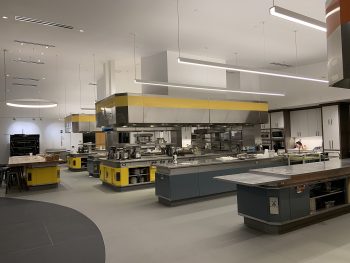
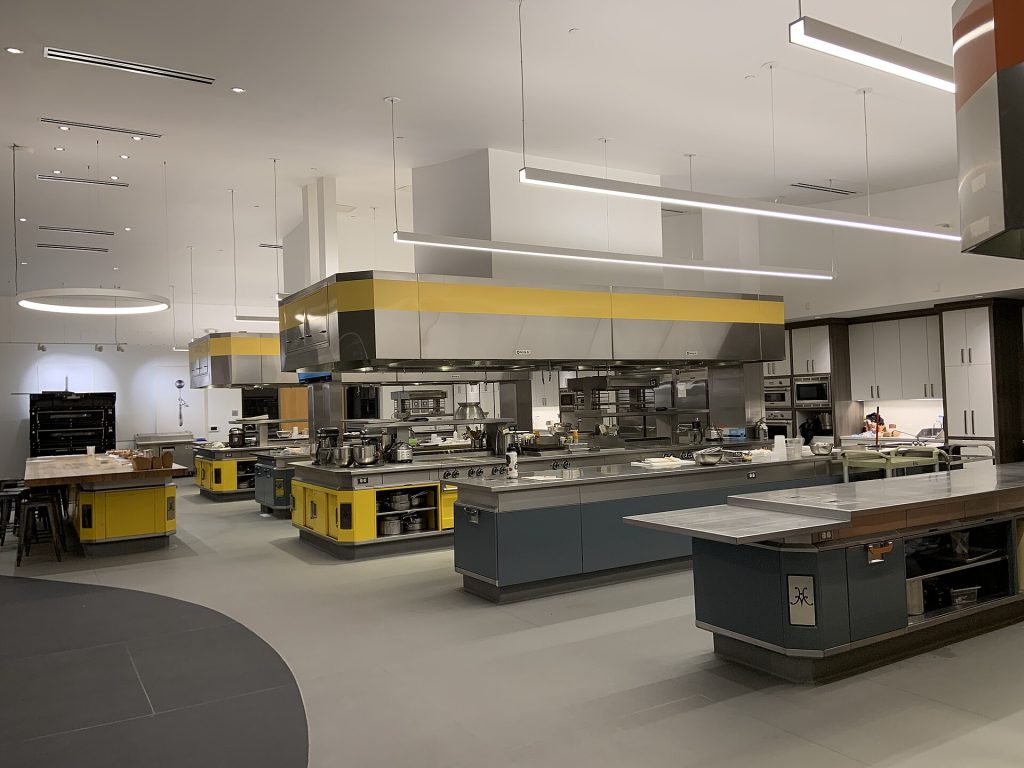
Featured photo: Kitchen at CIA Copia by Shrinks99, CC0.