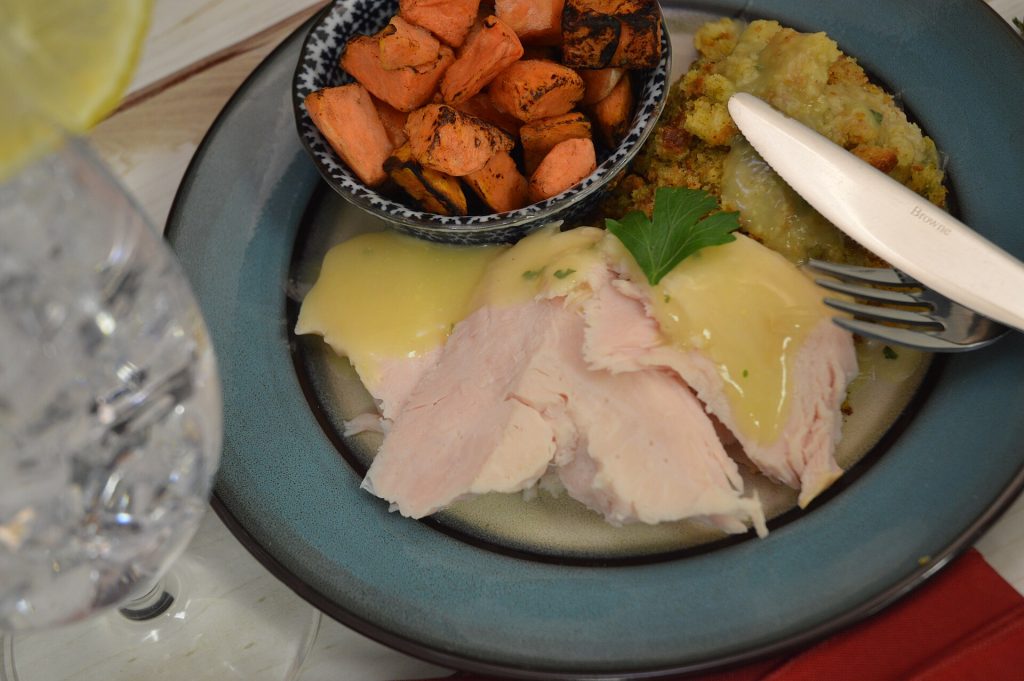
A Thanksgiving takeout menu works when it is small, pre-ordered and built around food that reheats well. Lock a short menu of two package sizes, close orders several days out, cook and chill to a schedule, send every order home with printed reheating instructions based on USDA guidance, and run pickup in timed slots on the Wednesday before the holiday.
Thanksgiving falls on Thursday, November 26 in 2026, and many restaurants either close or run a reduced service that day. To-go packages let you sell the holiday meal without filling the dining room, but only if the logistics are nailed down weeks ahead.
To make this concrete, we’ll follow a hypothetical restaurant through the whole plan. Every number below is illustrative; swap in your own.
Key takeaways
- Keep the menu short: one main, four or five sides, one dessert, in two package sizes.
- Close pre-orders several days before pickup so purchasing and prep are based on real numbers.
- Price from food cost, packaging and labor per package, not from what the dine-in menu charges.
- Include printed reheating instructions: reheat to 165°F and bring gravy to a rolling boil.
- Tell customers to refrigerate within two hours and use leftovers within three to four days.
The scenario: say you run a 70-seat neighbourhood restaurant with a strong roast chicken and seasonal sides. You plan to close on Thanksgiving Day and sell to-go dinners for pickup on Wednesday, November 25. Your kitchen team is four cooks plus a dishwasher, and your walk-in is the tightest constraint you have.
Step 1: Build a menu that travels
The dine-in menu is the wrong starting point. Pick dishes that hold, chill and reheat without falling apart, and that your line already knows how to make.
The hypothetical menu
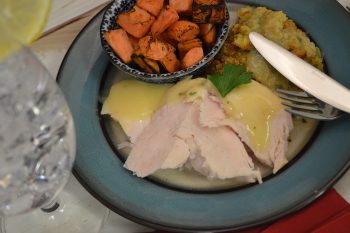
- Main: roast turkey breast, sliced and packed with pan juices, rather than whole birds, which eat walk-in space and are hard to reheat evenly.
- Sides: mashed potatoes, cornbread stuffing, green beans with shallots, roasted squash, cranberry relish.
- Gravy: packed separately in a sealed deli container.
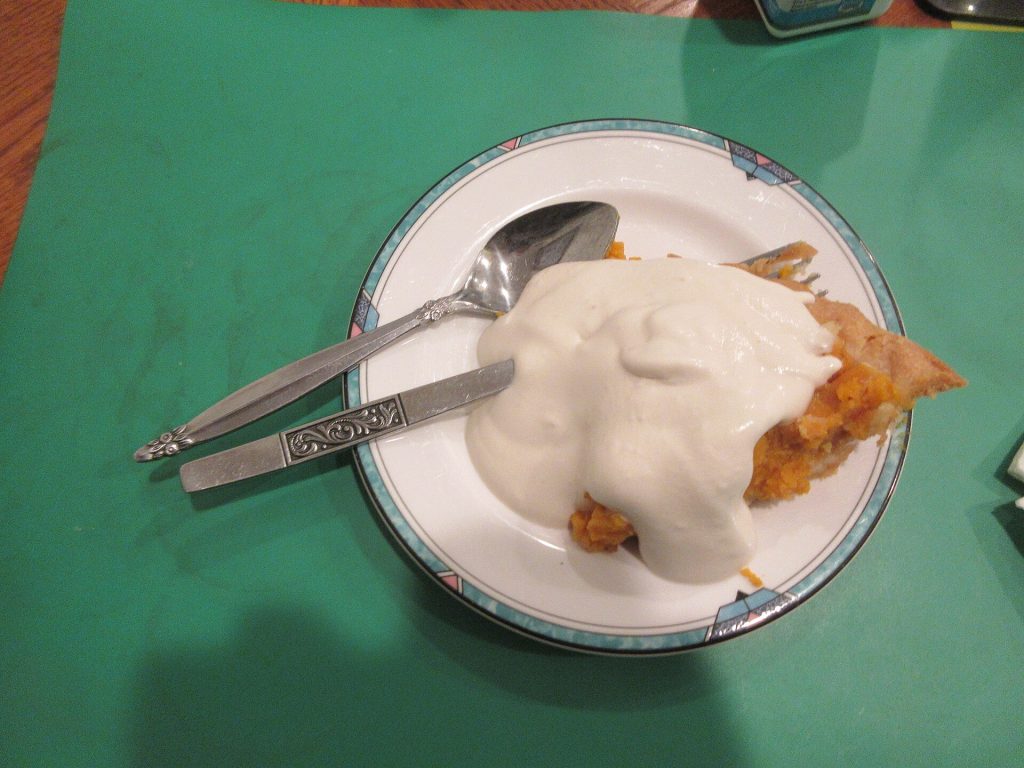
- Dessert: one pie, baked Tuesday.
- Add-ons: extra gravy, a second pie, dinner rolls.
What to leave off
Skip anything that relies on crisp texture at the table, such as fried items or delicate salads dressed in advance. Skip dishes that need last-minute finishing skills your customers don’t have. And skip anything your team hasn’t cooked in volume before; Thanksgiving week is not the time to test a new recipe on 150 households.
Two sizes keep ordering simple: a package that serves four and one that serves eight. Every extra option adds a line to the prep sheet and a chance for an order error at pickup.
Step 2: Set the pre-order window and cutoff
Pre-orders turn guesswork into a purchase order. In our scenario, the timeline looks like this.
| When (2026) | Task |
|---|---|
| Early October | Finalize menu, cost it, order packaging samples |
| Late October | Open pre-orders online and in the dining room |
| Thursday, Nov 19 | Pre-order cutoff; place protein and produce orders |
| Sat to Mon, Nov 21 to 23 | Stocks, cranberry relish, pie dough, portioning |
| Tuesday, Nov 24 | Roast, cool and slice turkey; bake pies; cook and chill sides |
| Wednesday, Nov 25 | Pack, label and run timed pickups |
How the order cap works
In the scenario, the team measures how many packed bags fit on cleared walk-in shelving alongside normal stock, then sets the cap slightly below that. If the cap is 120 packages, the online form closes automatically at 120, even if the cutoff date hasn’t arrived. Selling out early is a good problem; a walk-in too full to cool food properly is not.
Collect payment in full at ordering, and state the cancellation deadline plainly. A cap on total packages, set by walk-in space rather than by demand, protects you from overselling.
Step 3: Price it with a simple formula
Holiday packages are often underpriced because owners compare them to dine-in plates. Build the price from the package up instead.
- Cost the food for each package size from your actual recipes and supplier quotes.
- Add packaging: containers, lids, bags, labels and printed instructions.
- Add labor: prep and packing hours divided by the number of packages.
- Set your target margin and round to a clean price.
Here’s an illustrative example only. If the four-person package costs $38 in food, $6 in packaging and $12 in labor, total cost is $56. At a target where cost is 45% of price, the package sells for about $125. Run the same maths for the eight-person size rather than simply doubling the price.
A holiday takeout package is a separate product with its own costs. Price it like one.
If your recipe costing is patchy, sort that first; our guide to costing a menu walks through it.
Step 4: Packaging and reheating instructions
Packaging
Use oven-safe containers for anything customers will reheat, and sealed, leak-resistant containers for gravy and relish. Label every container with the dish name and the order number, and tape a checklist to each bag so the pickup team can confirm contents in seconds.
Reheating instructions
Print one card per order. Base it on federal guidance, not house habit. FoodSafety.gov says poultry must be cooked to 165°F and leftovers reheated to 165°F. The FoodSafety.gov Thanksgiving leftovers guidance adds that sauces, soups and gravies should be brought to a rolling boil, and that microwaved food should be covered, rotated and checked with a thermometer in several places.
- Keep everything refrigerated until you’re ready to reheat.
- Reheat turkey and sides until they reach 165°F, checked with a food thermometer.
- Bring gravy to a rolling boil.
- Refrigerate leftovers within two hours in shallow containers, and use them within three to four days or freeze them.
USDA’s own Thanksgiving advice for home cooks also stresses keeping food out of the danger zone of 40°F to 140°F for no more than two hours, according to its holiday food safety release. Put that line on the card too.
Step 5: Staff the prep days and the pickup
Prep days
In our scenario, two cooks handle stocks, sauces and pie dough from Saturday to Monday while the others run normal service. Tuesday is all hands on roasting, cooling and packing sides. Chill cooked food fast in shallow pans so the walk-in isn’t loaded with warm product.
Print a production sheet from the final order count on Friday, broken down by dish and package size, so every cook knows exact quantities. Write the cooling log alongside it, so the time each batch goes into the walk-in and its temperature are recorded as you go.
Pickup day
- Offer 15-minute pickup slots and cap the number of orders in each.
- Pre-pack and stage orders in the walk-in by slot time, with the bag checklist on top.
- Set up one pickup point near the door, staffed by two people: one to find the order, one to check the name and hand it over.
- Keep a short list of extras for walk-ins only if the walk-in space allows.
For more on seasonal planning, see our food and dining guides, or list your holiday offer where locals are searching in our restaurant directory.
FAQ
How far ahead should the pre-order cutoff be?
Far enough to order product and schedule prep with real numbers. In the walkthrough above, cutoff falls a week before pickup, which leaves time for supplier orders.
Should I sell whole turkeys or sliced breast?
Sliced breast is easier to cook, chill, pack and reheat evenly. Whole birds take far more refrigerator space and are harder for customers to reheat safely.
What reheating temperature should I print on the card?
FoodSafety.gov says leftovers should be reheated to 165°F, checked with a food thermometer, and gravies brought to a rolling boil.
How long will the leftovers keep?
FoodSafety.gov says Thanksgiving leftovers are safe in the refrigerator for three to four days, or they can be frozen.
What to do this week
Cost out one package size this week using your own recipes, then set a hard order cap based on your walk-in space. Once both numbers are fixed, open pre-orders and let the sign-ups tell you how to staff. Our checklist for holiday staffing can help with the rota.
Featured photo: Sliced Turkey (13) (37562585304) by John Freeman, BY 2.0.