This Reading Terminal Market guide is for chefs, buyers and restaurant owners visiting Philadelphia who want more than a cheesesteak. The short answer: the market has traded at 12th and Arch since 1893, it is open daily from 8 am to 6 pm, and its mix of produce, butchers, fishmongers, cheese and Pennsylvania Dutch stands makes it a working food hall as much as a tourist stop. Go on a weekday morning between Tuesday and Saturday if you want to see every stand trading.
The Reading Terminal Market sits at 1136 Arch Street, next to the Pennsylvania Convention Center. It is run by a 501(c)(3) not-for-profit corporation and describes itself as one of America’s largest and oldest public markets.
Below: how the market came to be, how it works day to day, the merchants a food professional should know, and the schedule quirks that catch visitors out.
Key takeaways
- The market opened in 1893 beneath the Reading Railroad’s new terminal and is housed in a National Historic Landmark building.
- Market hours are 8 am to 6 pm daily, but individual merchants set their own hours.
- Chef-friendly stops include Iovine Brothers Produce, Giunta’s Prime Shop, John Yi Fish Market and Downtown Cheese.
- Bassetts Ice Cream, founded in 1861, was the first merchant to sign a lease at the market.
- Most Pennsylvania Dutch merchants close on Sundays and some also close on Mondays, so plan a Tuesday to Saturday visit.
A short history of the market
According to the Encyclopedia of Greater Philadelphia, farm and meat markets had traded along High Street, later Market Street, since colonial times. In the early 1890s the Reading Railroad, competing with the Pennsylvania Railroad’s Broad Street Station, built a new terminal at Twelfth and Market. Two existing markets secured space on the ground floor beneath the raised tracks, with a new cold storage basement below.
The market opened in stages in 1892 and was completed in January 1893. At its peak, nearly 380 vendors sold seafood, meat, produce and poultry. Supermarkets and the post-war move to the suburbs hurt trade, and by 1959 occupancy had fallen to 70 percent.
The revival came in the 1980s, when new management recruited Amish farmers and Asian vendors and tripled occupancy by 1983. In 1990 the Pennsylvania Convention Center Authority bought the property, with commitments to preserve the market. Today the market’s own history page notes that it has been housed in its National Historic Landmark building since 1893.
Reading Terminal is a food hall built on a working market, and it rewards the visitor who treats it that way.
Hours and how the market works
The market’s posted hours are 8 am to 6 pm, every day. Individual merchants set their own schedules within that, and several close earlier or on certain days. The Independence Visitor Center describes around 80 independently owned local merchants, selling everything from produce, meat and seafood to baked goods, flowers and prepared food.
- Early morning: the quietest time to talk to butchers and fishmongers, and the best selection.
- Lunch: the busiest period, when the prepared-food counters draw long lines.
- Late afternoon: several stands close before the market does, so do not leave buying until 5 pm.
Many merchants take online orders through the market’s ordering partner and accept cards, so a first visit can turn into repeat orders once you know which stands suit your menu.
Sourcing stops for chefs and buyers
For a chef or buyer, these are the stands to walk first. Each was confirmed trading on the market’s official merchant directory in September 2026.
Iovine Brothers Produce
Brothers James and Vincent Iovine opened Iovine Brothers Produce in 1994. The stand carries staples alongside specialty produce, gourmet mushrooms, exotic fruit and vegetables, and bulk nuts, beans, seeds and dried fruit, and the market describes it as a destination for Philadelphia chefs. It is open daily with the market.
Giunta’s Prime Shop
Giunta’s Prime Shop, open since 2005, is a full butcher offering beef, lamb, pork, poultry and veal. Its strength for professionals is custom cuts and special orders, which makes it worth a conversation if you need a specific cut for a menu test.
John Yi Fish Market
John Yi Fish Market sells farmed and wild-caught fish, sushi-grade tuna and salmon, and live lobster from tanks. It trades Monday to Saturday from 8 am to 6 pm and on Sundays from 9 am to 5 pm.
Downtown Cheese
Open since 1989, Downtown Cheese stocks international and domestic cheese and charcuterie, along with crackers, olives, oils and vinegars. Staff offer samples, which makes it a useful place to taste before building a cheese course.
Long-running names worth knowing
Several merchants carry decades of Philadelphia food history, and they are worth a visit for research as much as for lunch.
Bassetts Ice Cream
Bassetts Ice Cream was established in 1861 and describes itself as America’s oldest ice cream company. Its market listing says it was the first merchant to sign a lease at the market, in 1892, and it remains family-owned. The counter offers more than 40 flavours made with cream and milk from western Pennsylvania dairy farms, and the company runs a wholesale division for foodservice operators.
DiNic’s
The Nicolosi family’s food business began in 1918 with a butcher shop in South Philadelphia. DiNic’s opened in the late 1970s and is now in its fourth generation, known for slow-roasted meats and its roast pork sandwich, which its listing notes was crowned Best Sandwich in America in 2013 after Travel Channel coverage. It is open Monday to Saturday.
The Pennsylvania Dutch merchants and their schedule
The Pennsylvania Dutch stands are one of the market’s defining features, and their schedule is the thing visitors most often miss. Most close on Sundays, and some also close on Mondays. Check the day before you plan a buying trip around them.
| Merchant | What to look for | Days open |
|---|---|---|
| Beiler’s Bakery | Pies, sticky buns, breads and whoopie pies, baked on site by the same family since 1984 | Monday to Saturday |
| Dutch Eating Place | Pennsylvania Dutch breakfasts and lunches, shoofly pie and apple dumplings | Tuesday to Saturday |
| Miller’s Twist | Butter-dipped Amish-style soft pretzels and pretzel wraps | Monday to Saturday |
| Lancaster County Dairy | Milk and cream from Lancaster County farms, yogurt, butter and fresh juices | Tuesday to Saturday |
| Halteman Family Meats | Lancaster County beef, pork and poultry, and at least eight kinds of bacon | Closed Thursdays and Sundays |
Halteman Family Meats is run by the Riehl family, three generations of butchers from Lancaster County. Lancaster County Dairy sources milk and cream from Kreider Farms and Maplehofe Dairy. For a buyer interested in regional supply, these stands are a direct line to farms an hour or two west of the city.
Practical tips for a working visit
- Pick the right day. Tuesday to Saturday is the only window when every stand in this guide is trading.
- Arrive early. Talk to butchers, fishmongers and produce staff before the lunch crowd.
- Bring a cooler. If you are buying meat, fish or dairy to take back, keep it cold for the trip.
- Ask about ordering. Many merchants take online orders, and butchers such as Giunta’s handle special orders.
- Taste with purpose. Note flavours and techniques you could adapt, then record costs and suppliers in your own menu development notes.
For more food trips like this, browse our lifestyle guides, see working with local suppliers, and find places to eat across the country in our restaurant directory.
FAQ
What are Reading Terminal Market’s hours?
The market is open daily from 8 am to 6 pm. Individual merchants set their own hours, and some close earlier or on certain days.
Are the Amish and Pennsylvania Dutch stands open on Sunday?
Generally not. The Pennsylvania Dutch merchants in this guide are closed on Sundays, and some also close on Mondays.
Where is Reading Terminal Market?
At 1136 Arch Street in Philadelphia, beside the Pennsylvania Convention Center.
When did Reading Terminal Market open?
It opened in stages from 1892 and was completed in January 1893, beneath the Reading Railroad’s terminal.
Plan your visit
Check the market’s merchant directory the week before you go, since hours and line-ups change. Plan a Tuesday to Saturday morning, walk the produce, meat, fish and cheese stands first, then the Pennsylvania Dutch aisle, and collect contact details from any merchant you might order from again.
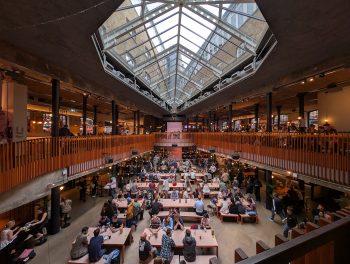
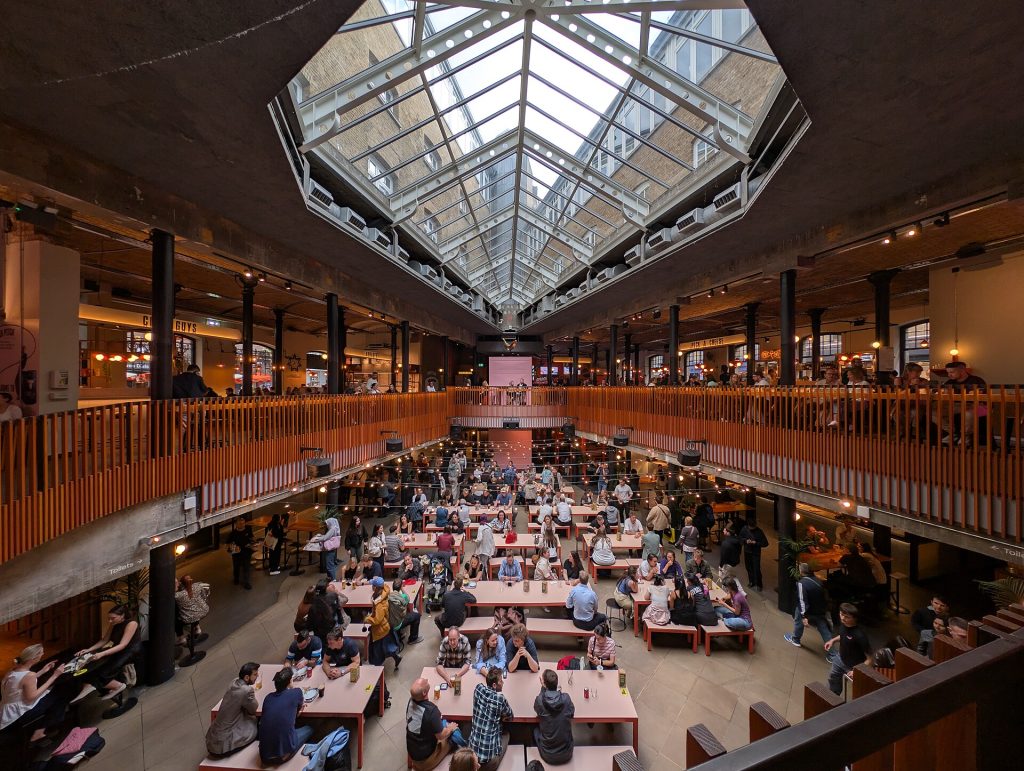
Featured photo: Seven Dials Market 2026-06-04 by Andy Li, CC0.