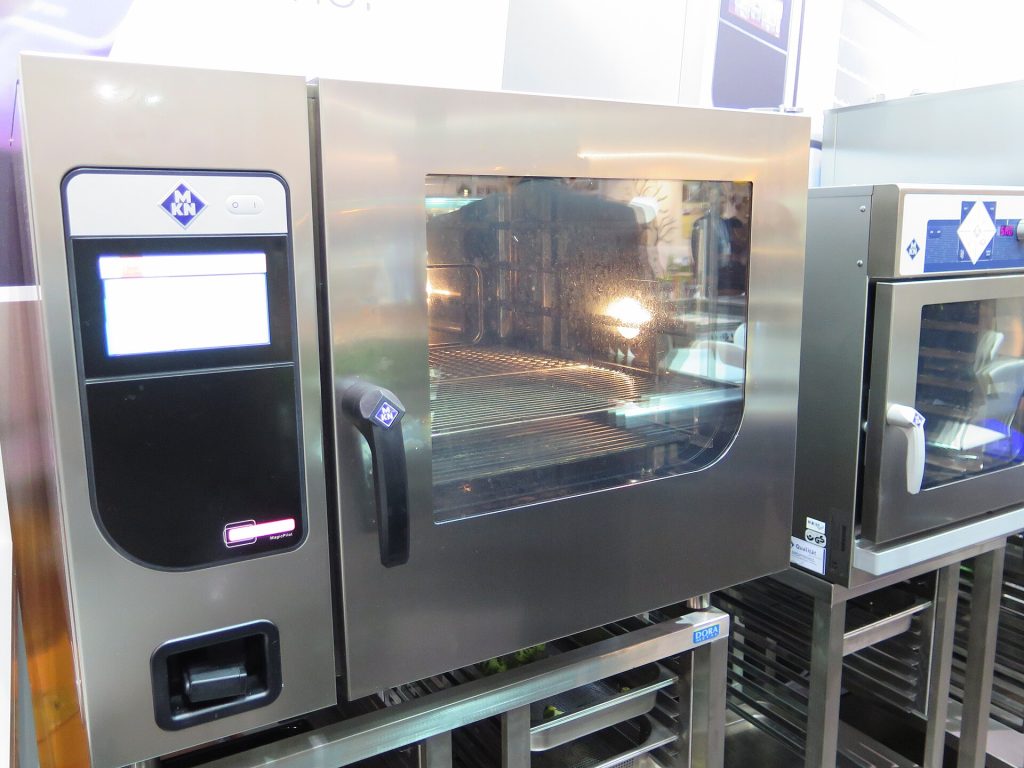
A combi oven is a single oven that cooks with steam, with dry convection heat, or with both at once. That combination lets one cabinet steam vegetables, roast meat, bake bread, proof dough and regenerate plated food, often faster and with less shrinkage than a standard convection oven.
It suits kitchens that want to do more with less floor space: busy full-service restaurants, banquet and catering operations, hotels and any menu that leans on batch roasting. It is harder to justify for a small grill-and-fryer menu. This explainer covers how the modes work, what the probe does, how to size one, and the water, ventilation and energy questions to settle before you buy.
Key takeaways
- Combi ovens have three modes: steam, convection (dry heat) and combination, which adds controlled humidity to hot air.
- Boilerless models make steam inside the cavity and use far less water than boiler-based ones.
- A core-temperature probe lets the oven cook to a target internal temperature rather than a fixed time.
- Capacity is measured in pans. Size on your busiest batch, not your average one.
- Hard water and scale are the main enemies. Plan water treatment and a descaling routine from day one.
In this guide
- Three cooking modes in one cabinet
- Boiler or boilerless steam
- Core-temperature probes and programs
- Sizing a combi oven by pans
- Water treatment, descaling and ventilation
- Running costs and ENERGY STAR
- FAQ
- Deciding whether you need one
Three cooking modes in one cabinet
The EPA’s WaterSense at Work guide to combination ovens describes the three modes simply: steam mode for rapid cooking, circulated hot air mode for roasting and baking, and combi mode that blends the two. What makes the oven useful is the ability to switch between them, and to control humidity, within a single cooking program.
Steam mode
Steam carries heat into food quickly and gently. It is used for vegetables, rice, seafood, dumplings, custards and for holding delicate items without drying them. Because the cavity is saturated, there is little surface browning.
Convection mode
A fan circulates dry hot air, just as in a standard convection oven. This is where you get browning and crisp surfaces: roast potatoes, sheet-pan chicken, pastries and bread crusts.
Combination mode
Hot air and steam run together, with the oven managing humidity. The moisture limits shrinkage and speeds heat transfer, while the dry heat still browns the outside. Large roasts, braised dishes, whole birds and reheating plated banquet meals are classic combi-mode jobs.
Other functions
- Proofing dough at a low, humid setting.
- Delta-T or low-temperature cooking, keeping the cavity a set number of degrees above the core temperature for gentle roasting.
- Regeneration of chilled plated food for banquets.
- Overnight cooking programmed to finish before the morning shift arrives.
Boiler or boilerless steam
How the oven makes steam affects water use, maintenance and price.
- Boiler-based: a separate boiler generates steam and feeds it into the cavity. The EPA notes that these units waste substantial water cooling condensed steam before it goes down the drain, and can use more than 20 gallons per cooking cycle in steam mode.
- Boilerless: water is sprayed onto a heat source inside the cavity to create steam on demand. There is no separate boiler to heat or descale, and the EPA says the unit only needs draining and refilling daily, with no condensate cooling water.
Boiler models are often favoured for heavy, continuous steaming. Boilerless models are simpler and cheaper to run for most restaurant menus. Ask each supplier which type they are quoting and why.
Core-temperature probes and programs
Most combi ovens come with a core-temperature probe: a thin spike you insert into the thickest part of the food. Instead of cooking for a fixed time, you tell the oven the target internal temperature, and it stops, holds or switches modes when the food gets there.
That makes the probe a food safety tool as well as a quality one. FoodSafety.gov’s minimum internal temperatures are 165°F (74°C) for all poultry, 160°F (71°C) for ground meats, and 145°F (63°C) for whole cuts of beef, pork and lamb with a three-minute rest. Setting the probe to the right target, and recording the result, gives you a cooking log with no extra work. Your local health code still governs what you must record, so confirm the rules with your inspector.
Programs
Nearly every model stores recipes as multi-step programs, for example steam for ten minutes, combi until the core hits a set point, then dry heat to crisp. Programs let a less experienced cook get the same result as the chef, which is one of the strongest arguments for a combi in a kitchen with staff turnover.
The probe turns a timer guess into a temperature you can prove.
Sizing a combi oven by pans
Combi capacity is expressed in the number of hotel or gastronorm pans the oven holds, and in pan size: half-size, full-size or 2/3-size. Under the ENERGY STAR commercial ovens specification, eligible electric models range from 3 to 40 pans and gas models from 5 to 40 pans, with separate criteria for 2/3-size electric units holding 3 to 5 pans.
- List the dishes that would move into the combi and the batch sizes for your busiest service or event.
- Convert each batch into pans, remembering that shallow pans cook faster and more evenly than deep ones.
- Allow for the fact that steam-mode items and dry-heat items cannot share the cavity at the same time.
- Choose a size with some headroom. A stacked pair of smaller units is an option if you need two modes at once.
Check door swing, clearances and whether a stand, stacking kit or roll-in trolley is needed. Larger floor models take full rack trolleys, which suits banquet work but needs clear floor space in front of the oven.
Water treatment, descaling and ventilation
Water treatment and descaling
Scale is the most common reason combi ovens underperform or need a service call. The EPA advises operators to keep track of water quality and prevent scale buildup to increase the equipment’s life, and to replace door gaskets and maintain hinges so the door seals properly.
- Have your water tested for hardness before installation and follow the manufacturer’s water specification.
- Budget for a filtration or softening system if the supplier recommends one. Warranty terms often depend on it.
- Run the built-in cleaning and descaling programs on the schedule the manufacturer sets, and log them.
- Check door gaskets weekly and replace any that are torn or flattened.
Ventilation and hoods
Combi ovens release heat, steam and cooking vapour when the door opens. Whether you need a hood, and what kind, depends on the model’s listing, what you cook and your local mechanical code. Some models are sold with integrated condensation hoods. Ask your supplier for the listing documents and confirm the requirement with your building or fire department before you order.

Running costs and ENERGY STAR
A combi runs for long hours, so utility use matters. According to ENERGY STAR, a certified electric combination oven saves a business about $1,200 a year and $8,000 over its lifetime, and a certified gas model about $500 a year and $4,600 over its lifetime. To qualify, an oven must meet idle and cooking efficiency levels in both convection and steam modes, plus limits on water use during cooking.
The water difference is large. The EPA guide says older ovens can use 3.5 gallons or more per pan per cooking cycle, while ENERGY STAR certified models use 0.5 gallons or less per pan in steam mode and 0.4 gallons or less in convection mode.
- Program recipes to use dry heat wherever steam is not needed.
- Turn the oven off in slow periods rather than leaving it idling.
- Keep the door closed and load full batches.
For more on planning the line around a new piece of kit, see planning an efficient kitchen layout and our kitchen equipment guides.
FAQ
Can a combi oven replace a steamer and a convection oven?
In many kitchens, yes, because it performs both jobs. It cannot do both at the same moment, so busy kitchens sometimes keep a second oven or buy a stacked pair.
Is a combi oven hard for cooks to learn?
The basics are quick to learn, especially with stored programs. Getting the most from humidity control and multi-step cooking takes practice, so ask the supplier about on-site training.
How often should a combi oven be descaled?
It depends on your water hardness, how much steam you use and the manufacturer’s schedule. Hard water and heavy steaming mean more frequent descaling.
Do combi ovens need a drain?
Yes. Steam and cleaning cycles produce water that has to go somewhere, so plan the drain connection with your installer.
Deciding whether you need one
List the dishes you cook in the oven, steamer and on the stovetop today, and mark which ones a combi could take over. If that list is long and covers your busiest service, a combi is worth pricing. Then test your water, ask two or three suppliers for quotes that include water treatment, installation and training, and compare the ENERGY STAR status of each model. If you are replacing older equipment at the same time, a kitchen equipment maintenance plan will help it last.
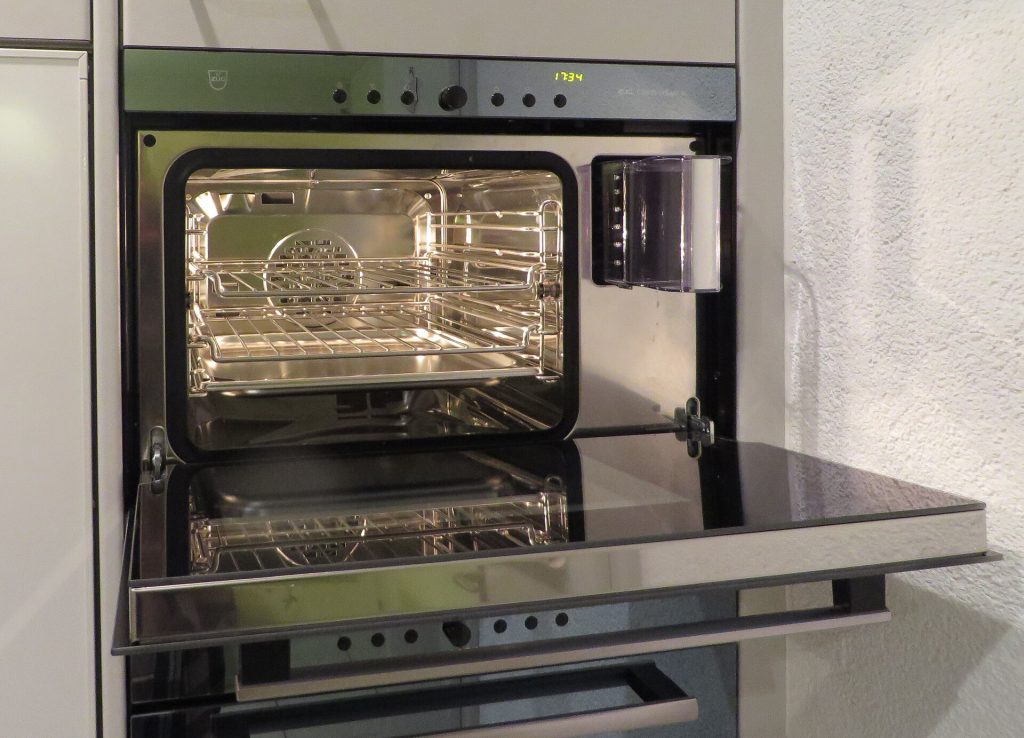
Featured photo: Combi-Steamer SL V-Zug by BBCLCD, BY-SA 3.0.