Restaurant shift scheduling usually comes down to four patterns: fixed shifts, rotating shifts, split shifts and on-call shifts. Fixed shifts are the easiest to staff and the best for retention. Rotating shifts spread the unpopular nights fairly. Split shifts cover lunch and dinner without paying for the dead afternoon. On-call shifts protect you from surprise rushes but are the most tightly regulated.
Most restaurants end up with a blend: a fixed core, a rotation for weekends and closes, and very little on-call. Before you settle on yours, check whether your city or state has a predictive scheduling law, because several of them put a price on late changes, short turnarounds and cancelled on-call shifts.
Key takeaways
- Fixed shifts give staff predictable lives and suit a stable core team, but they can leave the same people stuck with every Saturday close.
- Rotating shifts share good and bad slots fairly, at the cost of harder planning and more fatigue from changing start times.
- Split shifts trim idle labor between lunch and dinner, but the long day wears on people.
- On-call shifts are the most expensive pattern in cities with fair workweek laws, because cancelled on-call time can trigger predictability pay.
- New York City, Seattle, Chicago, Philadelphia and Oregon all require roughly two weeks’ notice of schedules for covered employers.
In this guide
- The four shift patterns in plain terms
- Side-by-side comparison
- Labor cost and retention trade-offs
- Predictive scheduling laws to check first
- Matching the pattern to your restaurant
- FAQ
- Build next month’s schedule this way
The four shift patterns in plain terms
Fixed shifts
Each person works the same days and hours every week: Maria opens Tuesday to Saturday, Dev closes Thursday to Monday. Staff can plan childcare, classes and second jobs around it, and managers spend minutes, not hours, on the rota. The weakness is rigidity. When sales swing with the seasons, a fixed schedule either overstaffs the quiet weeks or leaves you short on the busy ones.
Rotating shifts
People cycle through different slots over a set period, for example two weeks of opens followed by two weeks of closes, or a rotating share of Friday and Saturday nights. Rotation is the simplest way to show the team that the worst shifts are shared, and it cross-trains people on every daypart. It also means start times that move around, which some staff find tiring.
Split shifts
One person works two separate blocks in one day, typically 10:30 to 2:30 and then 5:00 to 9:30, with unpaid time in between. You pay only for the busy hours, and you keep the same faces on the floor for both services. The cost lands on the employee: a long day away from home, often with a commute too short to go back and too long to rest.
On-call shifts
Staff hold a block of time open and wait to hear whether they are needed. It is a tempting way to cover unpredictable rushes, big group bookings and bad weather, but it asks people to keep a slot free with no guarantee of pay. That is exactly what predictive scheduling laws target.
Side-by-side comparison
The table sets the four patterns against the things operators care about most. Use it as a starting point, then adjust for your own sales curve and team.
| Pattern | Labor cost control | Staff retention | Fairness | Legal watch-outs | Best suited to |
|---|---|---|---|---|---|
| Fixed | Weak when sales swing | Strong: predictable lives | Can feel unfair if the same people always close | Low risk once posted on time | Stable menus, steady traffic, long-serving teams |
| Rotating | Moderate | Mixed: fair but tiring | Strong: bad slots shared | Watch rest time between a close and the next open | Full-service venues with late closes |
| Split | Strong: no paid dead time | Weak for many people | Depends on who gets them | Check your state’s rules on split shifts and rest breaks | Lunch-and-dinner restaurants with a quiet afternoon |
| On-call | Strong on paper | Weak: income is uncertain | Weak | Highest: cancelled on-call time can trigger predictability pay | Event-driven or weather-driven sales, used sparingly |
Labor cost and retention trade-offs
Labor is usually the biggest controllable cost after food, so the pull is always toward patterns that match hours to covers. Split and on-call shifts do that most precisely. The catch is that turnover is expensive too. Every resignation means recruiting, onboarding and weeks of a new hire working slower than the person they replaced, and those costs never show up on the schedule itself.
A practical way to balance the two is to separate your roster into layers:
- The core: your most reliable people on fixed shifts that cover the predictable busy periods. This is where you buy loyalty.
- The flex layer: part-timers on a rotation for weekends, closes and seasonal peaks, with the rotation published well ahead.
- The buffer: a short, voluntary list of people who want extra hours and have agreed in writing to be contacted, instead of routine on-call shifts.
Fairness matters more than most managers expect. When staff see the same favourites getting the best sections and the easy Sundays, trust drops fast. A rotation for the unpopular shifts, published and explained, costs nothing and heads off a lot of resentment.
A schedule that saves an hour of labor but costs you a good server is not a saving.
Predictive scheduling laws to check first
Predictive scheduling, also called fair workweek or secure scheduling, requires covered employers to post schedules in advance and to pay extra when they change them late. The rules below apply mainly to larger chains and franchises, so check the coverage test before assuming you are in or out. They change, so confirm the current version with the agency before you rely on it.
New York City
The city’s Fair Workweek FAQ for fast food covers limited-service chain establishments that are one of 30 or more nationally. Schedules must go out at least 14 days ahead. Late changes carry set premiums, from $10 for a change made with less than 14 days’ notice up to $75 for cutting hours with less than 24 hours’ notice. Back-to-back closing and opening shifts less than 11 hours apart need the worker’s written consent and a $100 premium, and available shifts must be offered to current workers before new hires.
Seattle
Under the Secure Scheduling Ordinance, coverage applies to retail and food service employers with 500 or more employees worldwide, and full-service restaurants must also have at least 40 locations worldwide. Schedules must be posted 14 days in advance, and hours worked between a close and an open less than 10 hours apart are paid at time-and-a-half. Staff sent home early, or not called in for an on-call shift, are owed half the hours they did not work.
Chicago
Chicago’s Fair Workweek ordinance covers restaurants with at least 250 employees and 30 locations, for employees under an income threshold that is adjusted each year. Schedules require 14 days’ notice. Amended rules that took effect on 1 June 2026 set a premium of 1.25 times the regular rate for shifts with less than 10 hours’ rest and tightened how predictability pay and on-call hours are handled.
Philadelphia
The Philadelphia Fair Workweek FAQ applies to retail, food and hospitality employers with 250 or more employees and 30 or more locations worldwide, including franchises. Schedules must be posted 14 days in advance. Staff cannot be scheduled less than nine hours after the previous day’s shift unless they consent in writing and receive $40, and changes after posting trigger predictability pay.
Oregon
Oregon’s statewide predictive scheduling law covers retail, hospitality and food service employers with at least 500 employees worldwide. It requires written schedules 14 calendar days ahead and a 10-hour rest period between shifts unless the worker requests or agrees otherwise, with time-and-a-half for hours inside that window. Employers may keep a voluntary standby list of workers who have agreed in writing to take extra hours without predictability pay.
Even if none of these laws applies to you, they are a useful benchmark. Posting two weeks ahead and avoiding short turnarounds is simply good practice, and it makes you easier to work for than the chain down the street.

Matching the pattern to your restaurant
- Neighbourhood bistro, steady trade: mostly fixed shifts, with a rotation for Saturday closes. Retention is your main lever.
- Lunch-heavy cafe that also opens for dinner: a few split shifts for volunteers who want them, and separate lunch and dinner teams for everyone else.
- Late-night bar and kitchen: rotation, with a hard rule on minimum rest between a close and the next open.
- Venue with big private events: build event staffing into the posted schedule as soon as the booking is confirmed, and use a voluntary extra-hours list rather than blanket on-call.
Whatever mix you choose, schedule from data. Pull covers by hour from your POS for the same weeks last year, build the shape of the week from that, and then assign people. For forecasting help, see controlling restaurant labor costs, and browse our restaurant operations guides for the rest of the back-office picture.
FAQ
Are split shifts legal?
Split shifts are common in restaurants, but rules on pay and rest vary by state and city, and fair workweek laws treat short rest periods strictly. Check your state labor department’s rules before building them in.
How far ahead should a small restaurant post the schedule?
Two weeks is the standard the fair workweek laws have settled on, and it is a sensible target for anyone. One week is the practical minimum if you want staff to stay.
Is on-call ever a good idea?
Occasionally, for genuinely unpredictable demand, if you keep it rare and voluntary. In covered cities, cancelled on-call time costs money, so check the rules first.
What is a clopening?
A closing shift followed by an opening shift the next morning. Several fair workweek laws require a minimum rest gap or a premium for it.
Build next month’s schedule this way
Before you write next month’s rota, pull last year’s covers by hour, decide which roles sit in your fixed core, and set up a rotation for the closes nobody wants. Check whether any predictive scheduling law covers you and put its notice period in your calendar. Then post the schedule two weeks out and track every change you make after that. If changes keep happening on the same day, the problem is the forecast, not the staff. When you are ready to tidy up the paperwork side, read writing a restaurant employee handbook.
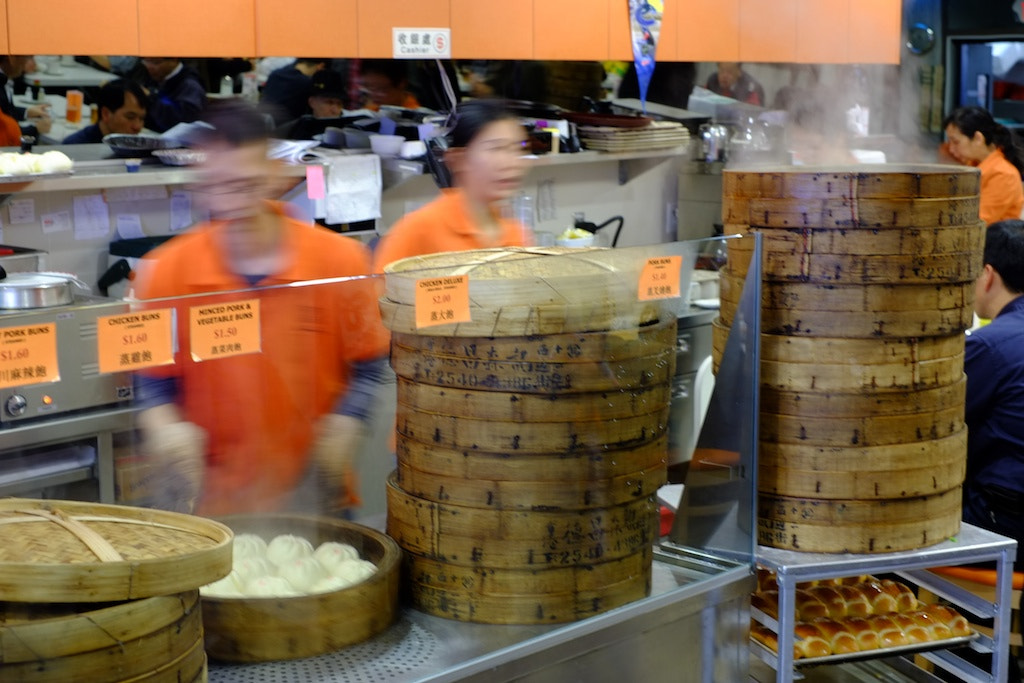
Featured photo: Busy Kitchen (18286687) by Hubert Figuière, BY-SA 3.0.