Good restaurant holiday staffing starts in October, not the week before Thanksgiving. The short version: forecast covers day by day from last year’s sales, hire and train seasonal help before the rush, write schedules that keep overtime deliberate rather than accidental, lock in a clear time-off policy, and keep a backup list of people who can step in when someone calls out.
The busy season rewards operators who plan the boring parts early. A packed dining room with a short line crew does more damage to reviews than a quiet night ever will.
Work through the checklist below section by section. Tick each box when it is done, not when it is “mostly done”.
Key takeaways
- Forecast by day and daypart using last year’s covers, then adjust for where the holidays fall on this year’s calendar.
- Post seasonal roles early and give new hires paid shadow shifts before the peak weeks.
- Under federal law, overtime is time and a half for hours over 40 in a fixed workweek, and weeks cannot be averaged.
- Federal law does not require holiday premium pay, so any holiday bonus is your policy choice. Write it down.
- Cross-train at least one backup for every station and keep an on-call list with phone numbers.
In this guide
- Forecast covers from last year
- Hire and onboard seasonal staff
- Build schedules that respect overtime rules
- Handle time-off requests fairly
- Cross-train and build a backup list
- FAQ
- Put the checklist on the wall this week
Forecast covers from last year
Your best staffing tool is already in your POS: last year’s sales. Pull covers and net sales by day and by daypart for mid-November through the first week of January. Then line them up against this year’s calendar, because Christmas Eve and New Year’s Eve land on different weekdays each year and that shifts demand.
Forecasting checklist
- ☐ Export last year’s covers by day and daypart (lunch, dinner, late) for the whole season.
- ☐ Mark the dates of private parties and large bookings that inflated last year’s numbers.
- ☐ Adjust for this year’s weekday alignment of each holiday.
- ☐ Compare this year’s reservation pace against the same date last year and note the gap.
- ☐ Convert covers into labor hours per station using your normal covers-per-server and covers-per-cook ratios.
- ☐ Flag the ten busiest shifts. Those get your strongest people first.
Keep the forecast in a simple spreadsheet and update it every Monday. A forecast you revise weekly beats a perfect one you wrote once.
Hire and onboard seasonal staff
Seasonal hires fail when they arrive on the busiest night with no training. Aim to have them working supervised shifts two to three weeks before your first peak date. That gives you time to spot the ones who will not work out while there is still time to replace them.
Hiring checklist
- ☐ Decide exactly which roles you need: dish, prep, bussers, hosts, bar-backs, servers.
- ☐ Ask former staff and reliable alumni first. They already know the menu and the POS.
- ☐ Post roles with the season’s dates and minimum shift commitment spelled out.
- ☐ Complete all hiring paperwork and payroll setup before the first shift.
- ☐ Check the ages of any student hires against youth employment hour limits (see below).
Onboarding checklist
- ☐ Give every new hire a one-page station guide with the menu, allergen procedure and key contacts.
- ☐ Schedule at least two paid shadow shifts alongside a strong regular.
- ☐ Set up POS logins and test them before the first solo shift.
- ☐ Walk them through the fire exits, first-aid kit and who to call if they are running late.
Holiday breaks bring out student applicants. The Department of Labor fact sheet for restaurants limits 14- and 15-year-olds to 3 hours on a school day and 18 hours in a school week, and to work between 7 a.m. and 7 p.m. outside the summer period. It also restricts which kitchen tasks they can do, so read it before you put a young hire on the schedule.
Build schedules that respect overtime rules
Holiday overtime is not bad in itself. Paying a trained regular time and a half is often cheaper than a mistake by someone on their first shift. The problem is overtime you did not plan for. Here is the federal baseline from the DOL overtime fact sheet:
- Non-exempt employees must get at least one and one-half times their regular rate for hours worked over 40 in a workweek.
- The workweek is a fixed, recurring period of 168 hours, seven consecutive 24-hour periods, and it can start on any day.
- Averaging hours over two or more weeks is not permitted. A 50-hour week followed by a 30-hour week still owes 10 hours of overtime.
- Federal law does not require overtime just because work falls on a weekend or holiday.
State and local rules can go further than federal law, so check your state labor department before you publish the schedule.
| Week | Scheduling task | Owner |
|---|---|---|
| 6 weeks out | Publish peak-date blackout rules and the time-off request deadline | GM |
| 5 weeks out | Draft forecast-based labor hours per station | GM, chef |
| 4 weeks out | Seasonal hires start shadow shifts | Shift leads |
| 3 weeks out | First full holiday schedule posted | GM |
| 2 weeks out | Review projected hours per person and rebalance anyone near 40 | GM |
| Each week in season | Compare scheduled vs actual hours and adjust next week’s schedule | GM |
Scheduling checklist
- ☐ Confirm your workweek start day and schedule to it, not to the calendar week.
- ☐ Run projected hours per person before posting and flag anyone over 40.
- ☐ Decide in advance who is approved for overtime and on which shifts.
- ☐ Post schedules at least a week ahead, and check whether your city or state sets its own advance-notice rules.
- ☐ Track clock-ins daily during peak weeks so extra hours show up before payday.
Overtime you planned is a cost. Overtime you discovered on payroll day is a leak.
Handle time-off requests fairly
Time off is where holiday staffing gets personal. The Department of Labor notes that the FLSA does not require payment for time not worked, such as holidays, and that these benefits are generally a matter of agreement between employer and employee. That means your policy, clearly written, is what staff will hold you to.
Time-off checklist
- ☐ Set a request deadline and share it in writing with every employee.
- ☐ Name the blackout dates, usually the few highest-volume shifts, and keep them few.
- ☐ Choose a fair tie-breaker: seniority, rotation from last year, or first come first served.
- ☐ Answer every request within a set number of days, in writing.
- ☐ If you offer holiday pay or a bonus, spell out who qualifies and how it is calculated.
Rotation works well in smaller teams. Whoever worked Christmas Eve last year gets first pick this year, and everyone can see it is fair.
Cross-train and build a backup list
Plan for call-outs in December. Someone will get sick, miss a flight home or simply hit a wall after a double. The fix is depth, not heroics from the same three people.
Cross-training checklist
- ☐ List every station and name at least one trained backup for each.
- ☐ Run short cross-training sessions in November, before the peak.
- ☐ Teach servers to expo and hosts to run food on the busiest nights.
- ☐ Prep a laminated station card for the grill, fry and pantry with pars and plating photos.
Backup list checklist
- ☐ Build an on-call list with names, stations they can cover and phone numbers.
- ☐ Include former staff willing to pick up a shift, and confirm they are set up in payroll.
- ☐ Agree a call-out rule: how much notice, and who to call first.
- ☐ Keep the list printed by the schedule, not only in a manager’s phone.
Pair this with a pre-shift huddle on peak nights. Five minutes on specials, 86’d items and large parties saves a lot of confusion. For more on running tight services, see our guide to running a better pre-shift meeting.
FAQ
How far ahead should I start holiday staffing?
Start forecasting and hiring six to eight weeks before your first peak date. That leaves time for shadow shifts and for replacing hires who do not work out.
Do I have to pay extra for working on a holiday?
Not under federal law. The FLSA does not require holiday premium pay, but a state rule, union contract or your own written policy might, so check all three.
Can I average hours across two weeks to avoid overtime?
No. The DOL says each workweek stands alone, so hours over 40 in any single workweek earn overtime.
How many backups do I need?
At least one trained backup per station, plus two or three people on an on-call list who can cover more than one role.
Put the checklist on the wall this week
Print this checklist, assign an owner and a due date to each section, and pin it next to the schedule. Start with the forecast, because every other decision depends on it. Once the season is over, save your actual hours and covers so next year’s forecast starts from better data. For more planning guides, browse our restaurant operations articles, or read about keeping labor costs under control.
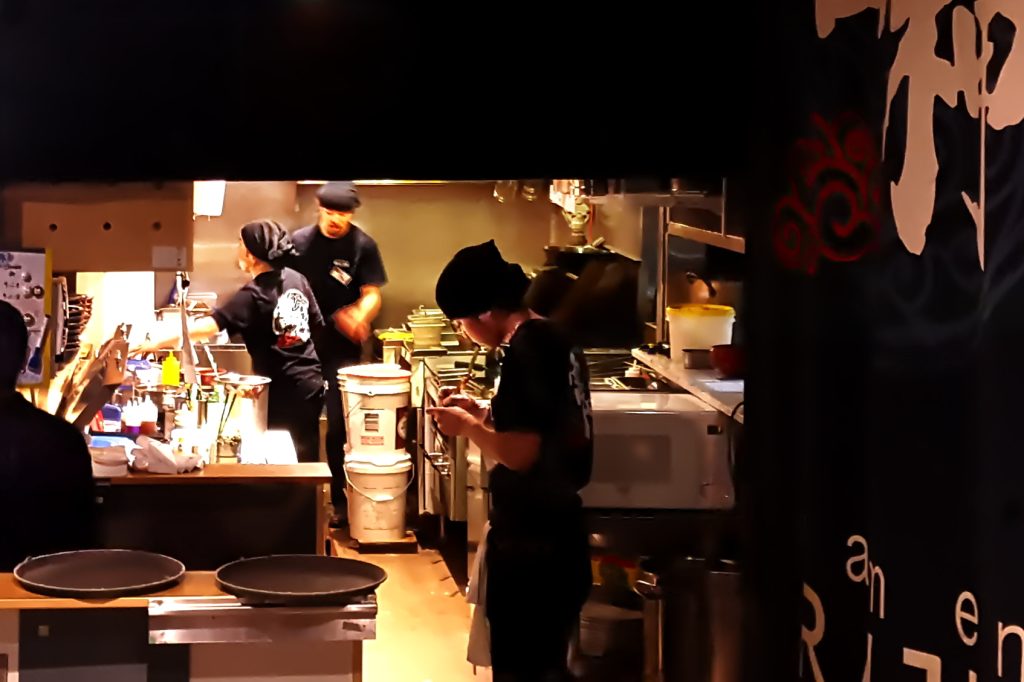
Featured photo: Busy kitchen (32998096578) by VV Nincic from Toronto, Canada, BY 2.0.